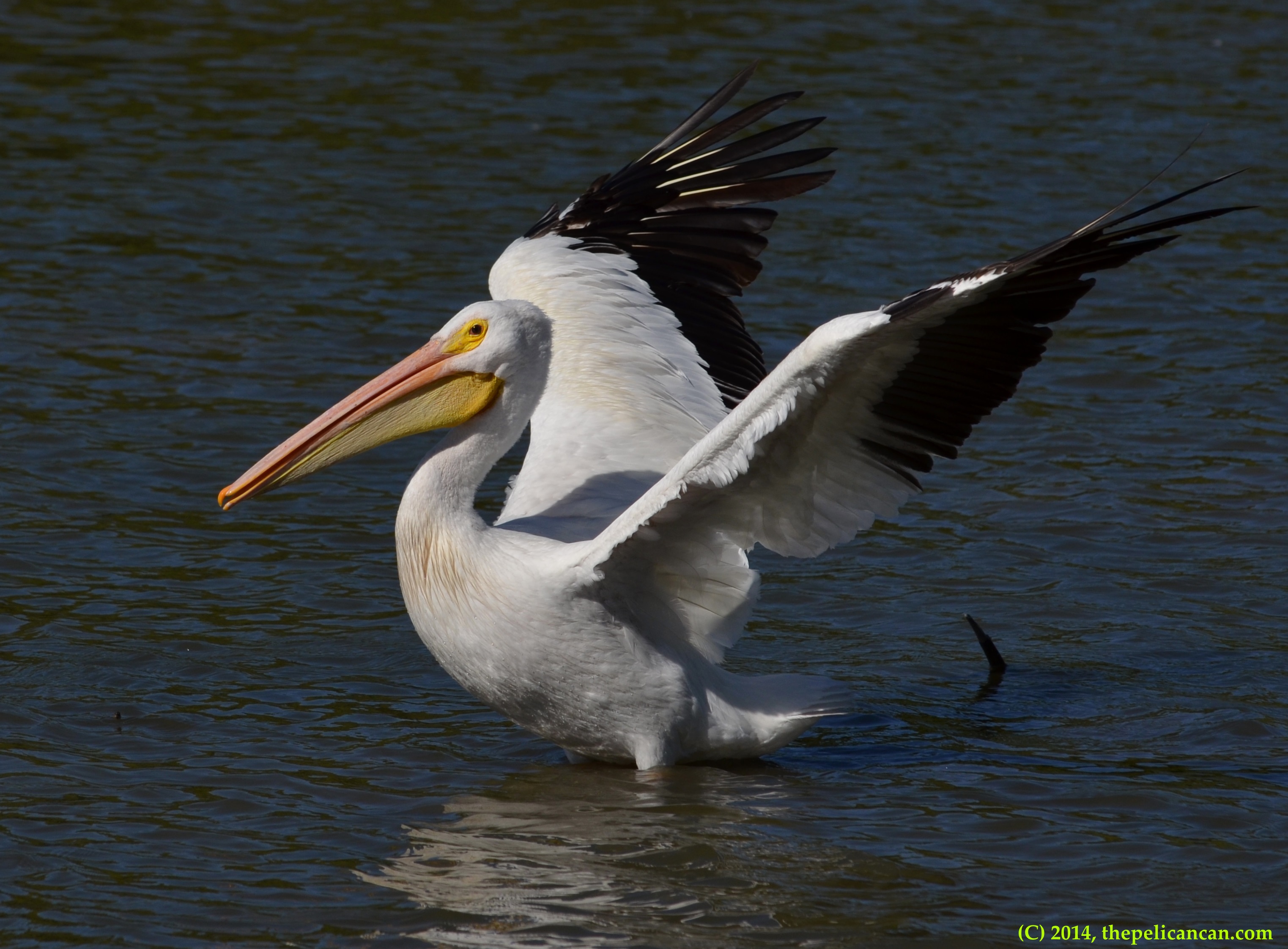
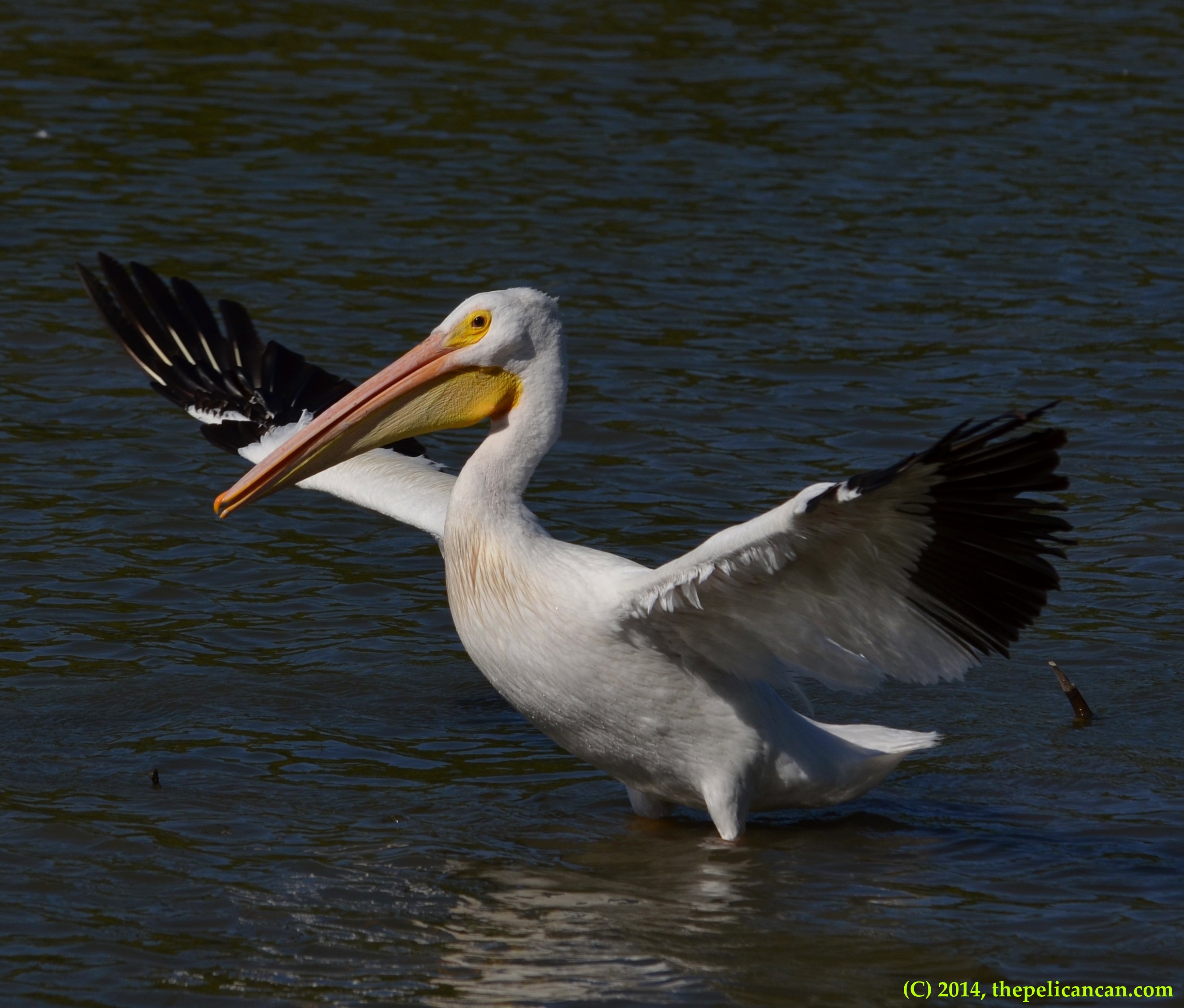
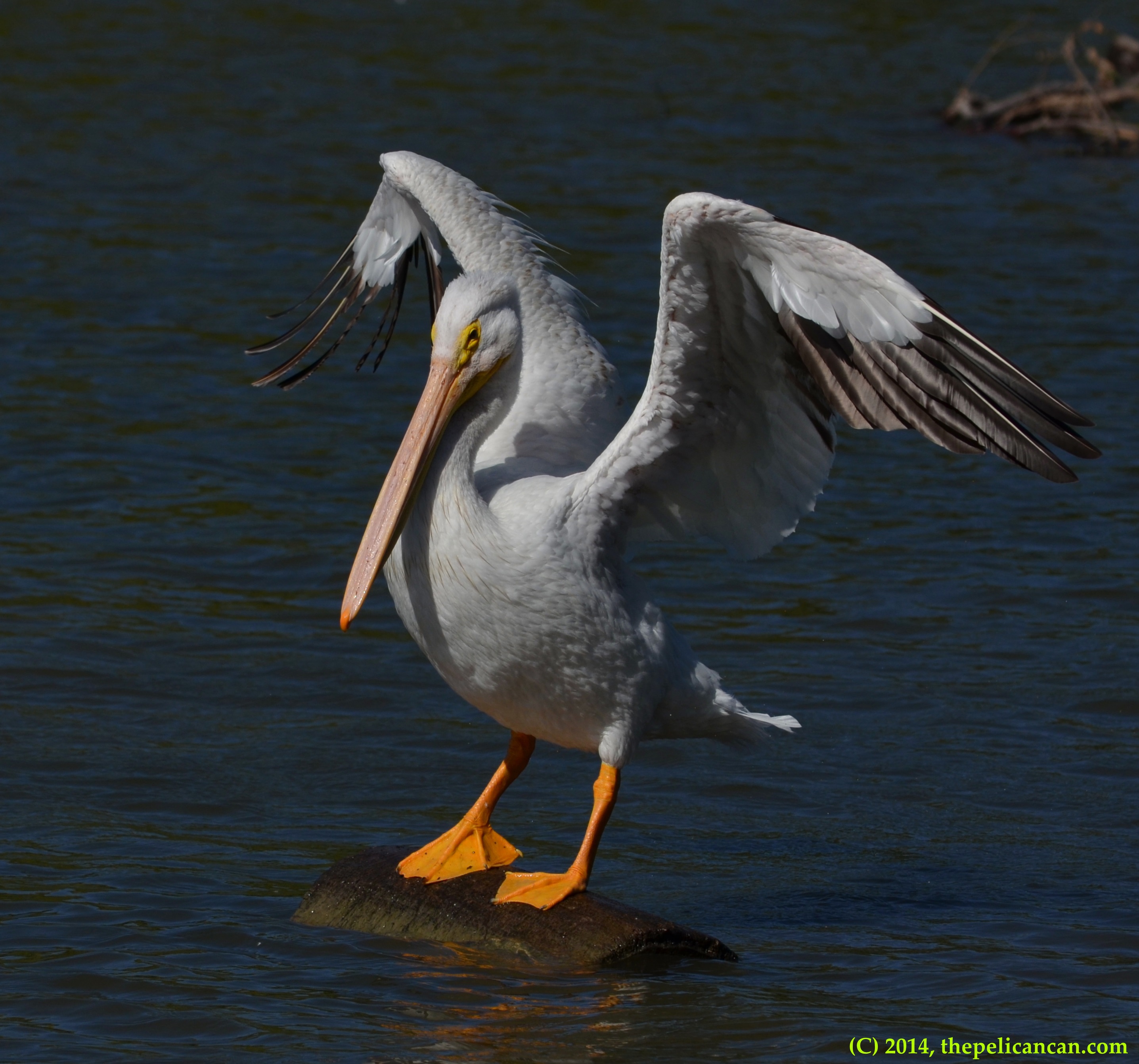
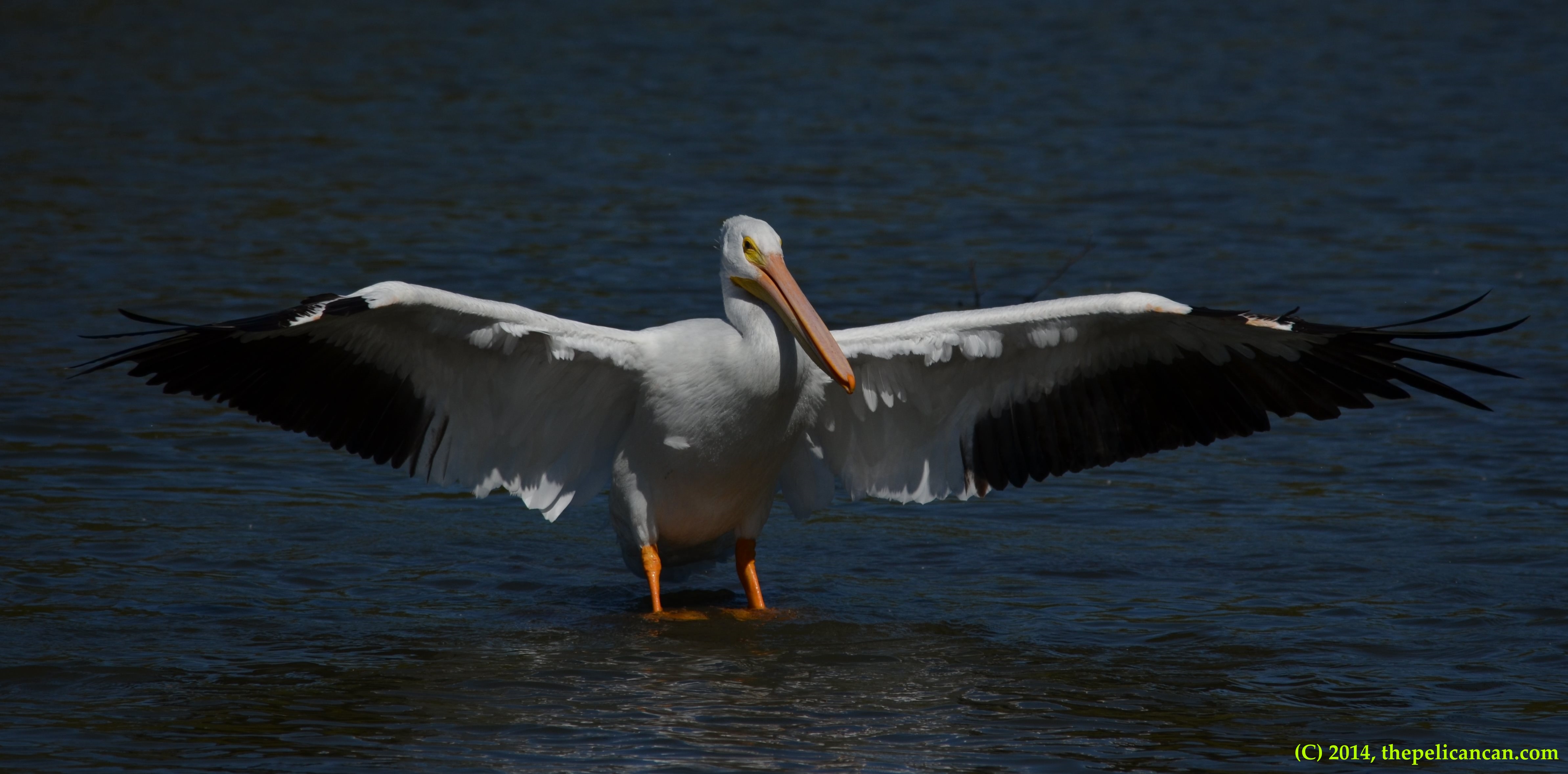
Wood Storks at Richland Creek WMA: July 2014

This was the second time Q and I went out to Richland. The first time Q had been very nervous. We had just taken a trip to the John Bunker Sands Wetland Center, which was not at all fruitful. Q was worried that we would repeat that experience. Richland was also a much farther drive than John Bunker Sands, and he really didn’t want to go all that way for a bust.

He started feeling better after we saw the bald eagle. And the anhingas. And all of the wood storks.

We went back two weeks later, which was this visit.

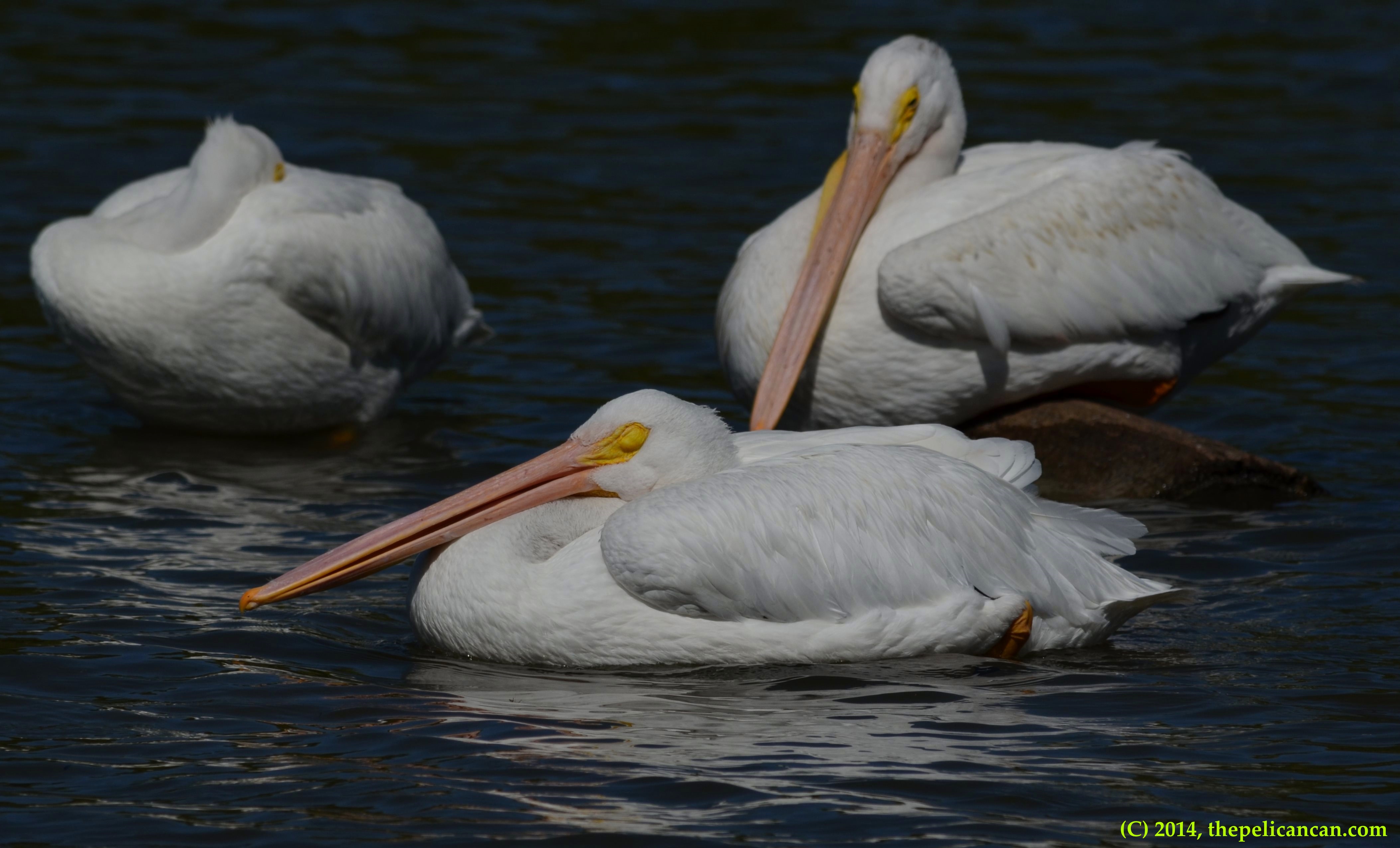
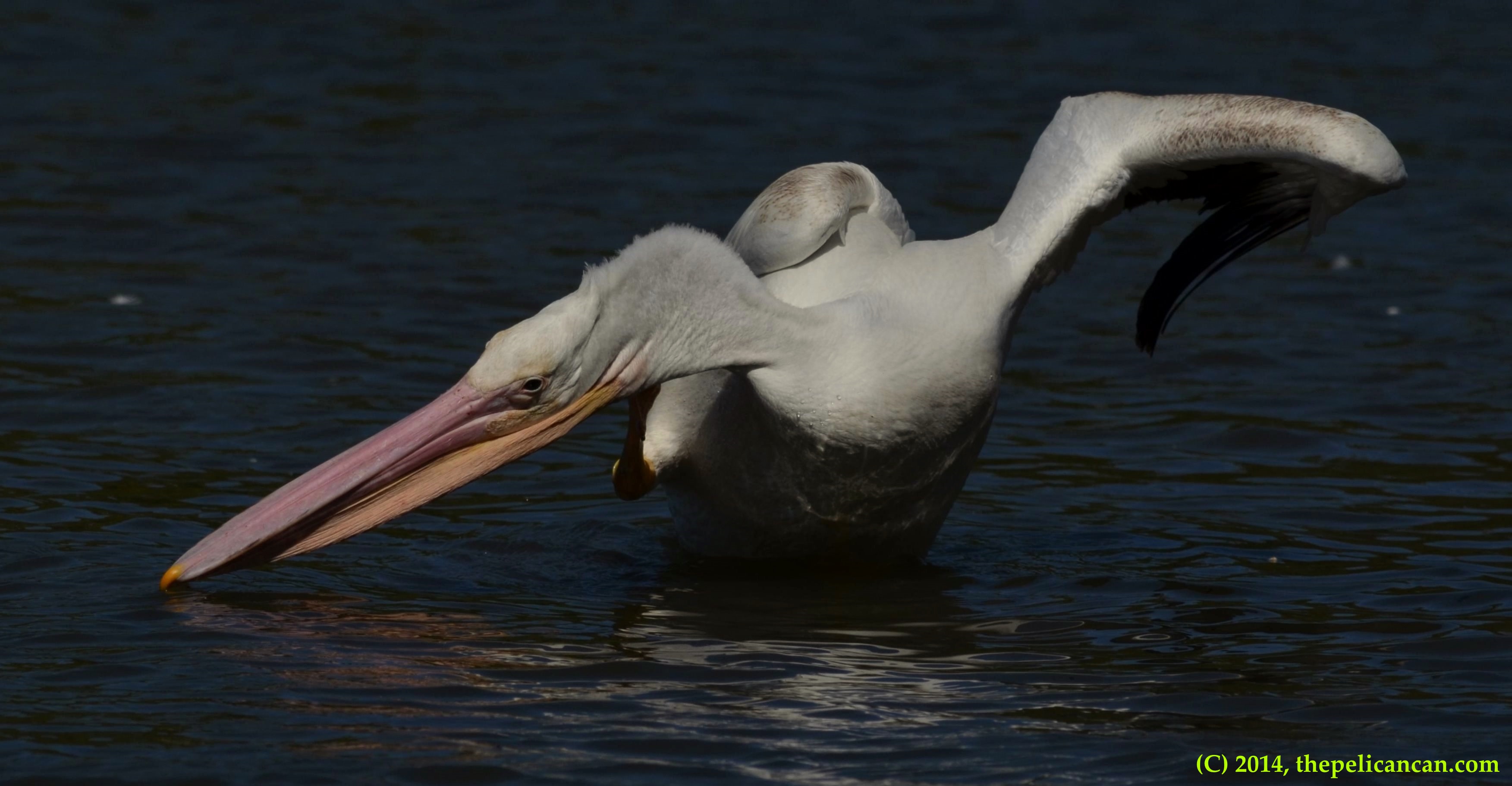
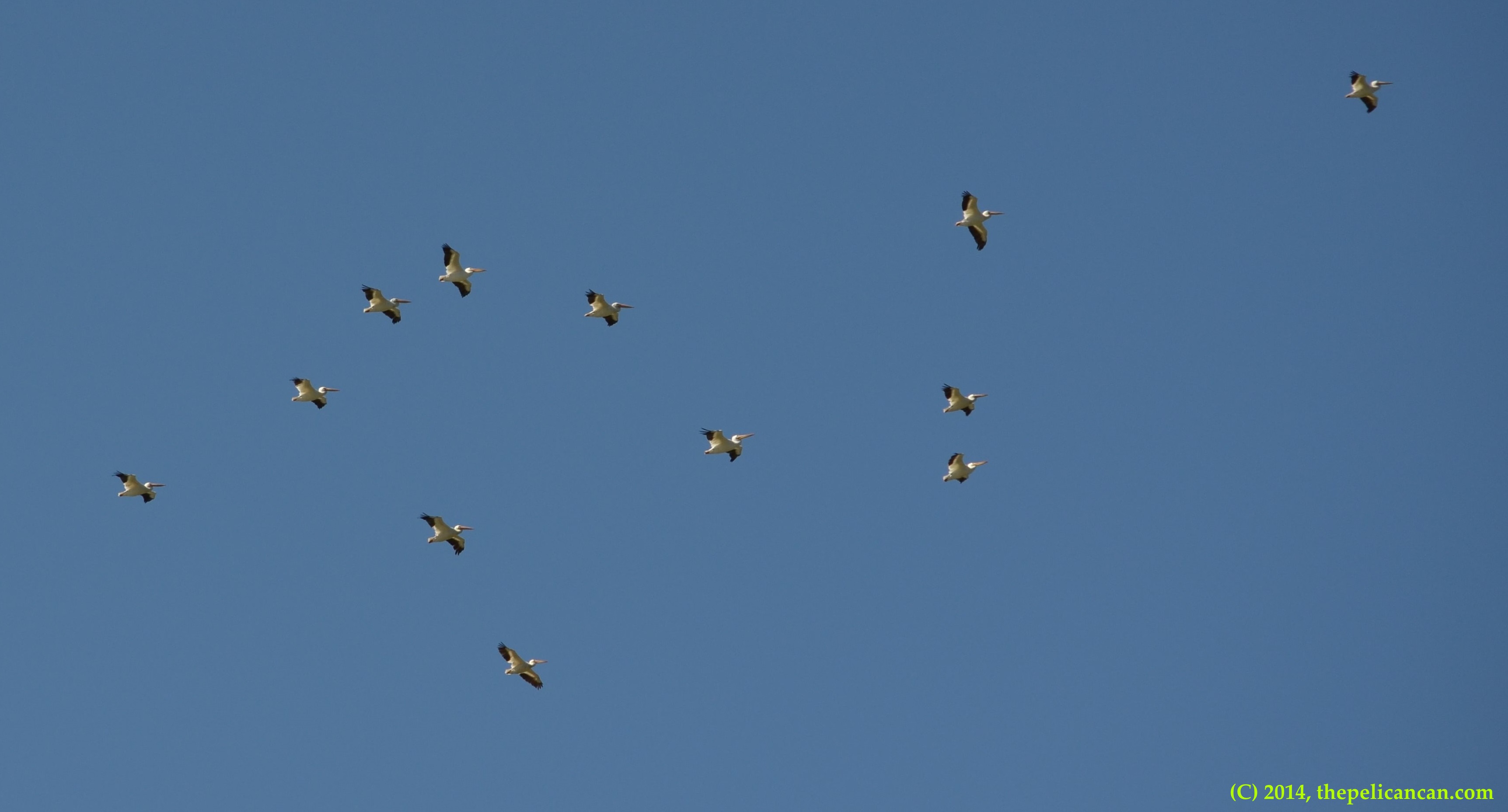
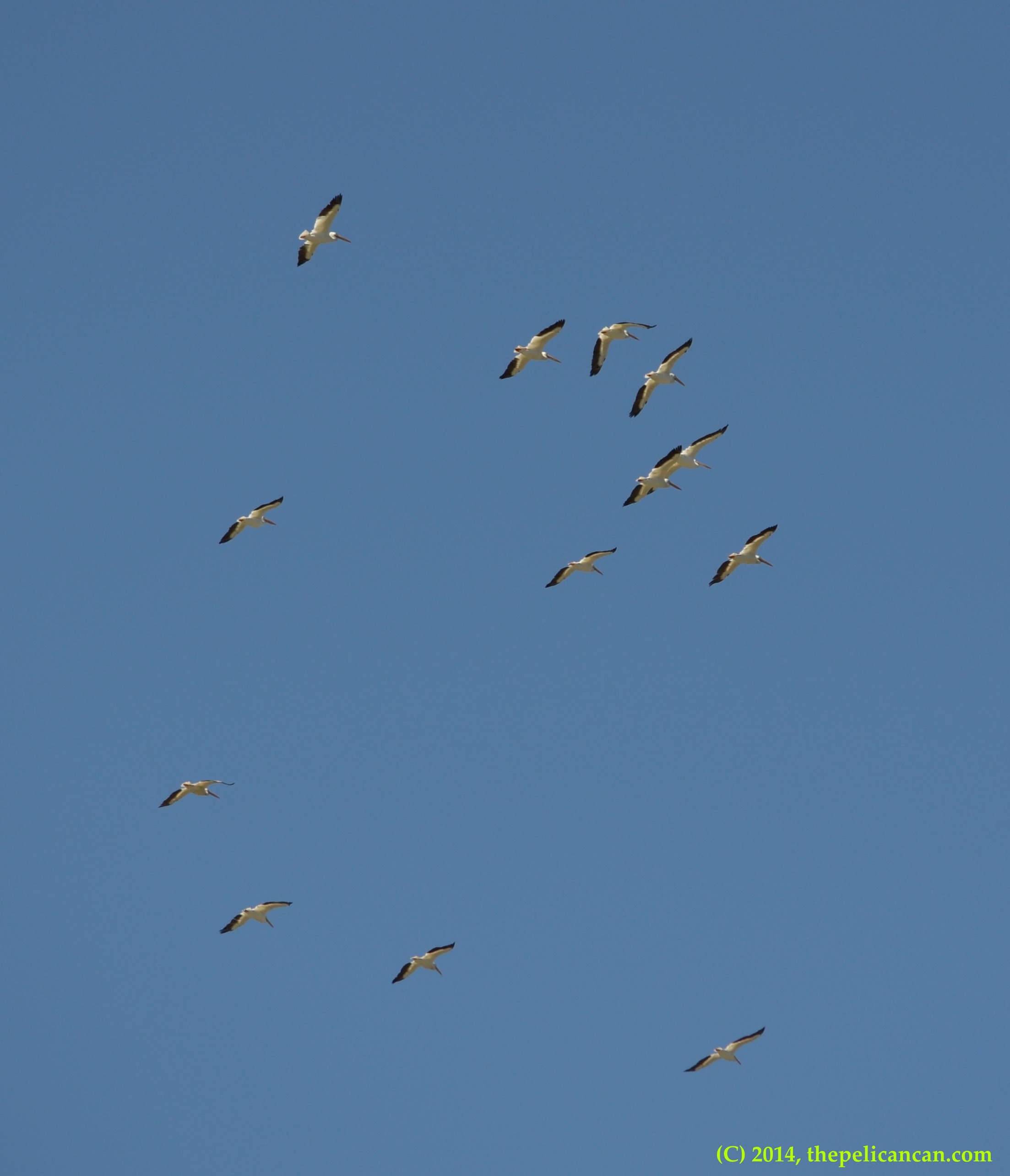
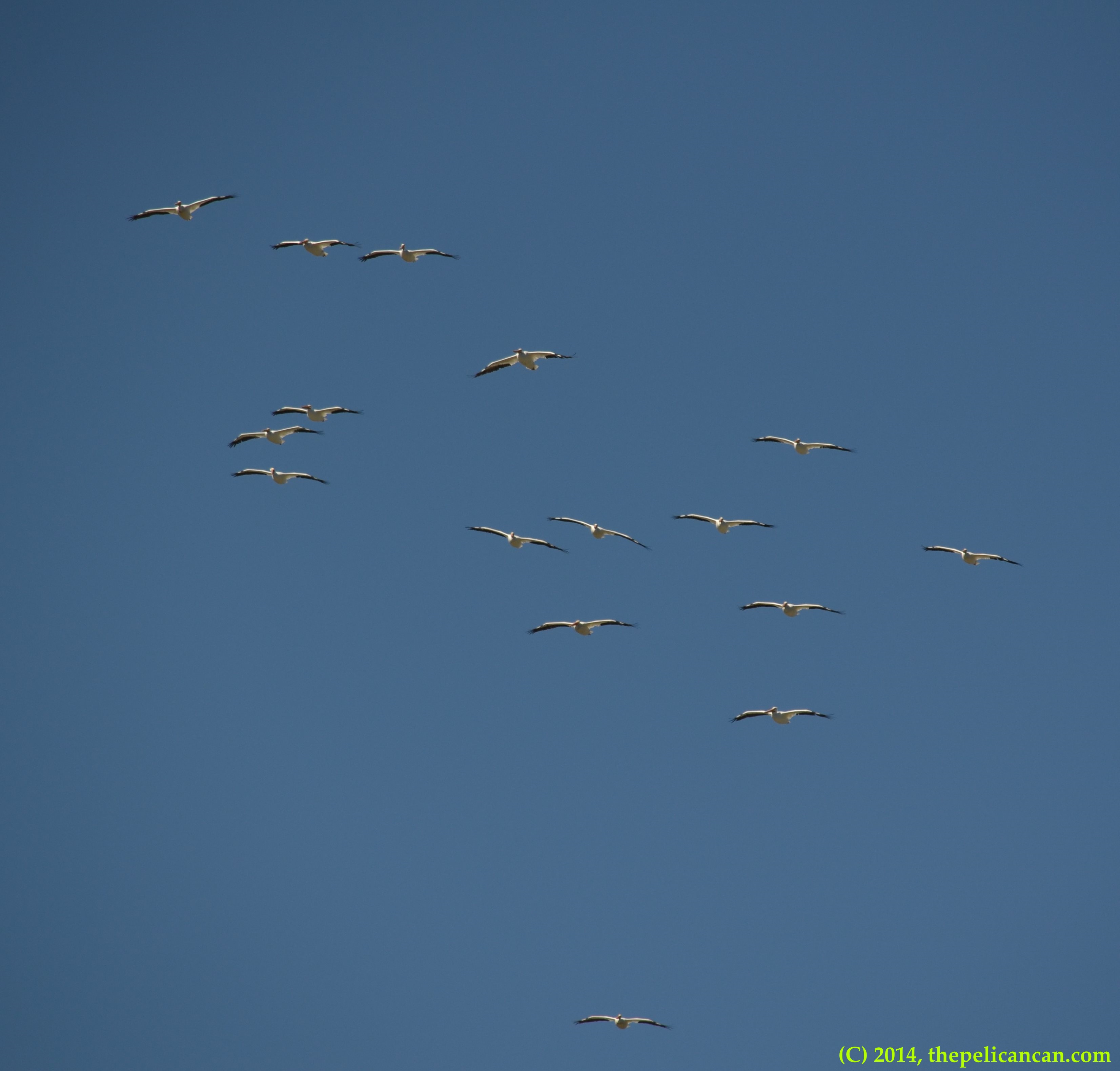
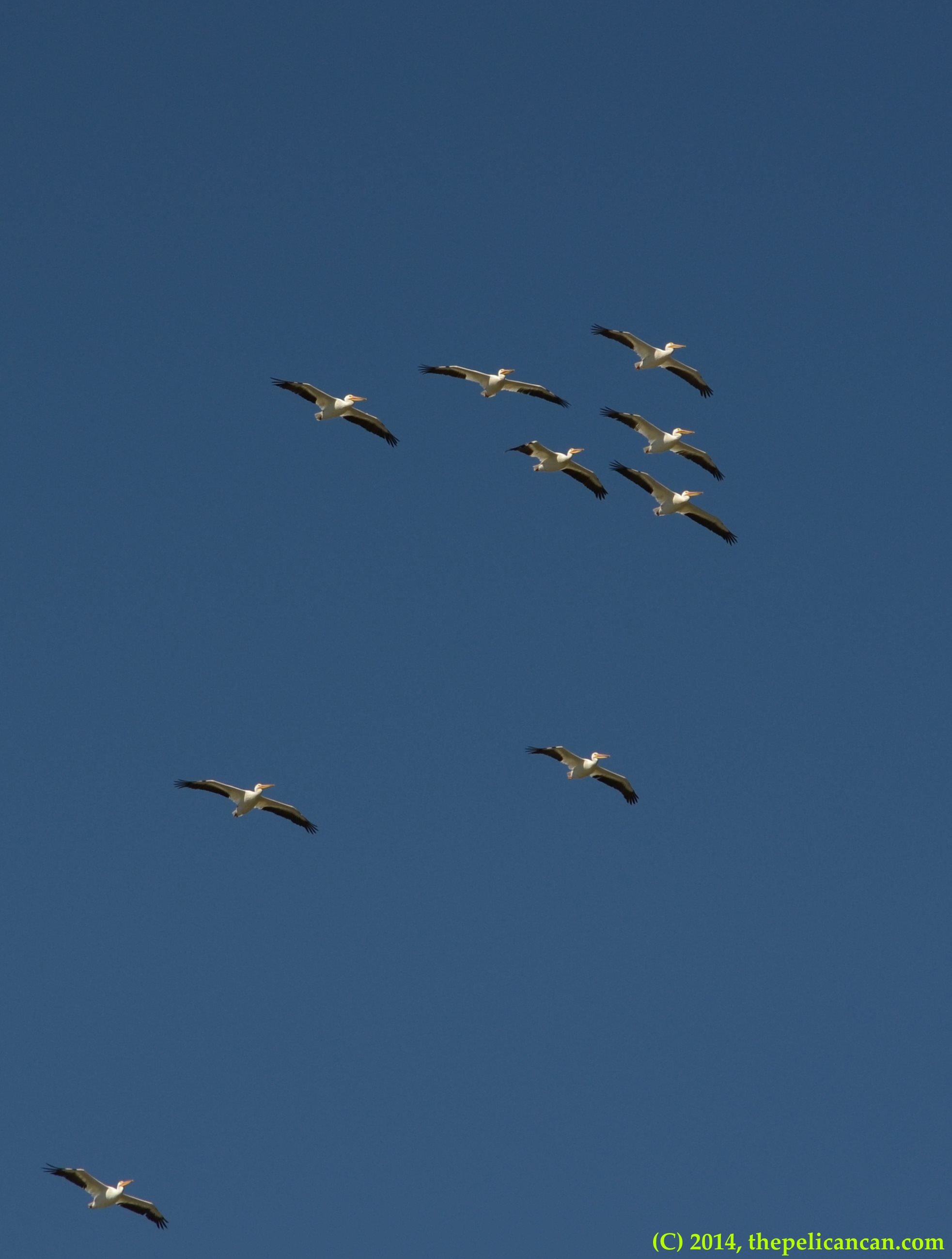
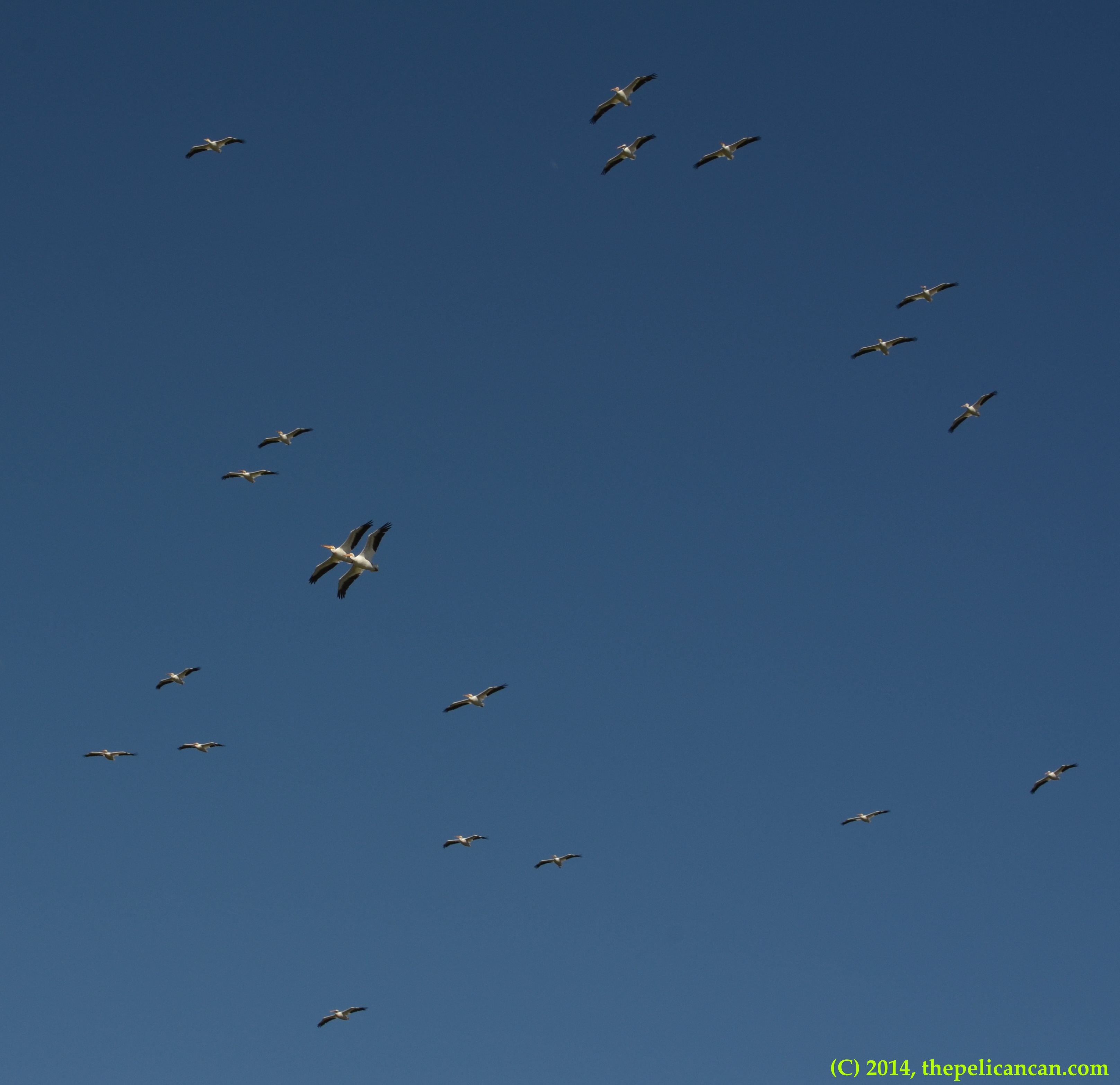
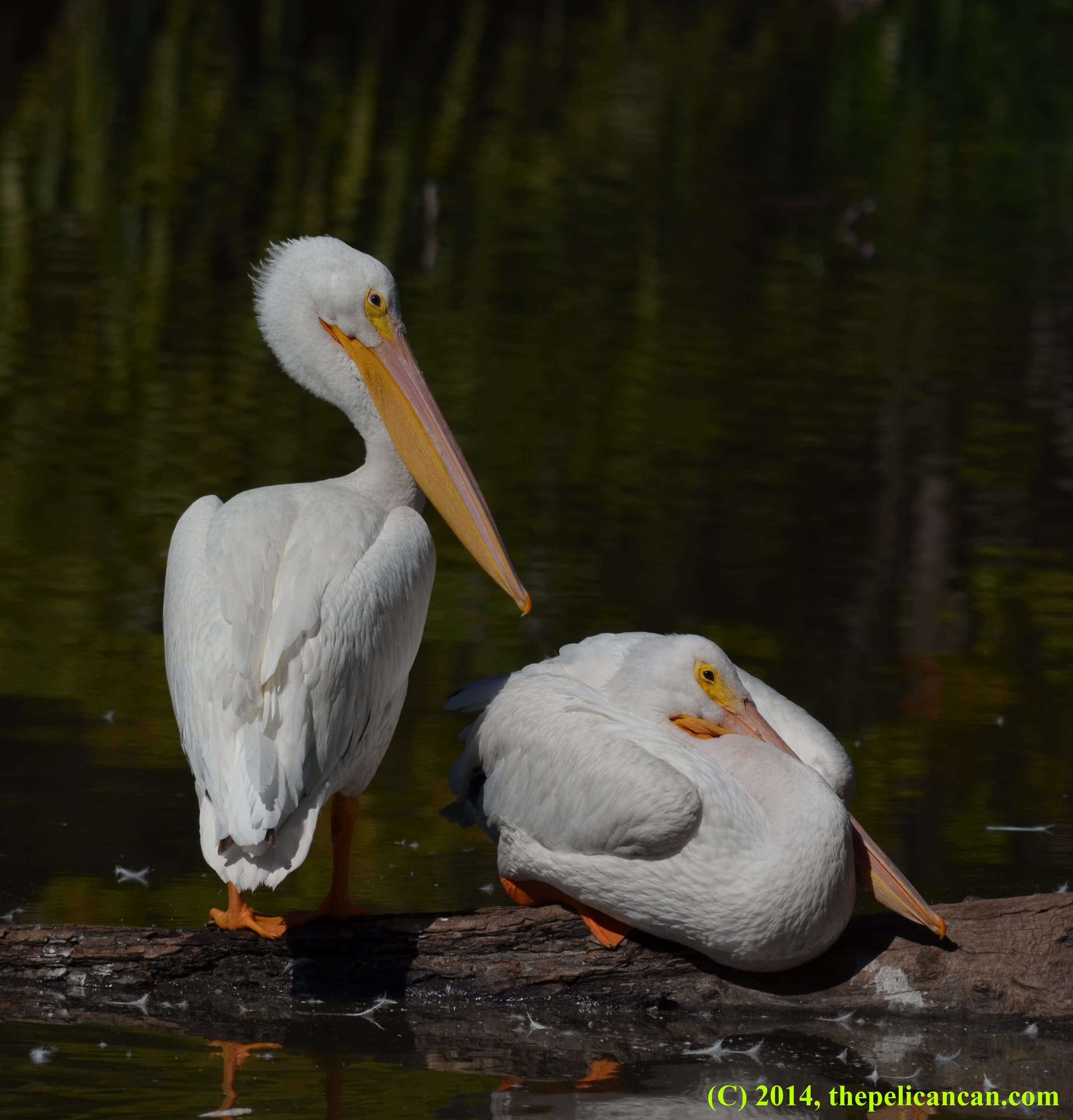
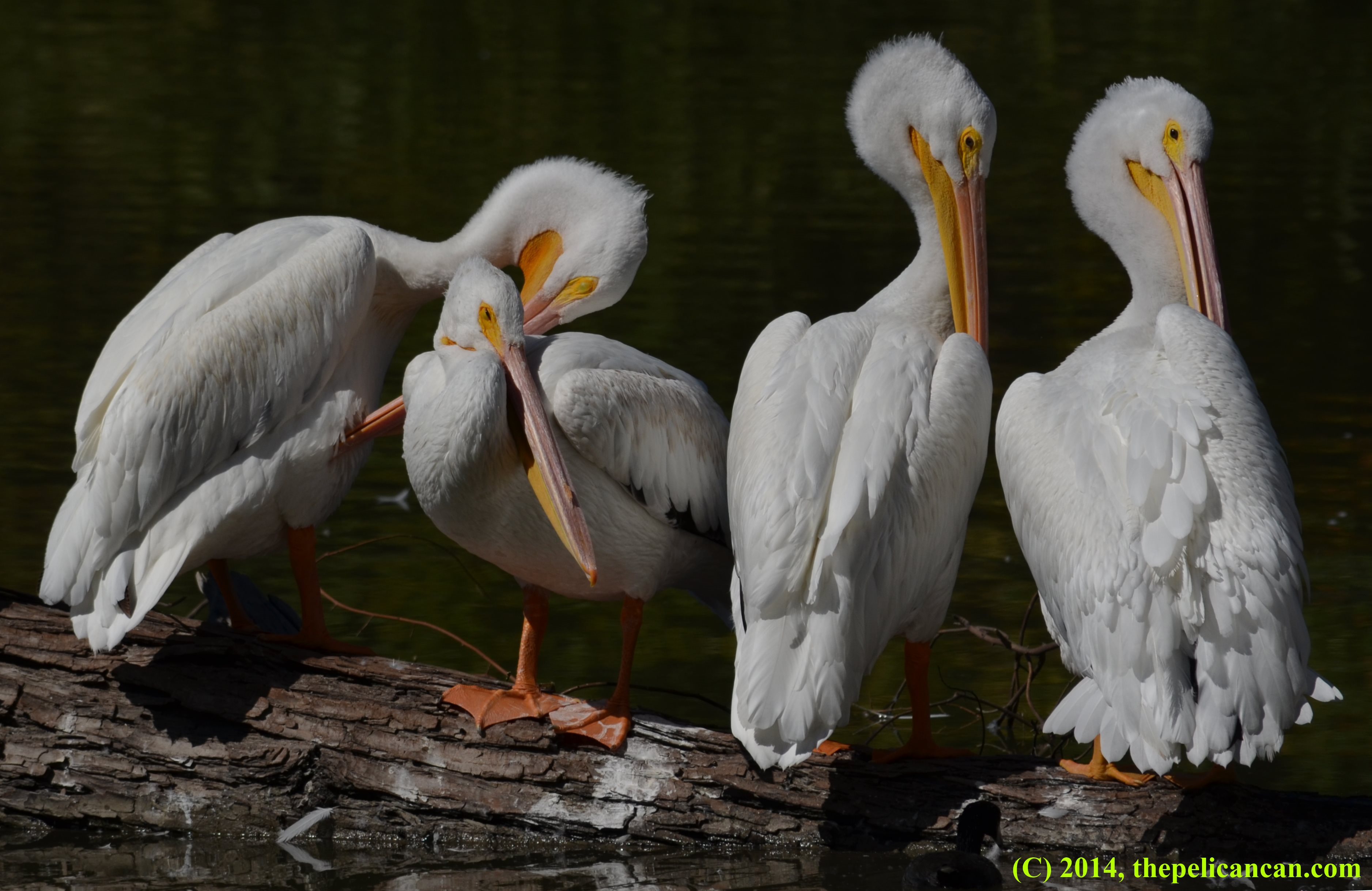
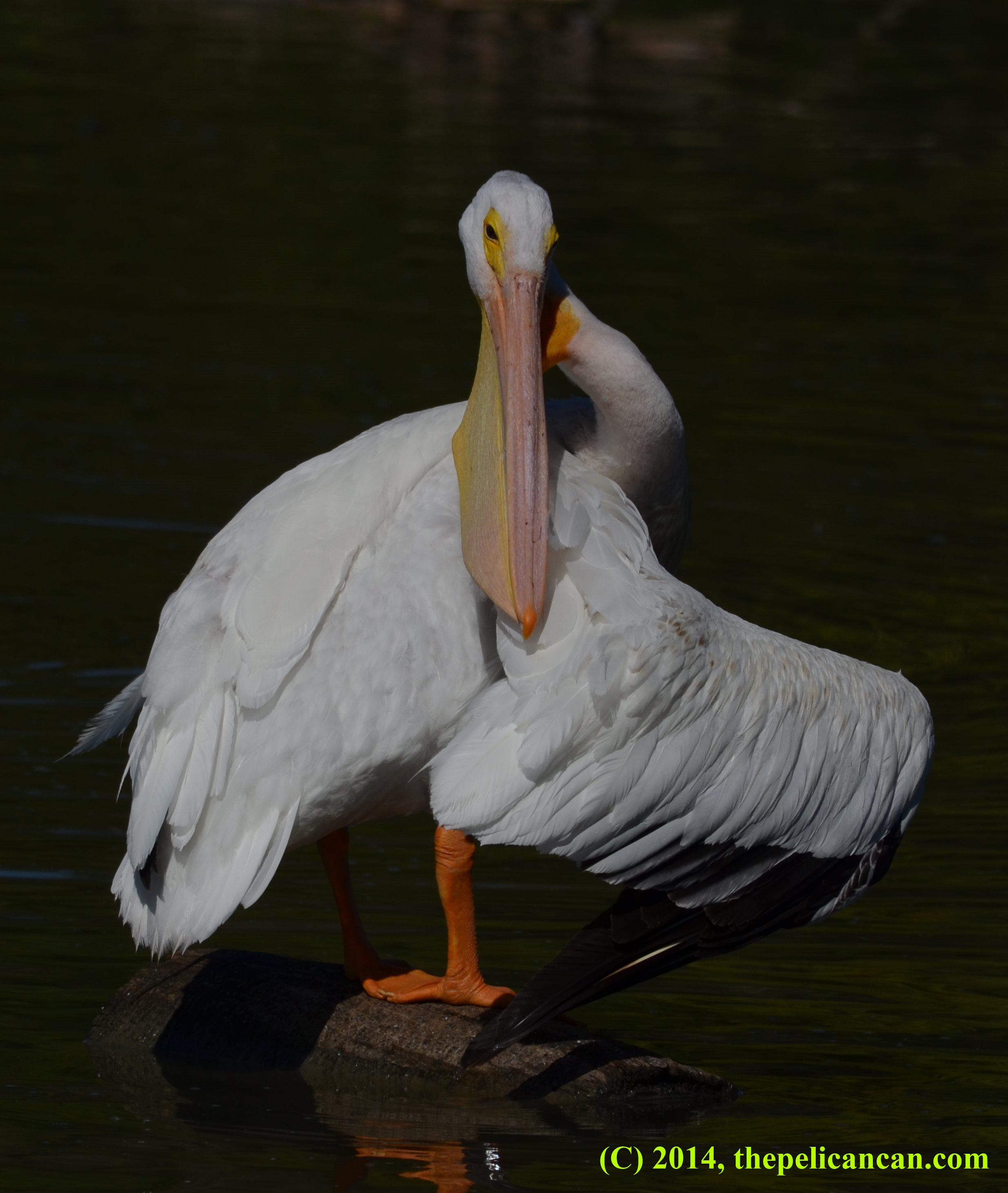
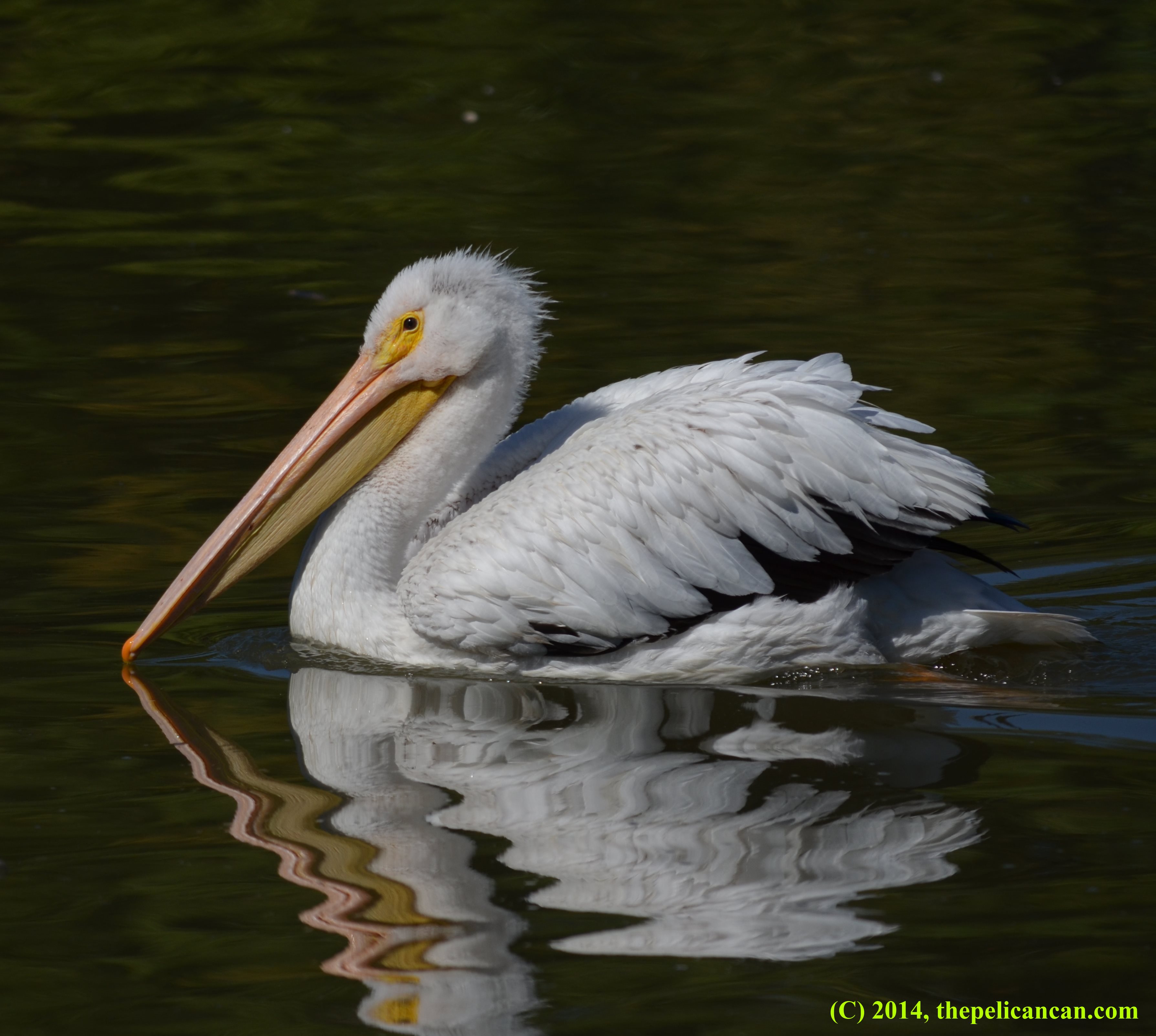
We saw over a hundred pelicans loafing on the shores of the wetland cells and swimming in the shallow water. Only a few of them were adults. Not needing to fly north to breed, perhaps some of the juveniles wintering down south decide to bum around the area until it was time to fly further south for the winter.

Juvenile American white pelicans (Pelecanus erythrorhynchos) fly overhead at Richland Creek WMA in Fairfield, Texas

We’re gonna poop on the loafing logs at White Rock Lake! Richland WMA pellies RULE!

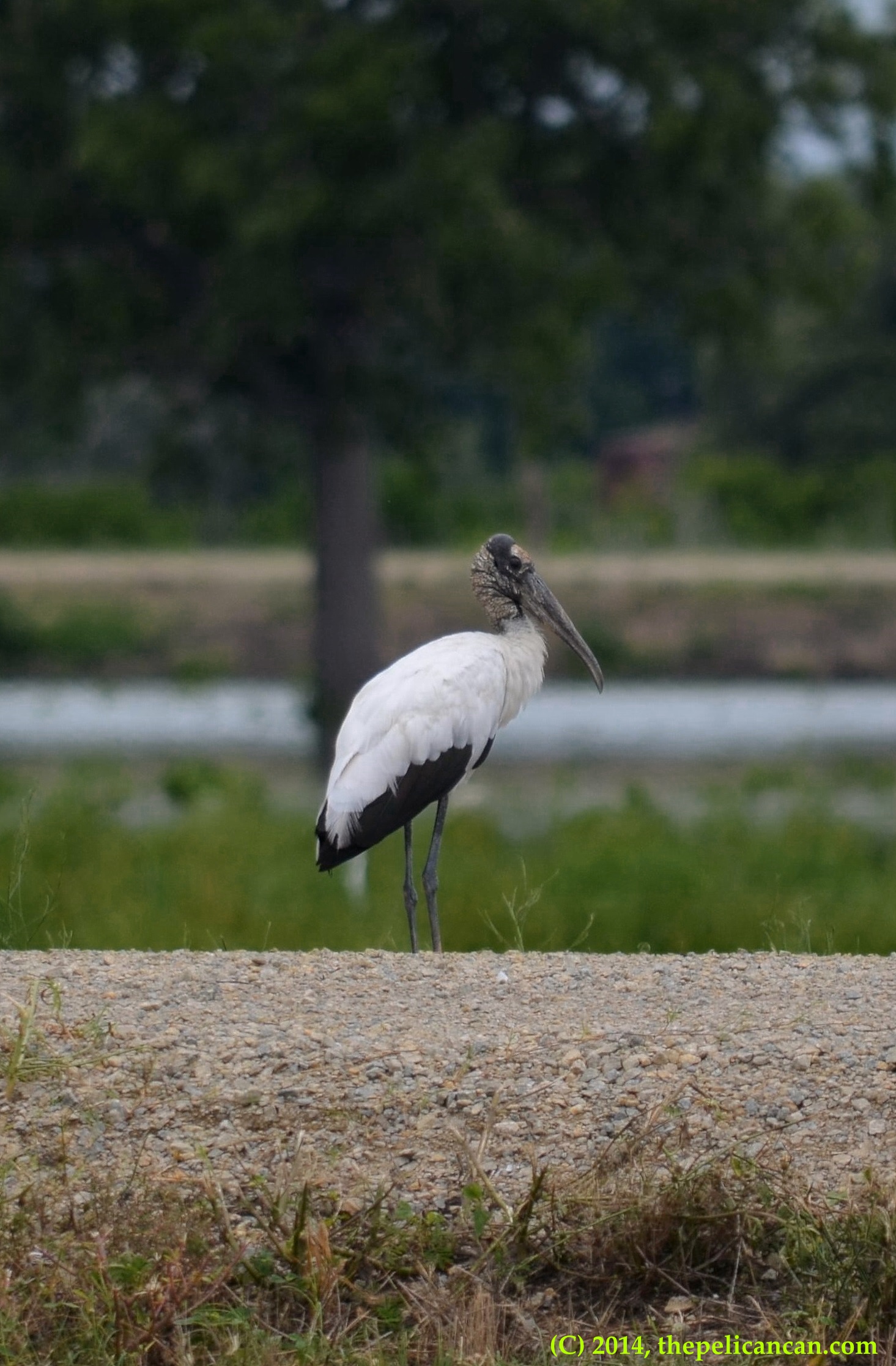
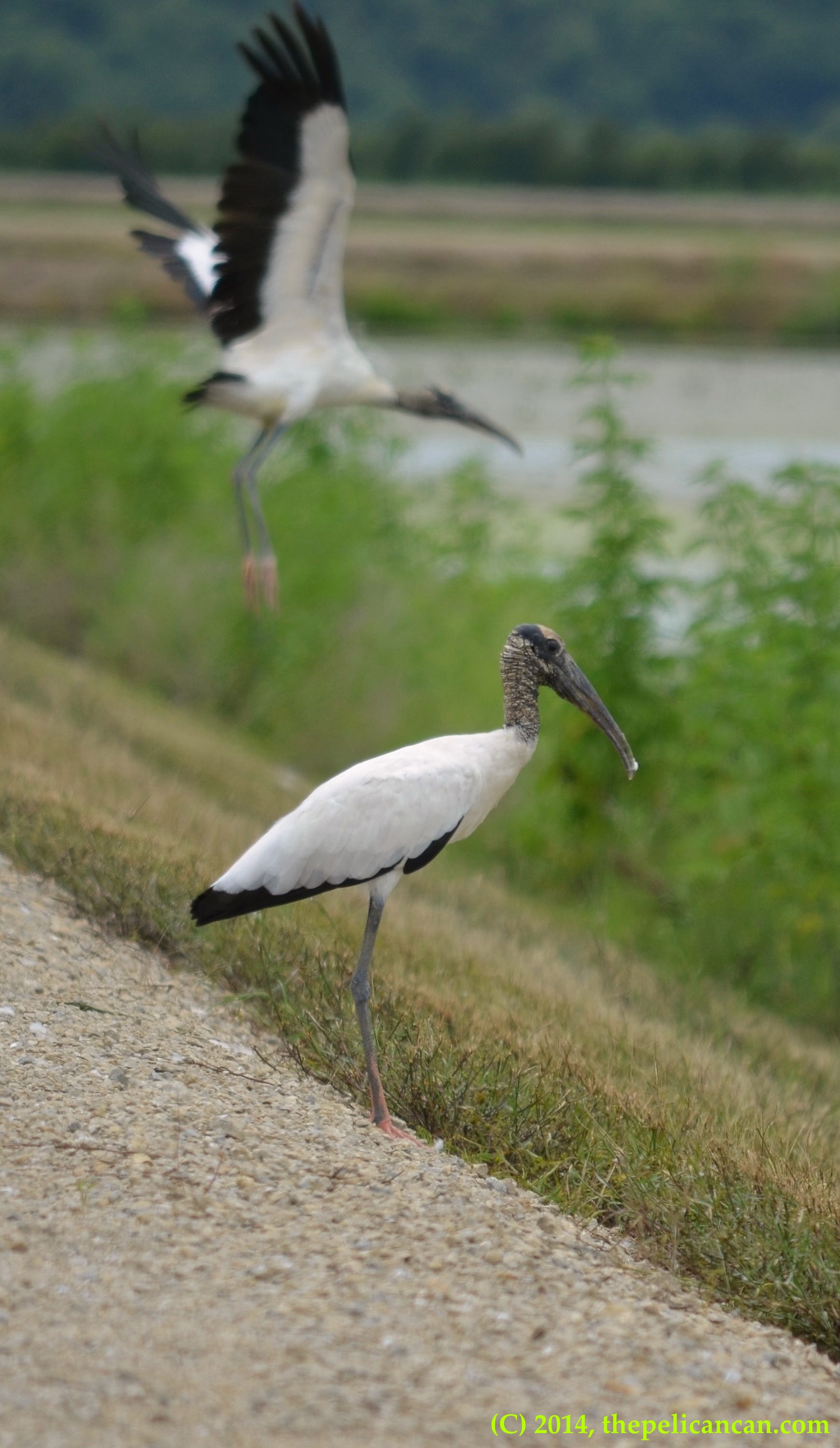
The wood storks were the stars of this visit. Q and I were able to get closer than we had on our first visit. They perched on trees and stood on the roads that crossed over the cells.

Wood stork (Mycteria americana) standing on a road at Richland Creek WMA in Fairfield, Texas

See a stork walkin’ down the street. She’s just the kind of stork that I’d like to meet. It ain’t her head, her claws, her feet. It’s something much more discreet . . .

Wood stork (Mycteria americana) standing on a road at Richland Creek WMA in Fairfield, Texas

There’s a wood stork on the road. And she would really like a toad. All toads on holiday: let your tadpoles play. If you let this stork walk by, sweet family will die. Wood stork on the road.

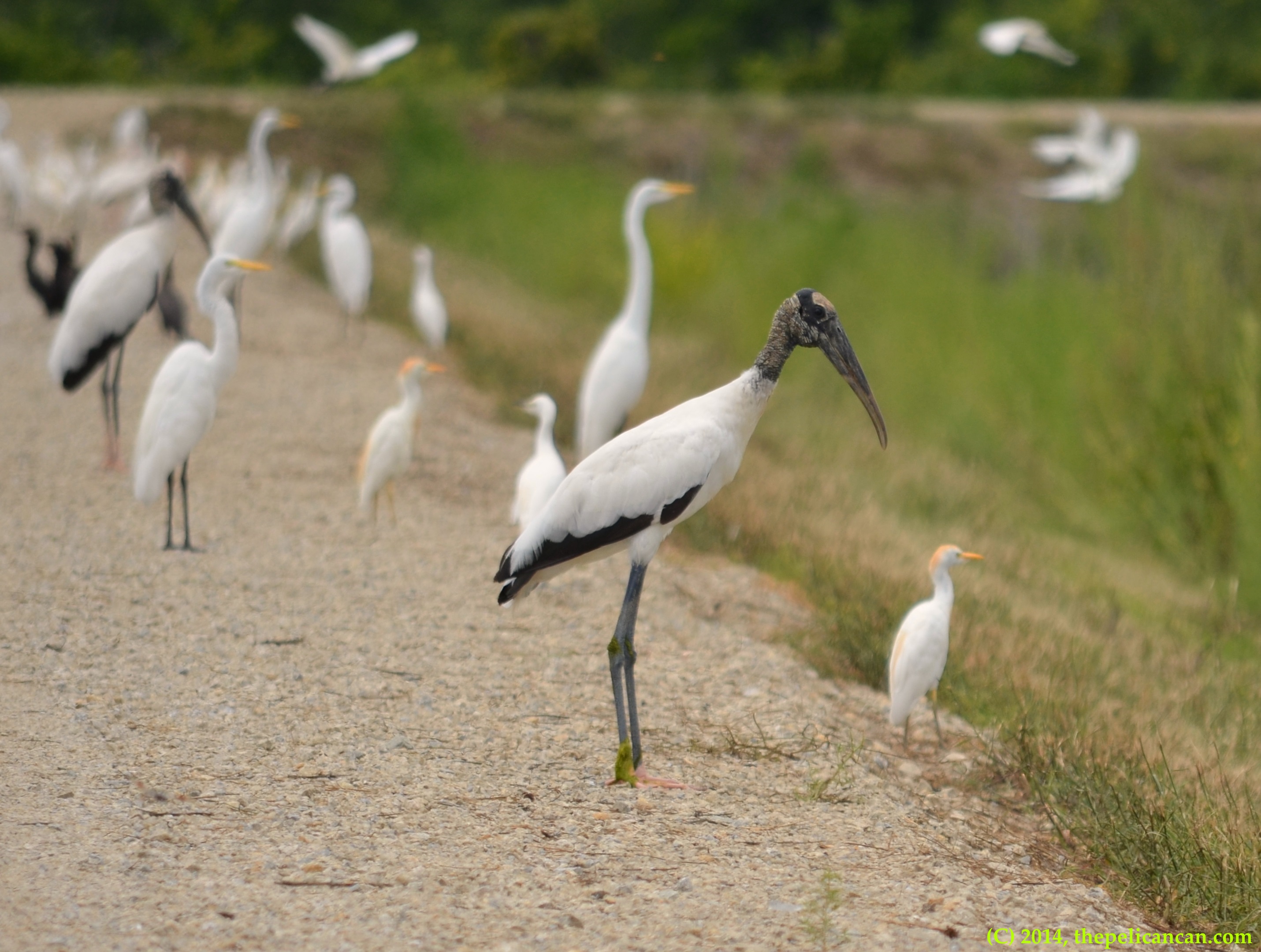
Occasionally we would have to drive on roads filled with wood storks, great egrets, snowy egrets, American white ibises, cattle egrets, neotropic cormorants, anhingas, and herons. They would amble away from the car, and when we got too close, they would fly several yards further down the road. When we caught up with them again, they would repeat their actions: amble and fly. We were never able to get close enough for good sharp pics, but I’d rather not get too close than seriously freak out the wild birds.

Wood stork (Mycteria americana) standing on a road at Richland Creek WMA in Fairfield, Texas

WHY IS THAT HUGE WHITE COW COMING TOWARD ME?

Wood stork (Mycteria americana) standing on a road at Richland Creek WMA in Fairfield, Texas

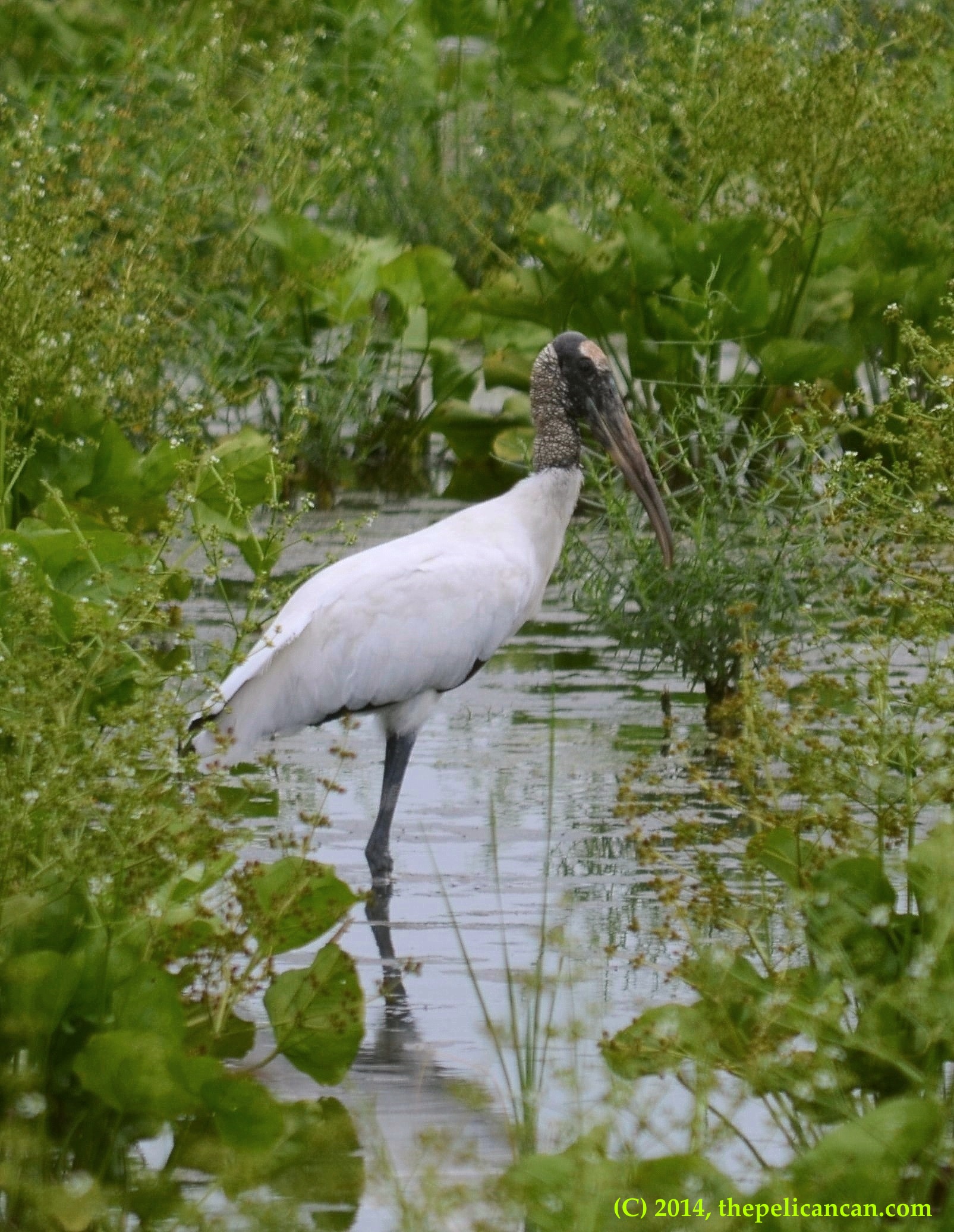
Wood stork (Mycteria americana) standing in wetlands at Richland Creek WMA in Fairfield, Texas

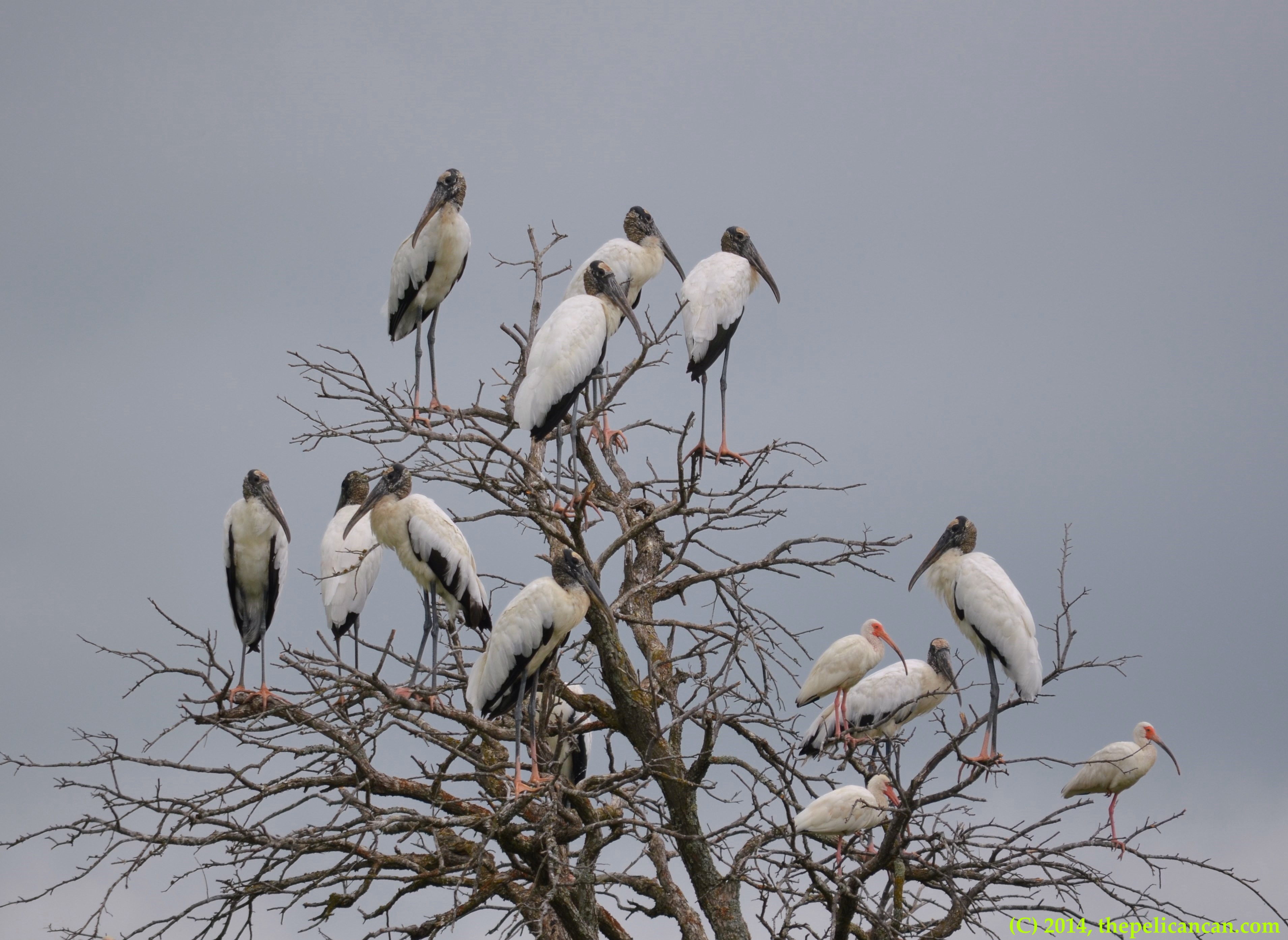
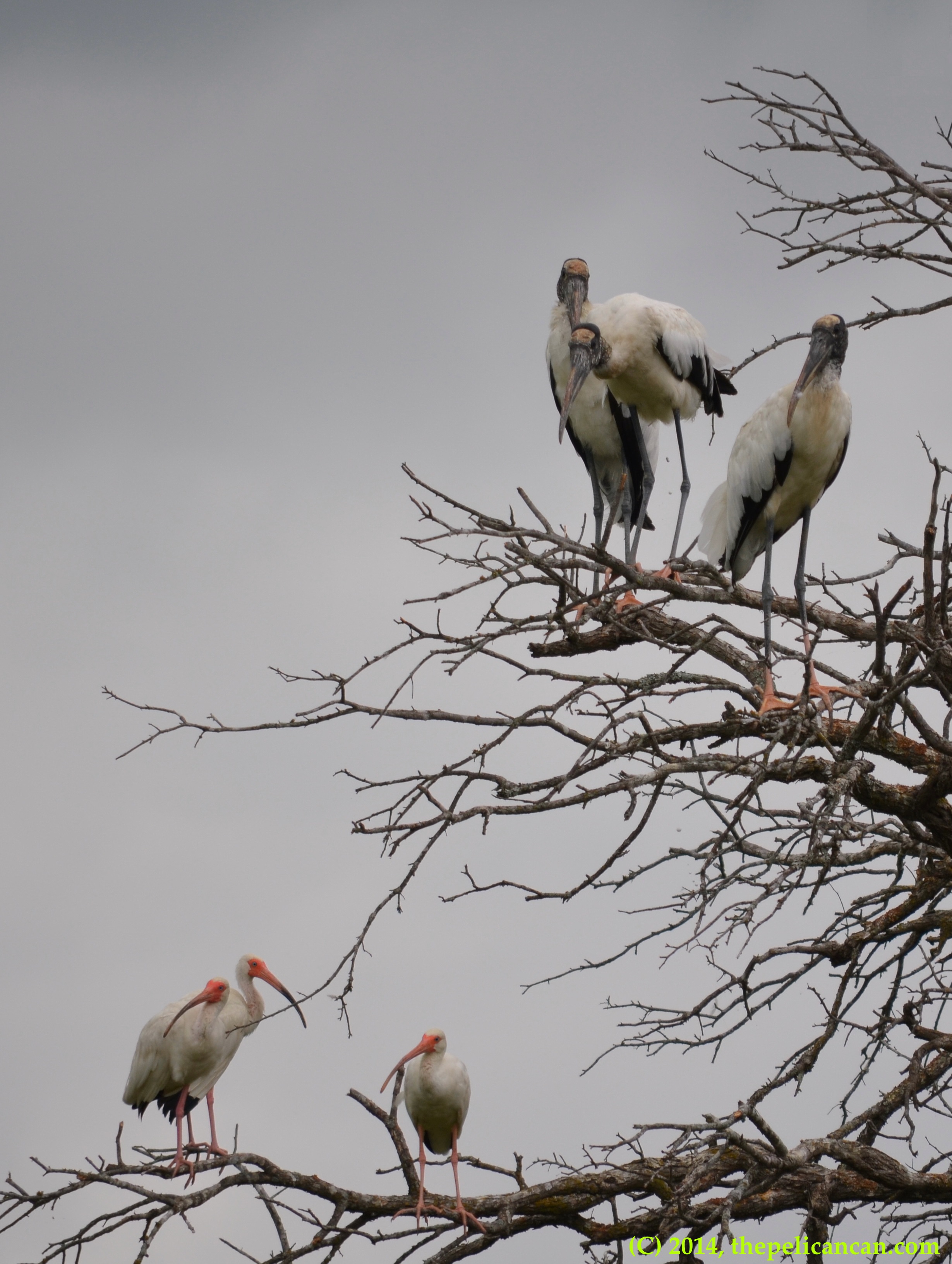
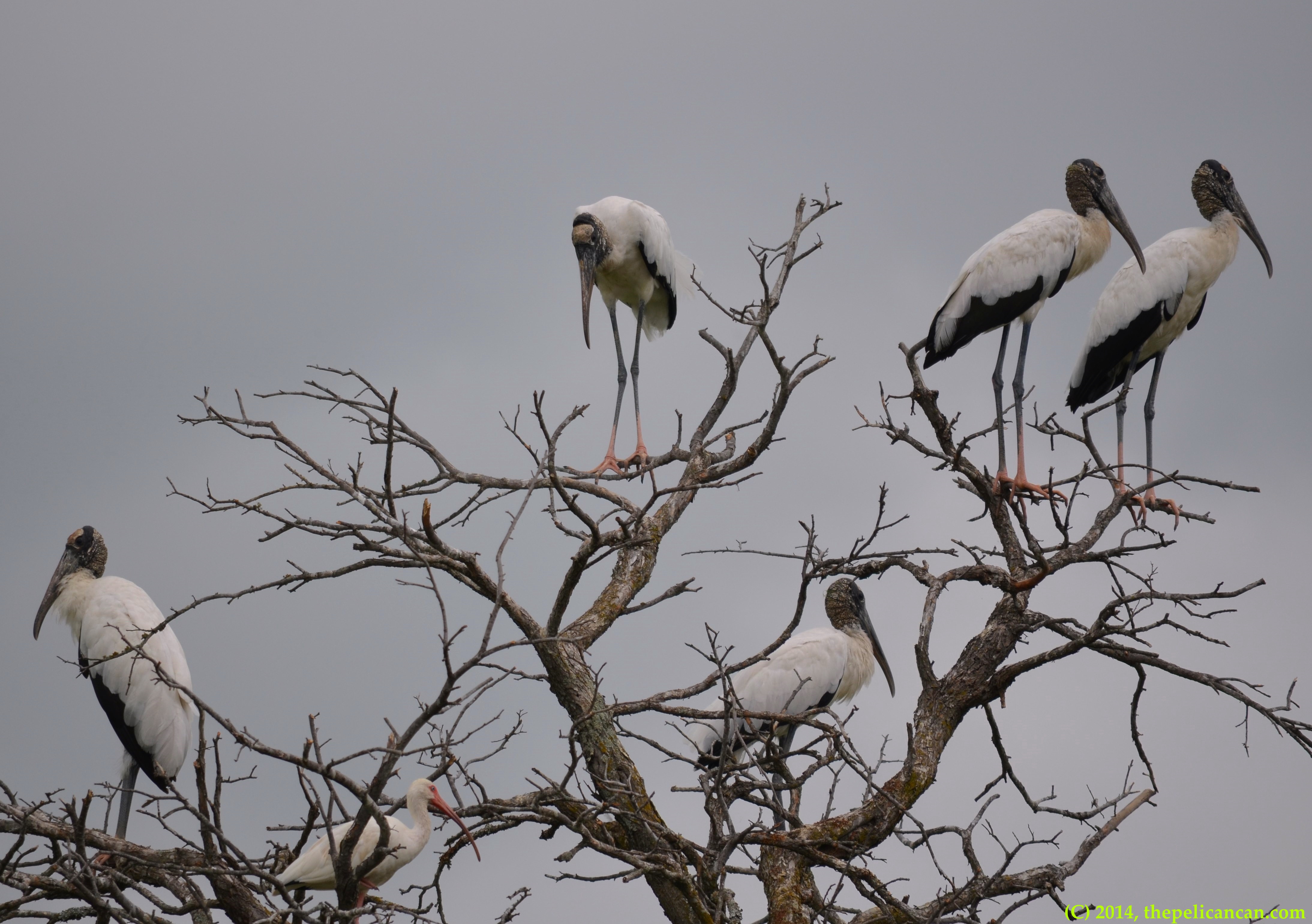
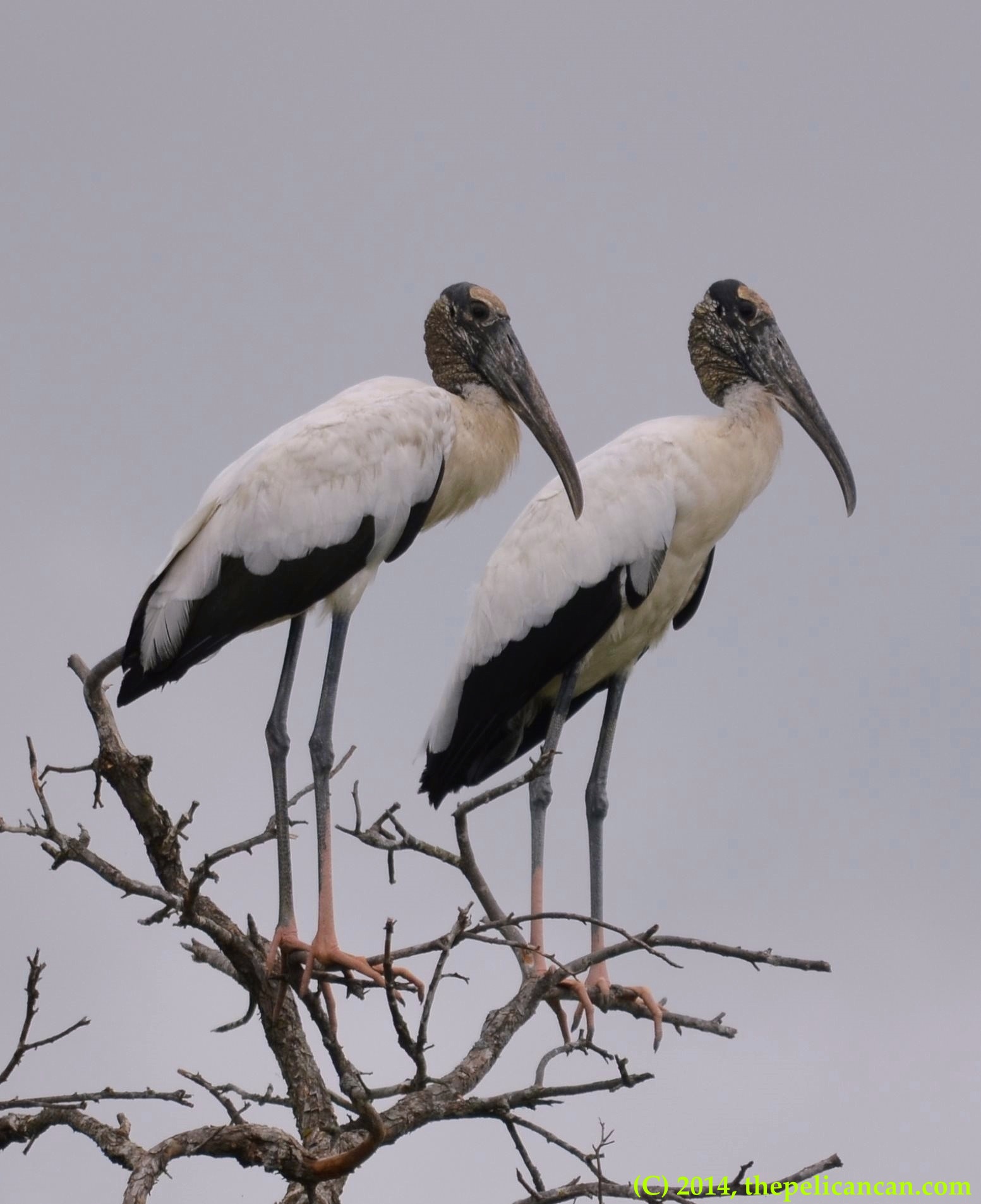
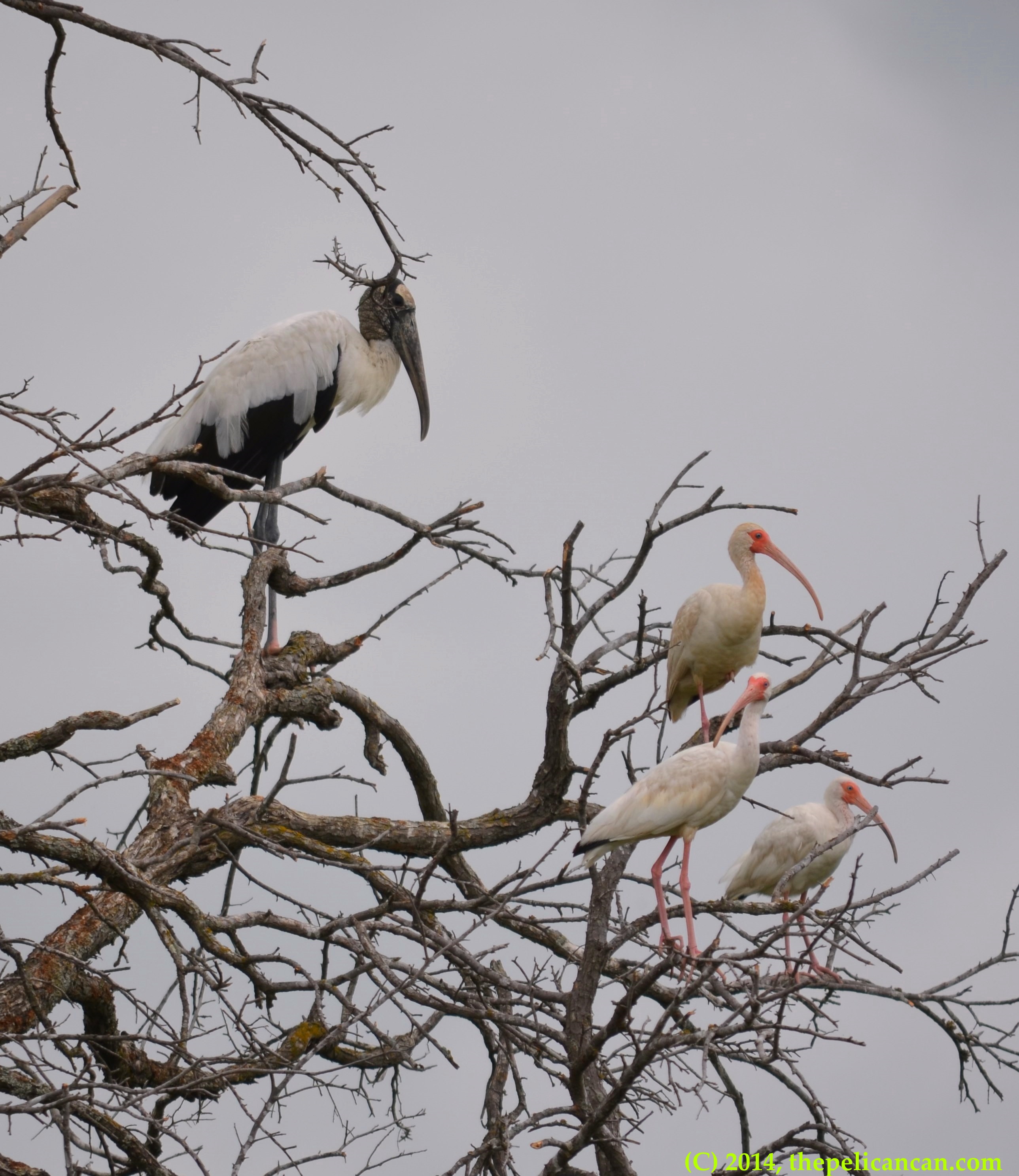
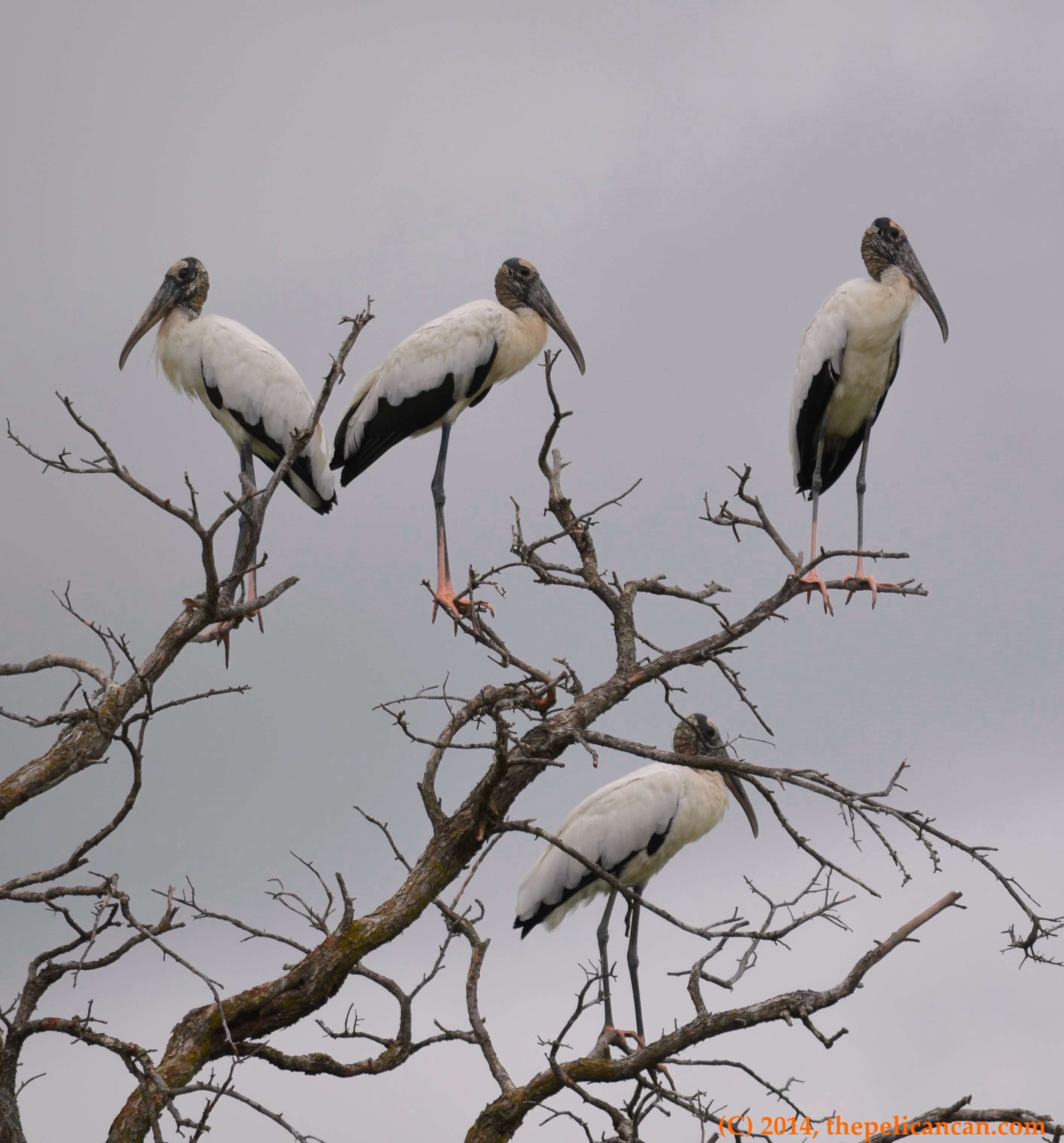
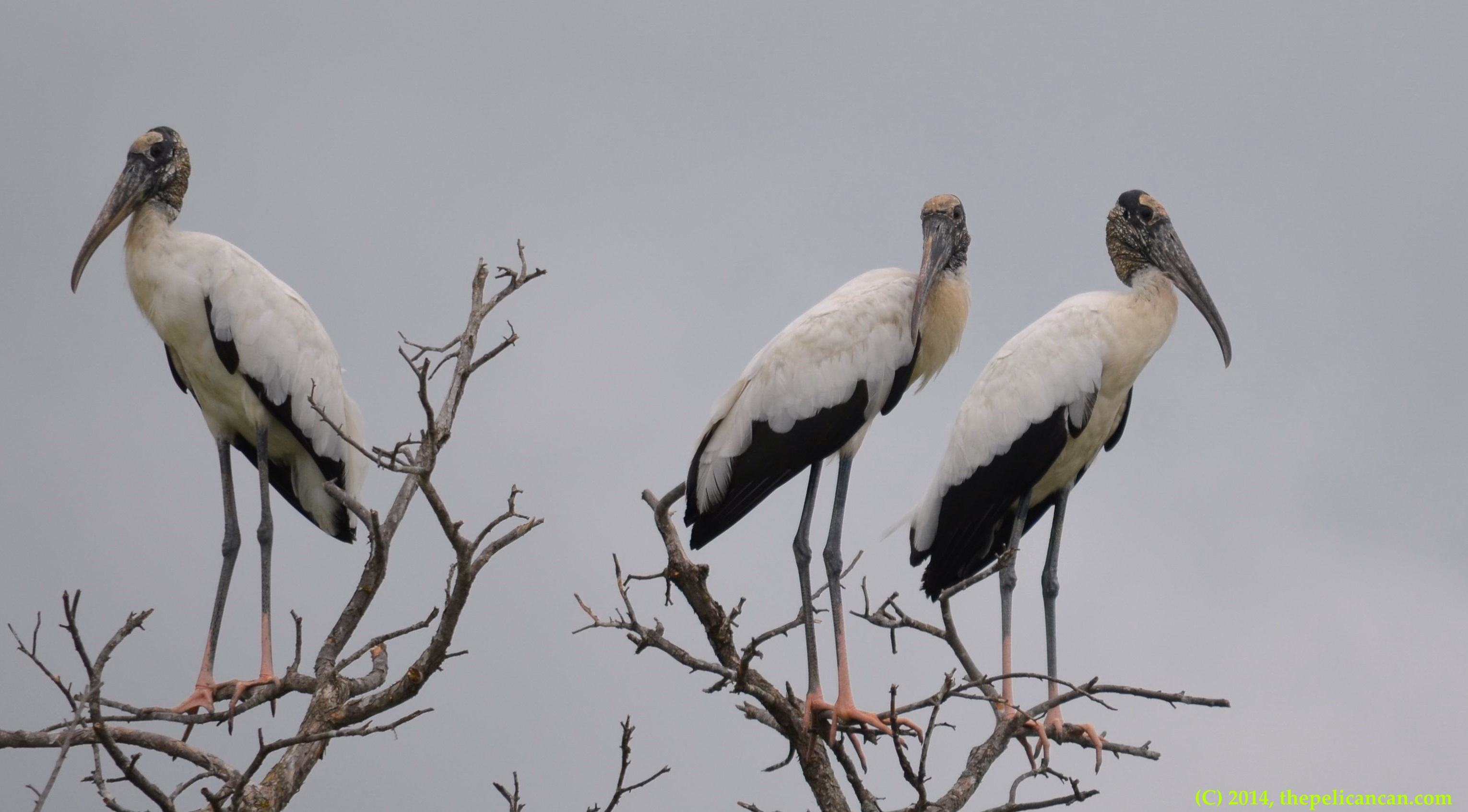
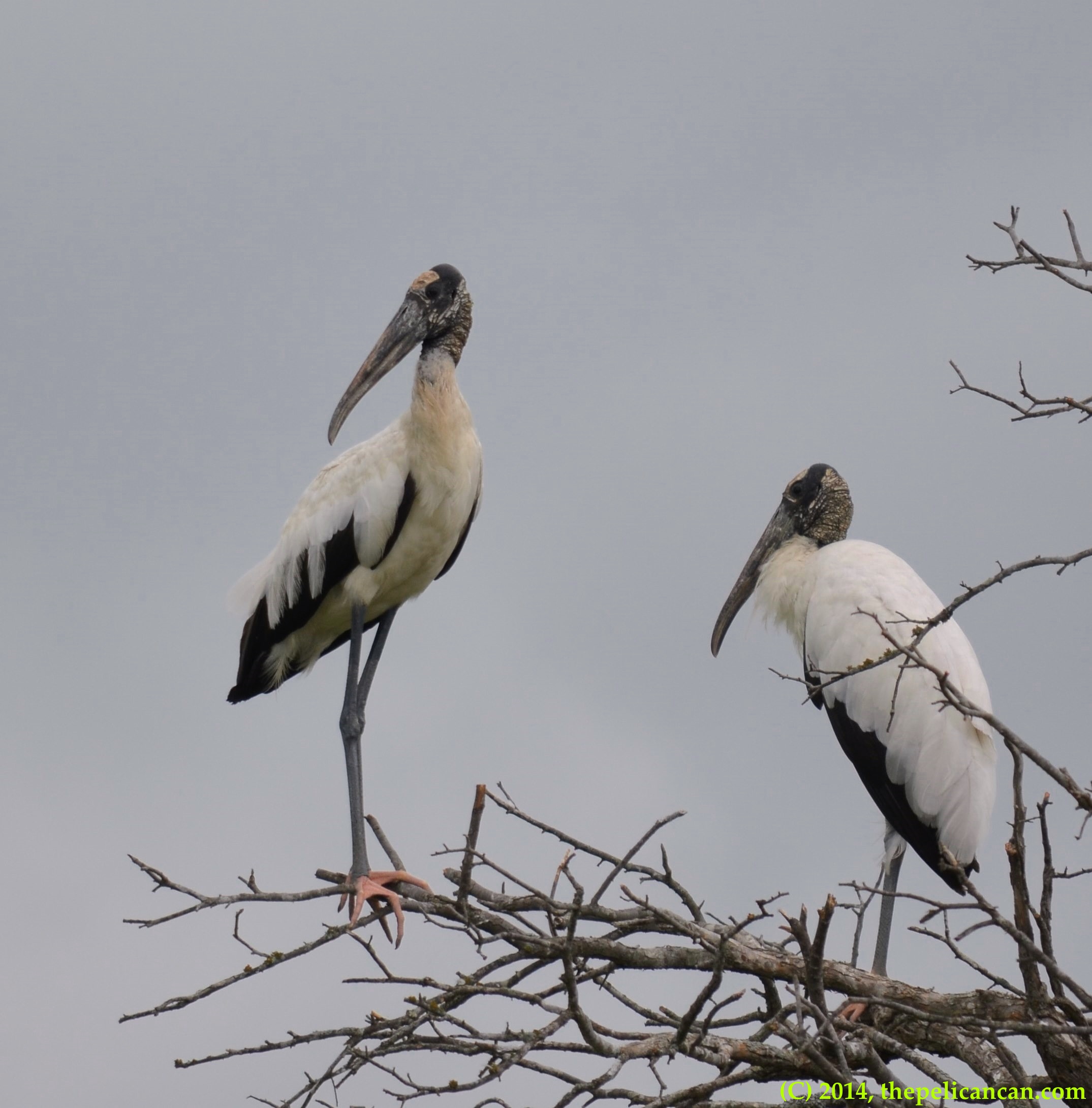
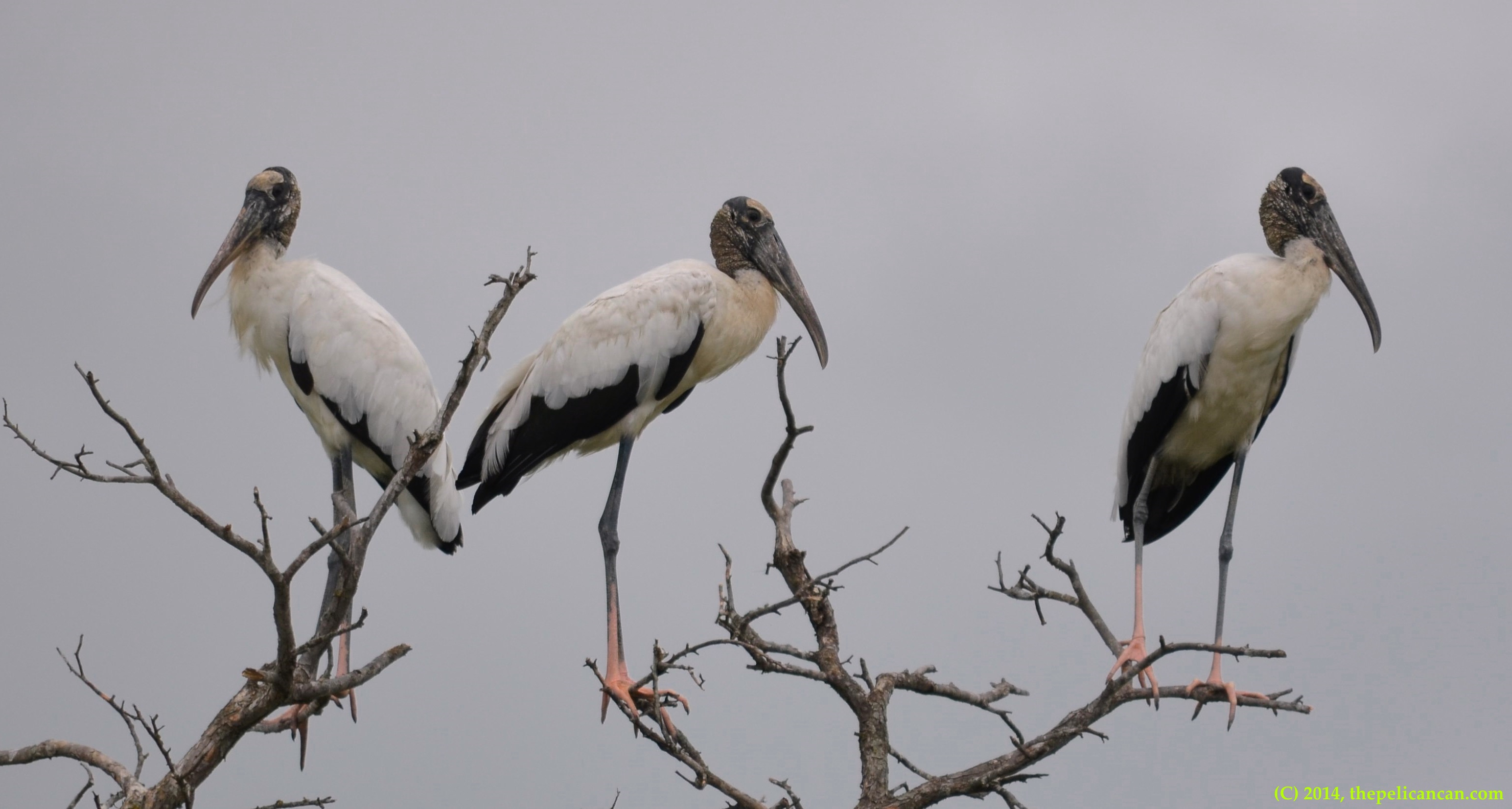
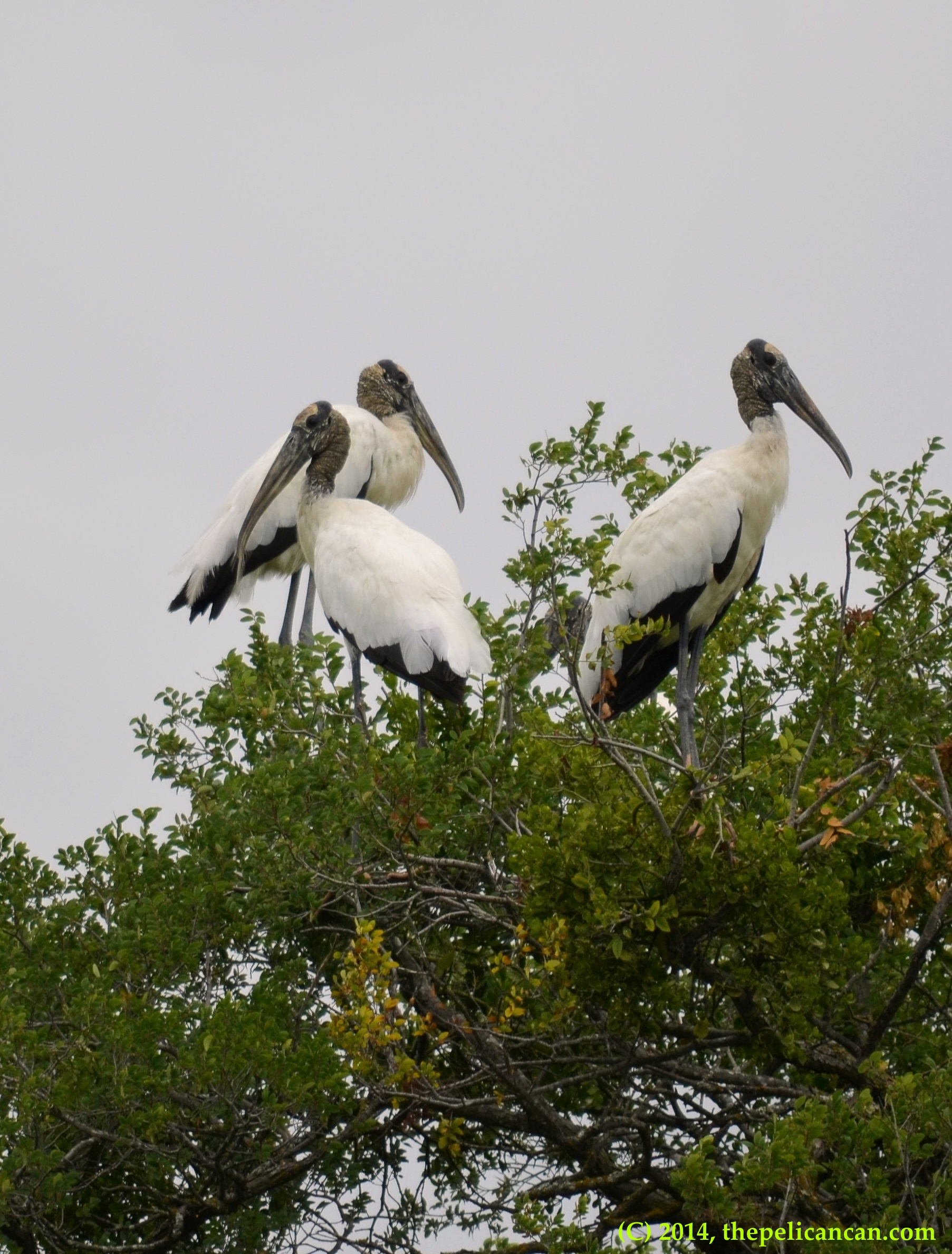
A large number of wood storks were roosting in trees near the rookery. They are such weird-looking birds. I remember how I described them to Q before he saw one in real life: it’s got the head of a black vulture, the beak of an ibis, and the body of a pelican.

Wood storks (Mycteria americana) and American white ibises (Eudocimus albus) perch in a tree at Richland Creek WMA in Fairfield, Texas

On the first day of Christmas, my true love gave to me: some wood storks in a dead tree.

Wood storks (Mycteria americana) and American white ibises (Eudocimus albus) perch in a tree at Richland Creek WMA in Fairfield, Texas

Hey, ibises! Lookin’ good! How about we all go for a nice flight around the swamp?

Wood storks (Mycteria americana) and an American white ibis (Eudocimus albus) perch in a tree at Richland Creek WMA in Fairfield, Texas

Despite Elena’s overwhelming desire to be a ballerina, she could never master first position.

Wood storks (Mycteria americana) perch in a tree at Richland Creek WMA in Fairfield, Texas

Juvenile male shovelers think that they are badasses? We will disabuse them of that notion!

Wood storks (Mycteria americana) and American white ibises (Eudocimus albus) perch in a tree at Richland Creek WMA in Fairfield, Texas

Ewww, is that wood stork STILL creeping on us? Let’s go find another tree.

Wood storks (Mycteria americana) perch in a tree at Richland Creek WMA in Fairfield, Texas

Wood storks (Mycteria americana) perch in a tree at Richland Creek WMA in Fairfield, Texas

Wood storks (Mycteria americana) perch in a tree at Richland Creek WMA in Fairfield, Texas

Wood storks (Mycteria americana) perch in a tree at Richland Creek WMA in Fairfield, Texas

Wood storks (Mycteria americana) perch in a tree at Richland Creek WMA in Fairfield, Texas

Wood storks (Mycteria americana) perch in a tree at Richland Creek WMA in Fairfield, Texas

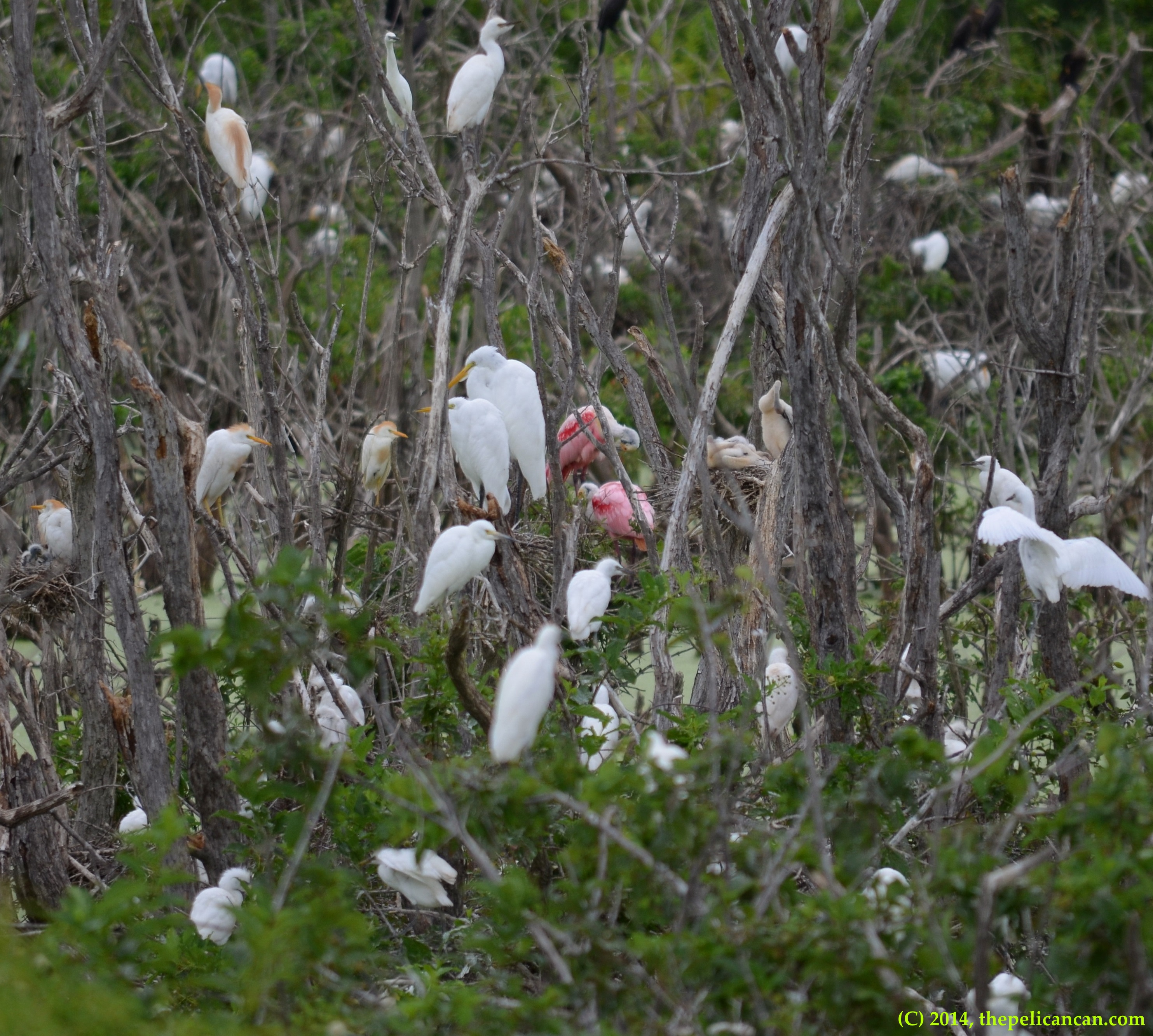
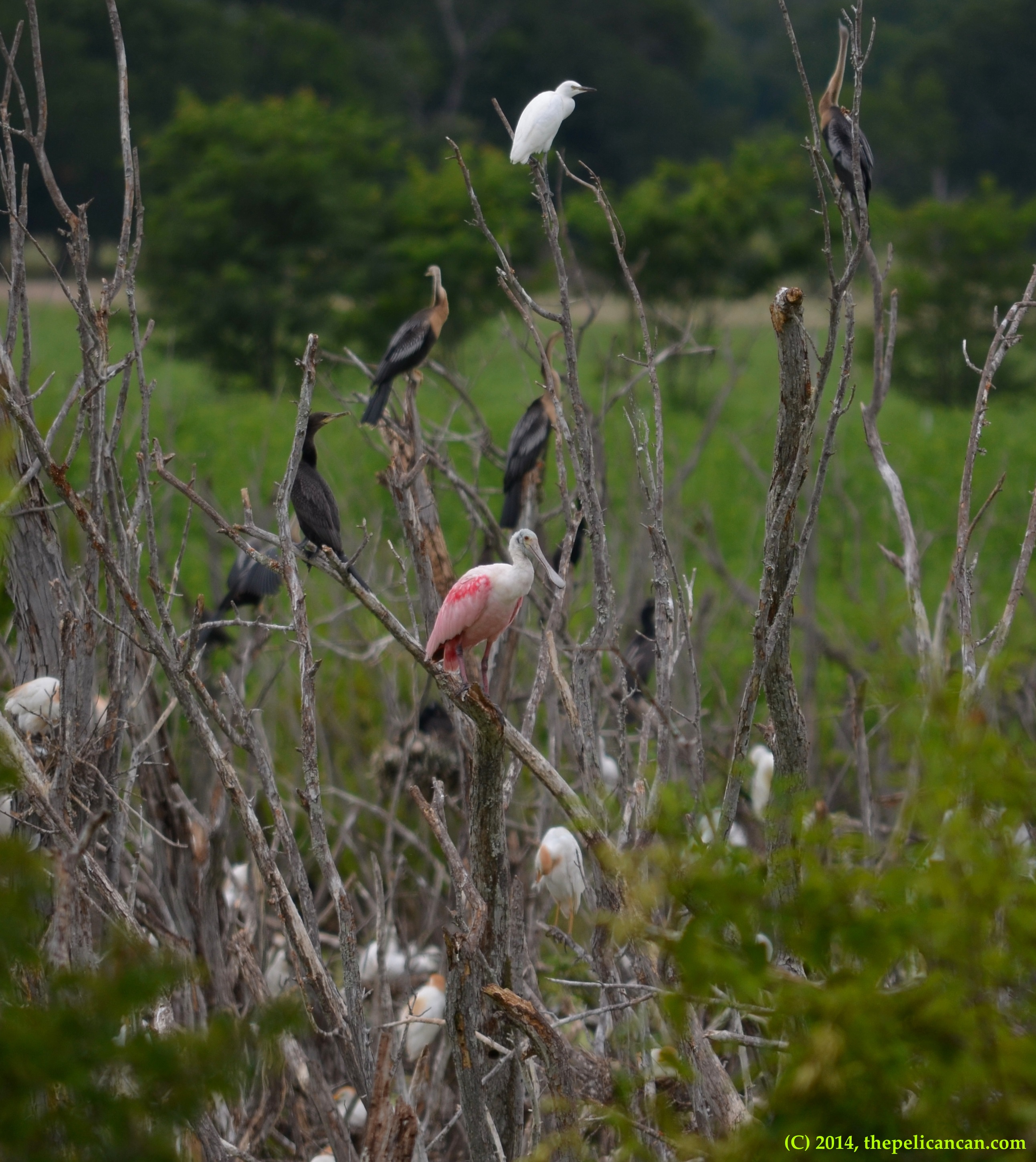
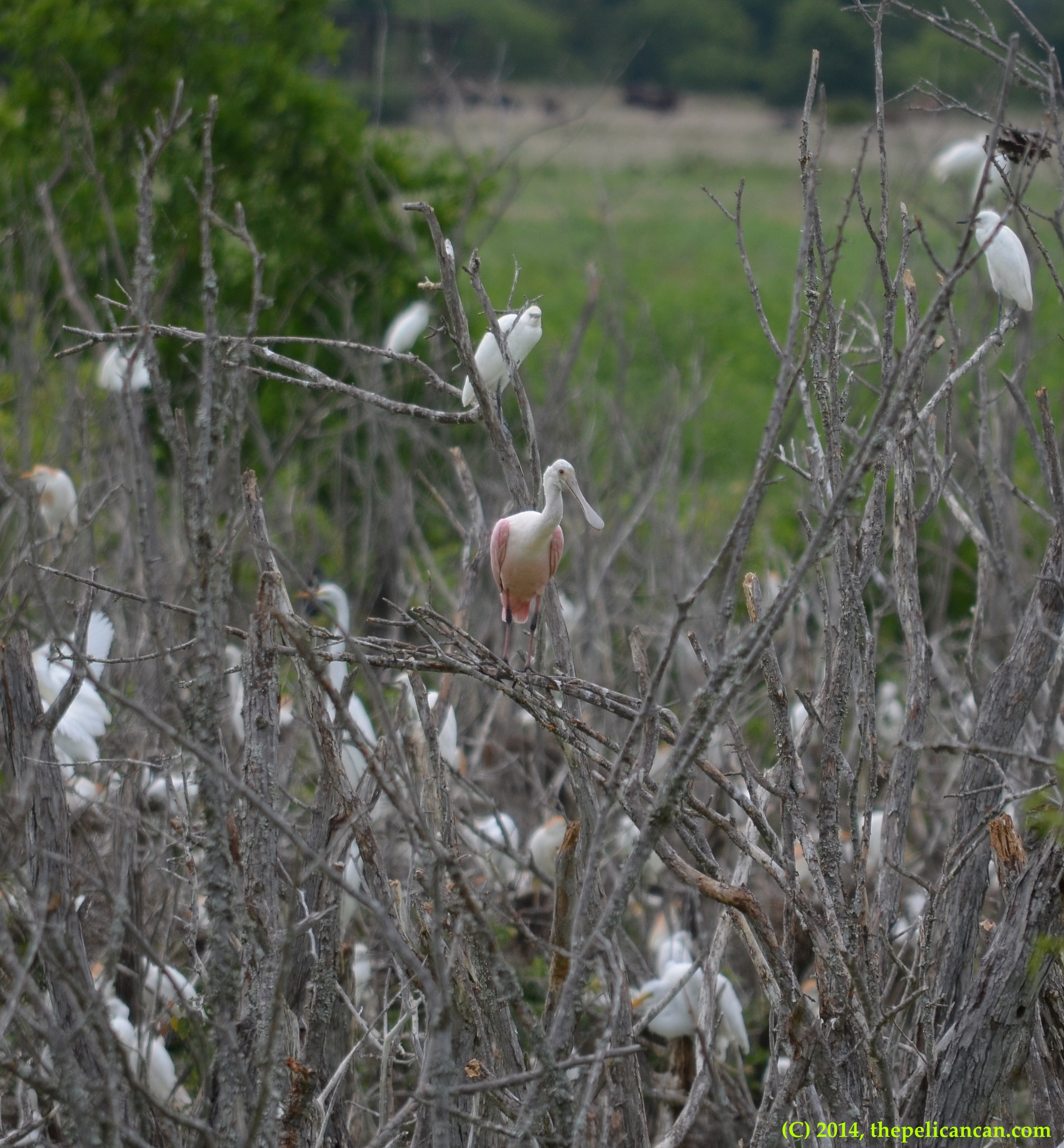
The rookery was on private land that abutted the WMA’s land. Cormorants, anhingas, and all kind of egrets nested there. Although we didn’t think they nested successfully, there were also a few roseate spoonbills!

Roseate spoonbills (Platalea ajaja) perch in a tree at Richland Creek WMA in Fairfield, Texas

Roseate spoonbill (Platalea ajaja) perches in a tree at Richland Creek WMA in Fairfield, Texas

Roseate spoonbill (Platalea ajaja) perches in a tree at Richland Creek WMA in Fairfield, Texas

It was Q’s first time to see a roseate spoonbill. I had seen some at Merritt Island, and I had briefly seen one flying in a flock of ibises on our first visit to Richland.

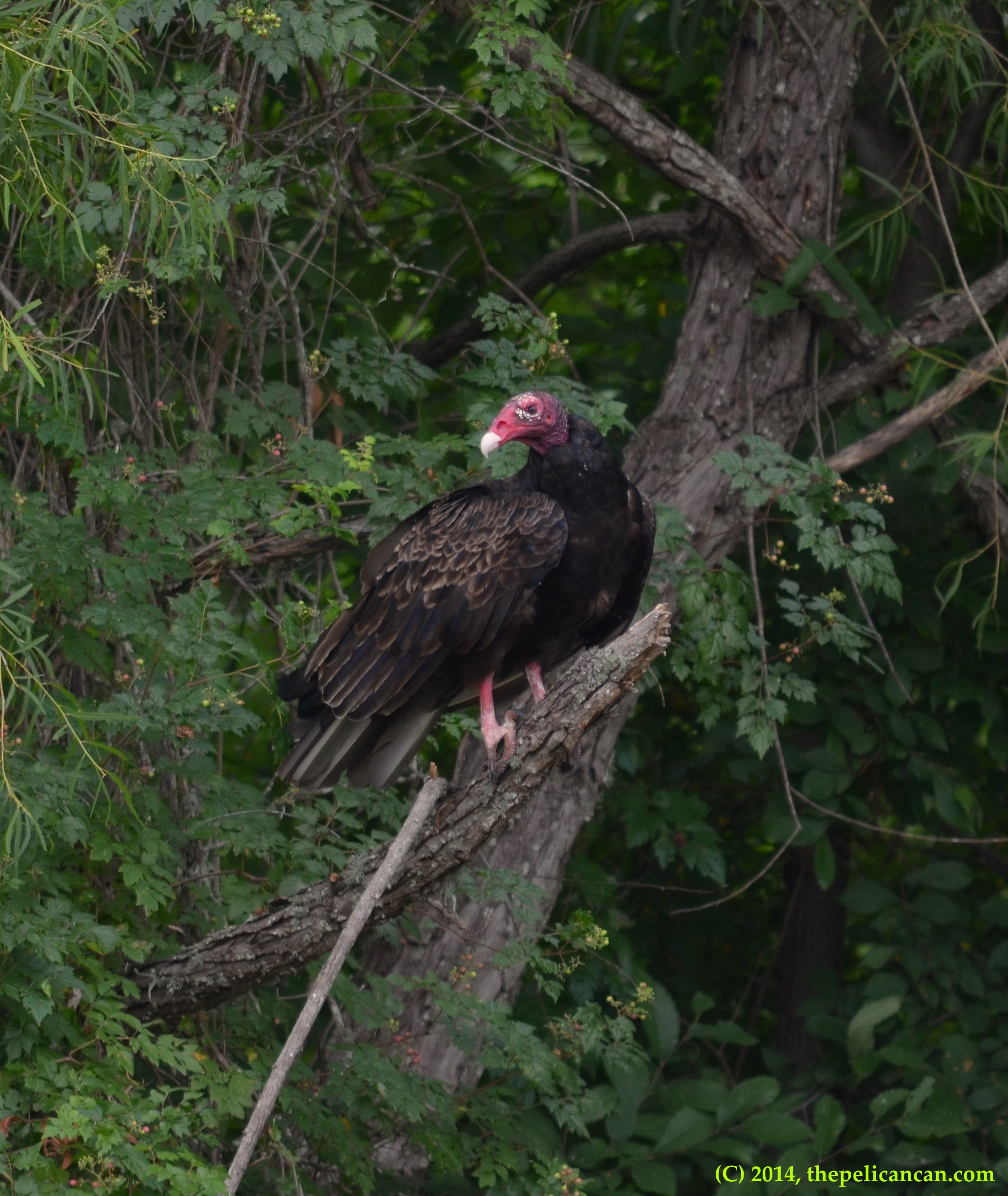
Right as we were about to leave, a turkey vulture landed near the road. She was only there for a couple of minutes before a mockingbird harassed her so intensely that she took off.

Turkey vulture (Cathartes aura) perches on a branch at Richland Creek WMA in Fairfield, Texas

We will have to go back sometime this winter and see who is there.

Flapping and Fun: October 16, Part 4

Although it wasn’t a windy day, a pelican out in the water was having difficulty keeping her balance as she scratched her head. I laughed at her as she kept adjusting her wings to stay balanced.American white pelican (Pelecanus erythrorhynchos) scratching at White Rock Lake in Dallas, TX

American white pelican (Pelecanus erythrorhynchos) scratching at White Rock Lake in Dallas, TX

American white pelican (Pelecanus erythrorhynchos) scratching at White Rock Lake in Dallas, TX

Breathing is overrated, anyway.

The pelican who had been frightened away from the Log of Status was out stomping through the water. She tried to take off but was unable to do so successfully and floundered before getting back on her feet again.

American white pelican flapping her wings while walking at White Rock Lake in Dallas, TX

American white pelican swims at White Rock Lake in Dallas, TX

Fuck this “walking” thing; it takes too damned long. I’m gonna swim!

She eventually made her way closer to shore, stopped, and began to preen.

American white pelican finishes flapping at White Rock Lake in Dallas, TX

But Mom, I’m only going to be out playing for a little while. Do I really have to wear five sweaters?

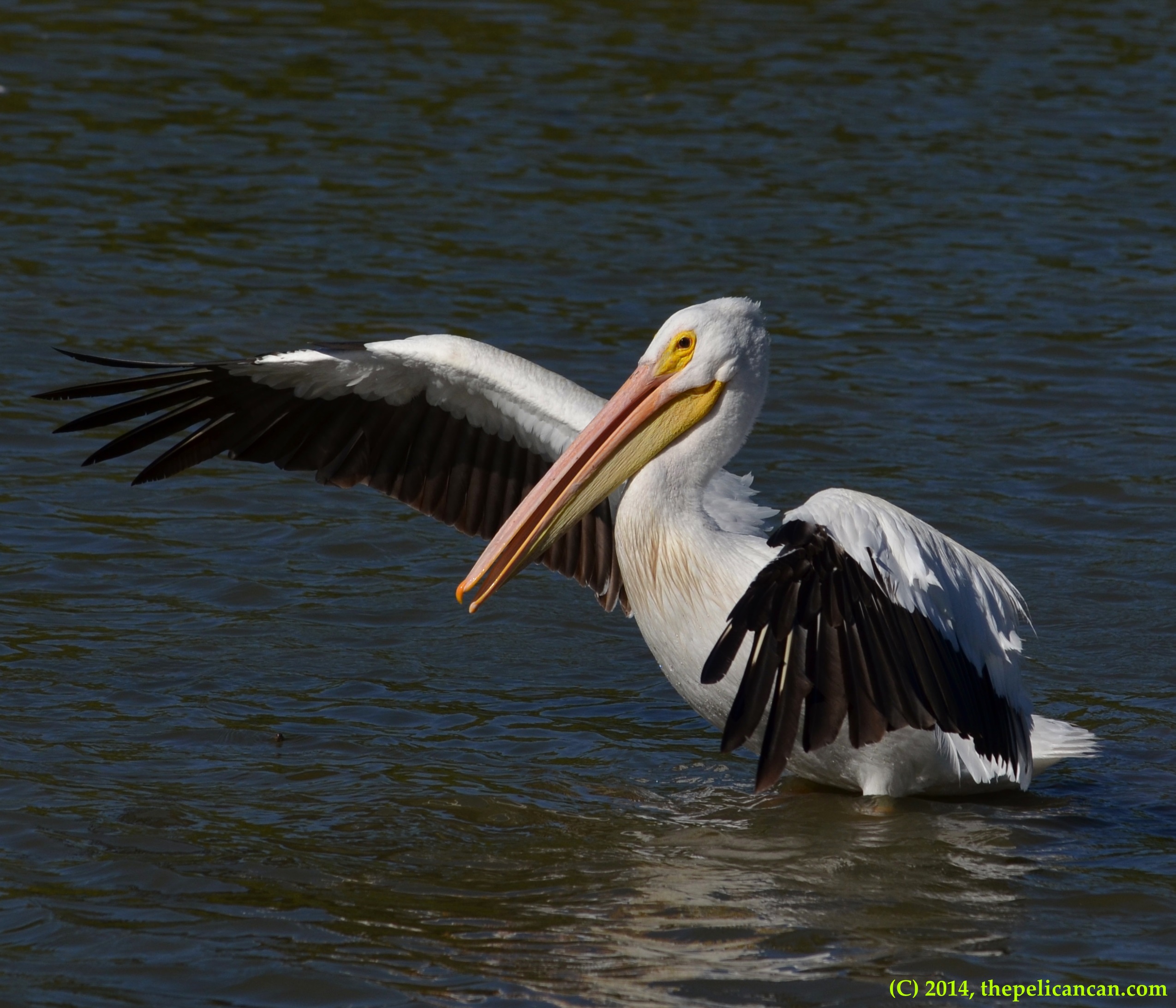
American white pelican (Pelecanus erythrorhynchos) grooms with her wings held out at White Rock Lake in Dallas, TX

I CAN’T PUT MY WINGS DOWN!

The pelican who had successfully challenged her for the Queen of the Log position had just made a startling discovery.

American white pelican pulls out a feather while grooming at White Rock Lake in Dallas, TX

Did this come out of me?

American white pelican (Pelecanus erythrorhynchos) flaps while standing on a log at White Rock Lake in Dallas, TX

Here she resembles a Willie Stark–like politician soaking up the introductory applause before she begins a good ol’ rabble-rousin’ speech.

American white pelican (Pelecanus erythrorhynchos) preens its neck feathers at White Rock Lake in Dallas, TX

And now the Queen will do her imitation of her stuffy, out-of-it, non-populist political opponent.

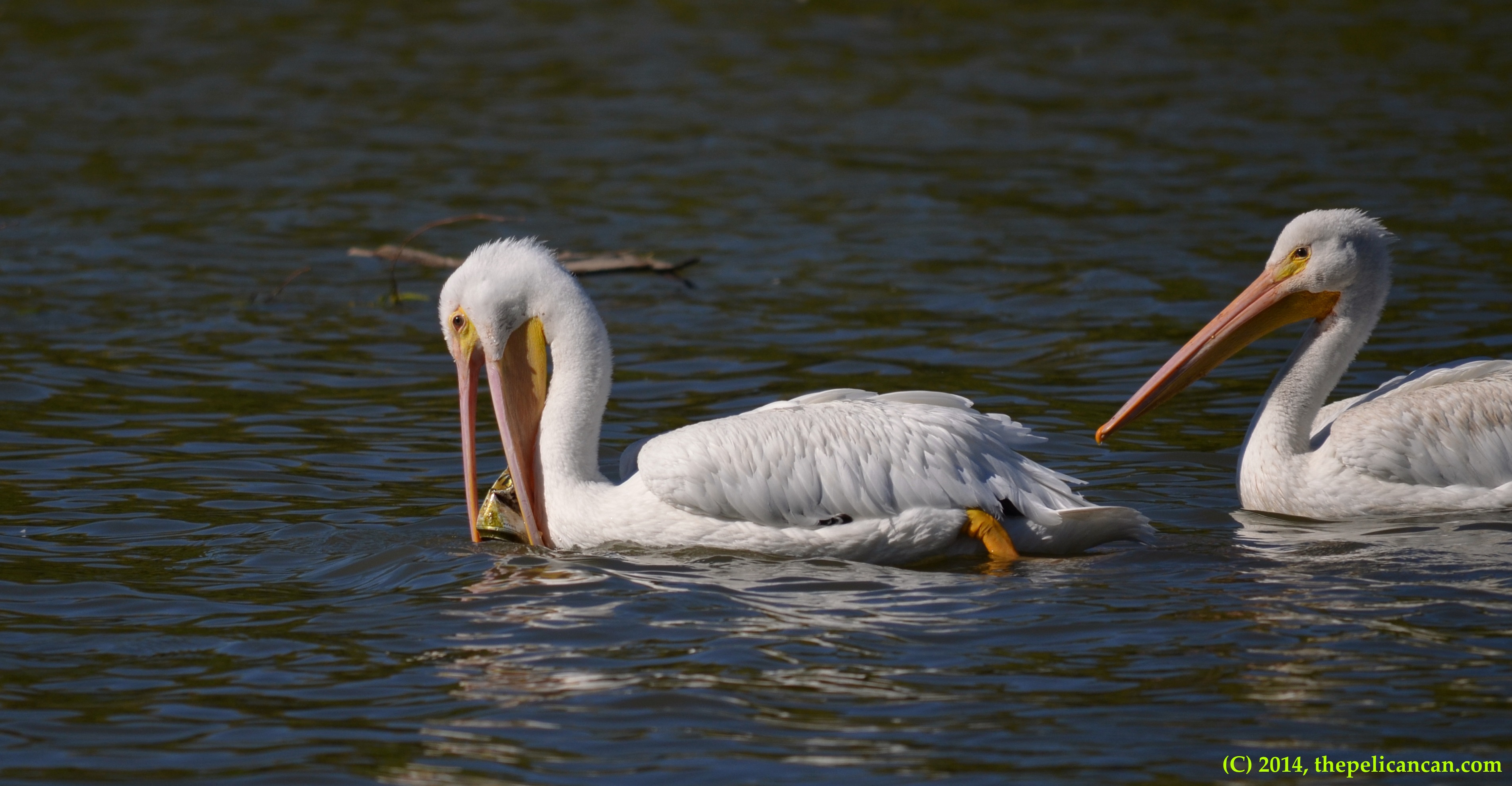
Further out past the Queen of the Log log, pelicans who were lackadaisically hunting found some trash to play with. The younger bird seemed to enjoy swimming with the paper in her pouch, which I’ve seen a lot of birds doing when they are playing with trash out in the water.

Juvenile American white pelican (Pelecanus erythrorhynchos) plays with a crumpled piece of trash at White Rock Lake in Dallas, TX

Who said I would have to eat my words?

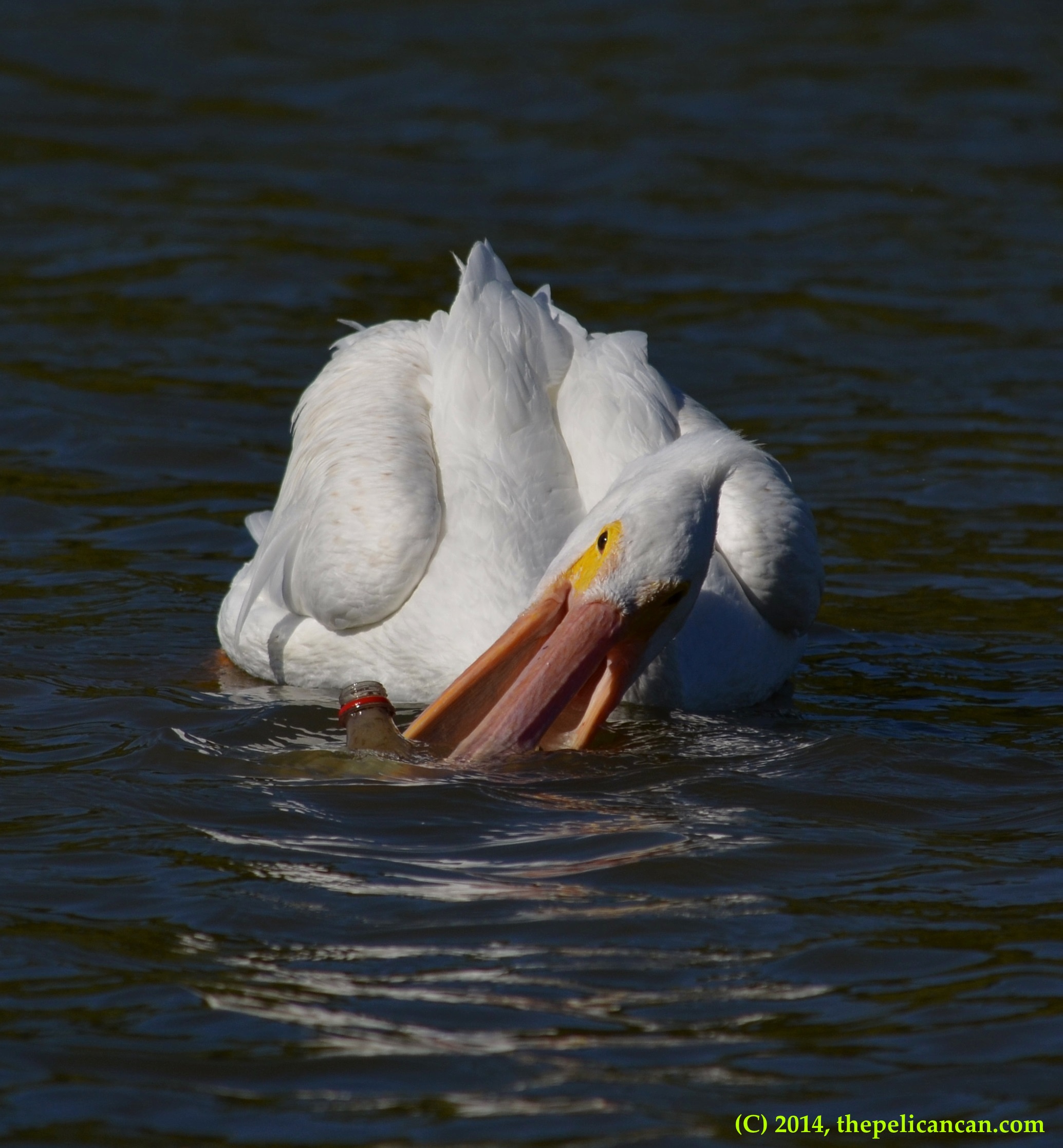
Then there were the soda bottle pelicans.

American white pelican tries to play with a soda bottle at White Rock Lake in Dallas, TX

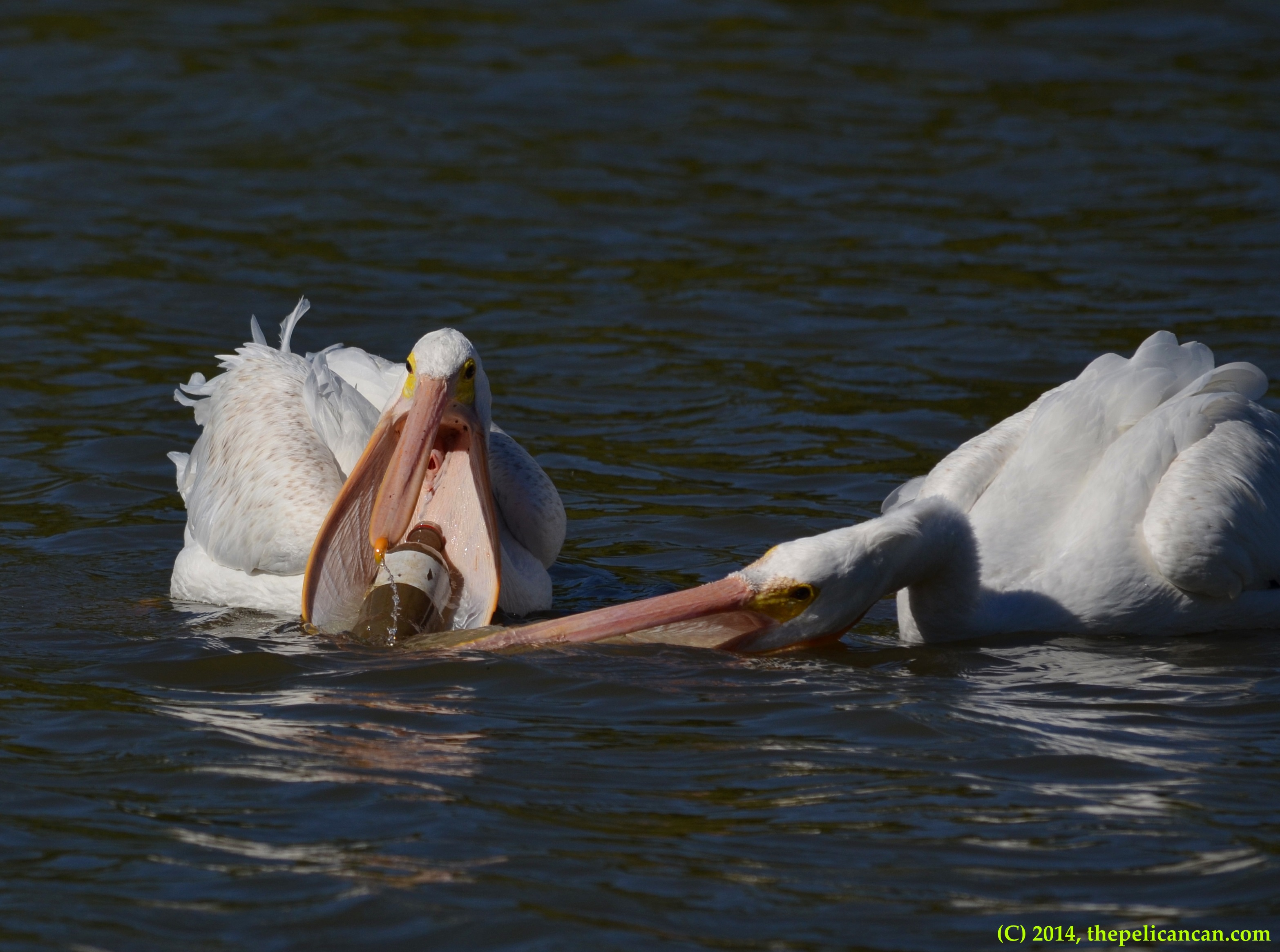
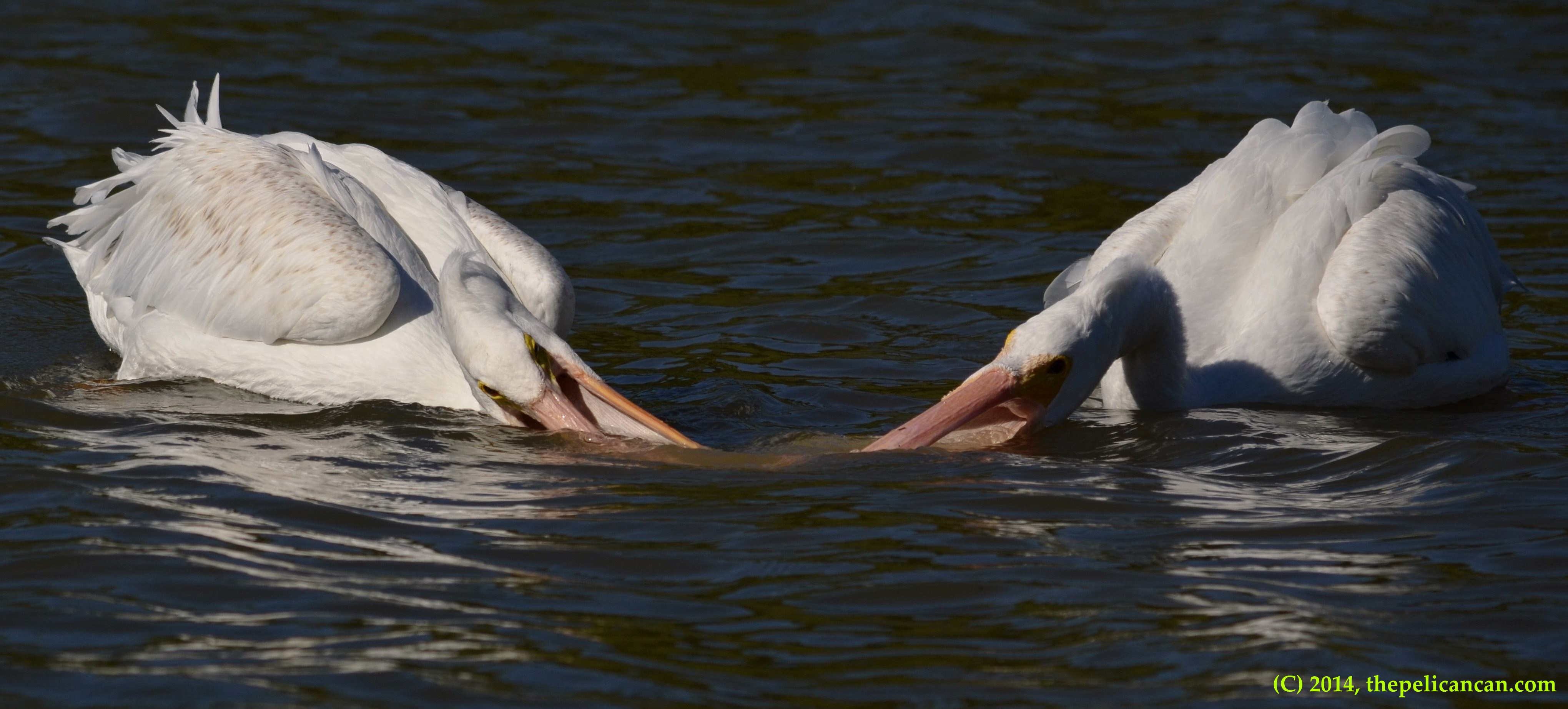
First there was only one, who kept trying over and over and over again to pick up the bottle. Her attempts attracted a nearby pelican to also investigate.

Two American white pelicans (Pelecanus erythrorhynchos) try to play with a soda bottle at White Rock Lake in Dallas, TX

Come play with us, pelicansrulegullsdrool. Forever, and ever, and ever.

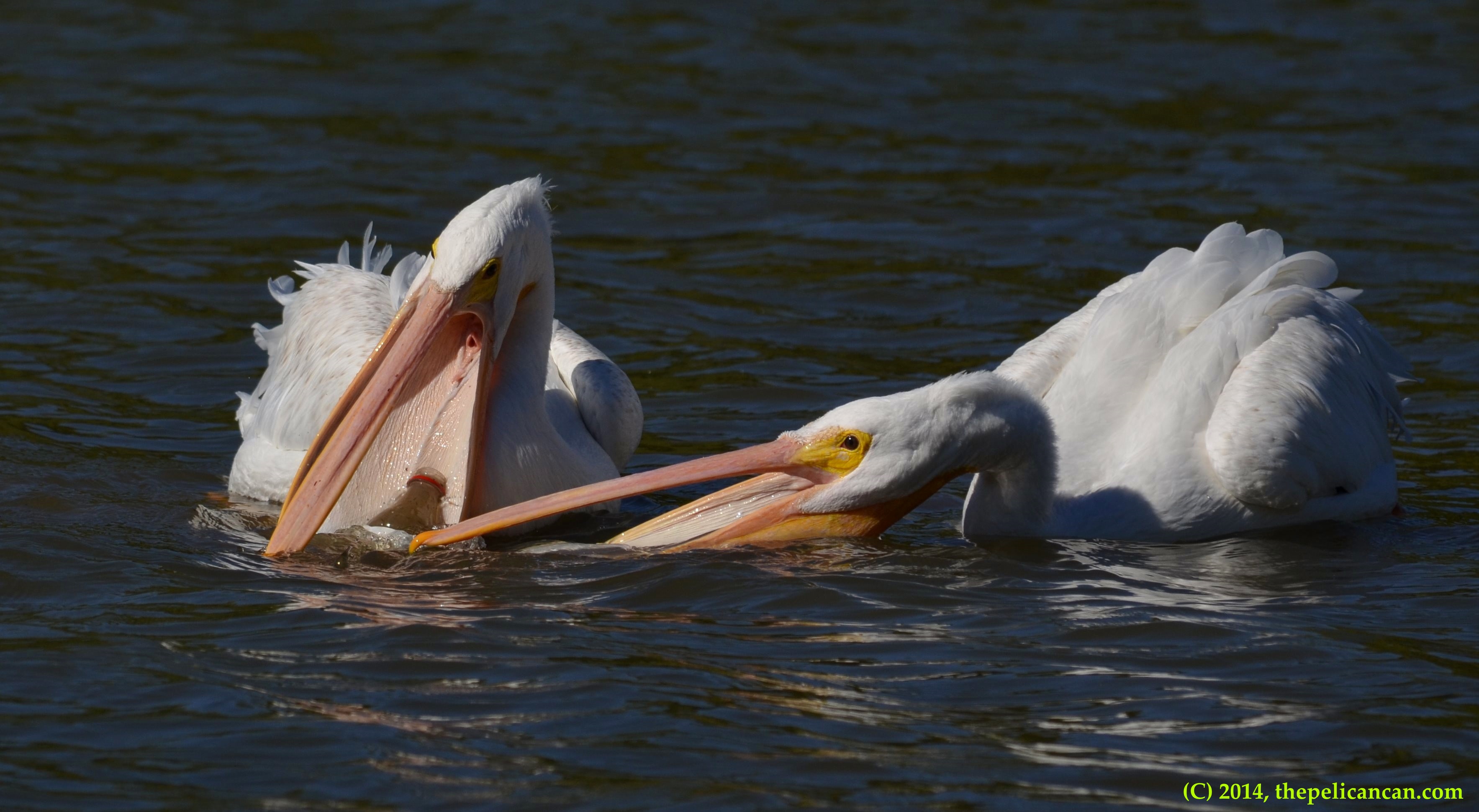
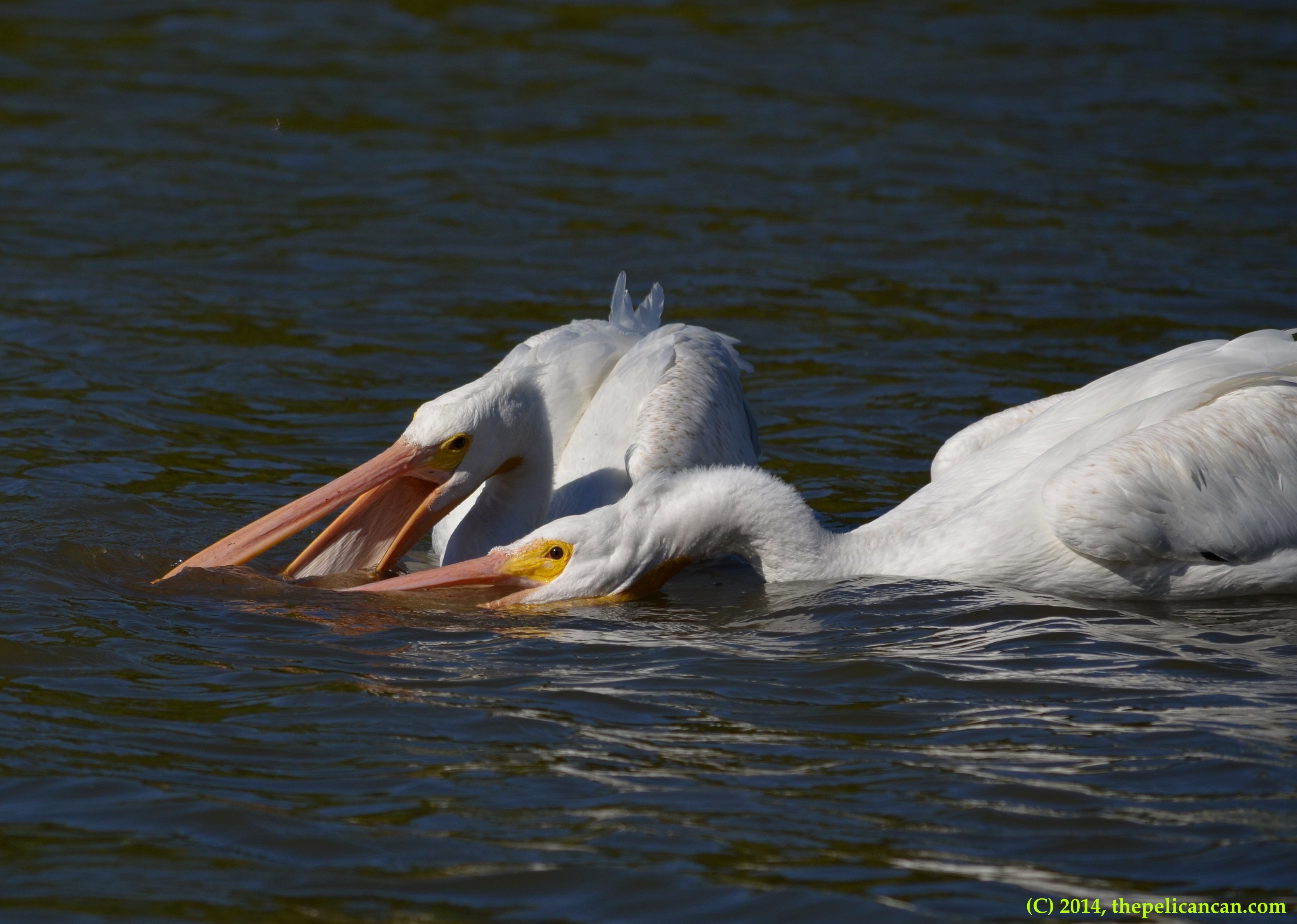
The second pelican managed to get a hold of the bottle by floating it into her pouch.

Two American white pelicans (Pelecanus erythrorhynchos) try to play with a soda bottle at White Rock Lake in Dallas, TX

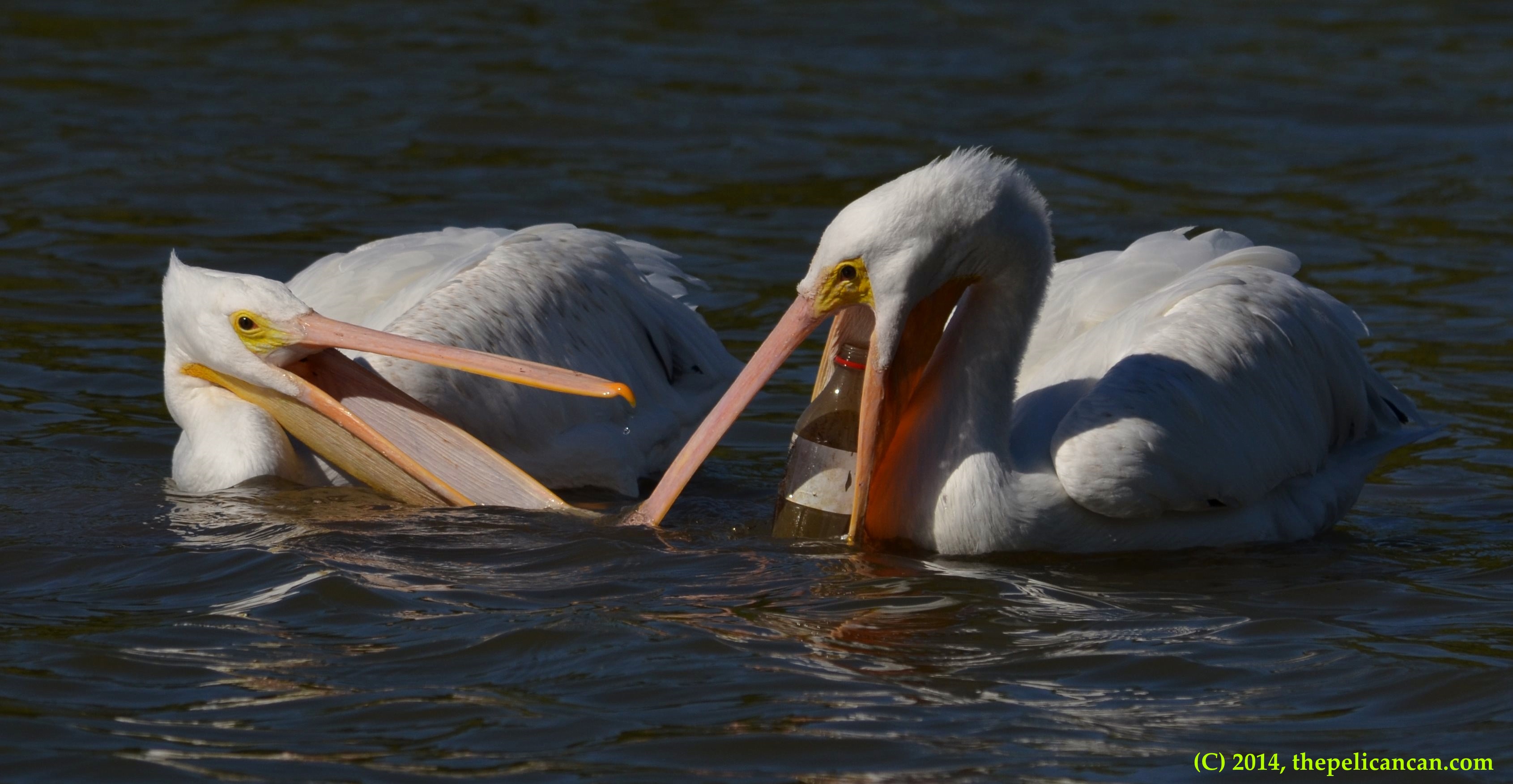
Luckily for the first pelican, the second pelican’s success was short lived.

Two American white pelicans (Pelecanus erythrorhynchos) try to play with a soda bottle at White Rock Lake in Dallas, TX

Two American white pelicans (Pelecanus erythrorhynchos) try to play with a soda bottle at White Rock Lake in Dallas, TX

Maria, I was here first! C’mon, give me a turn!

The first pelican’s luck abruptly changed, and she was able to take possession of the bottle.

Two American white pelicans (Pelecanus erythrorhynchos) try to play with a soda bottle at White Rock Lake in Dallas, TX

How the hell do humans drink out of this thing?!

Two American white pelicans (Pelecanus erythrorhynchos) try to play with a soda bottle at White Rock Lake in Dallas, TX

OH NO IT DISAPPEARED!

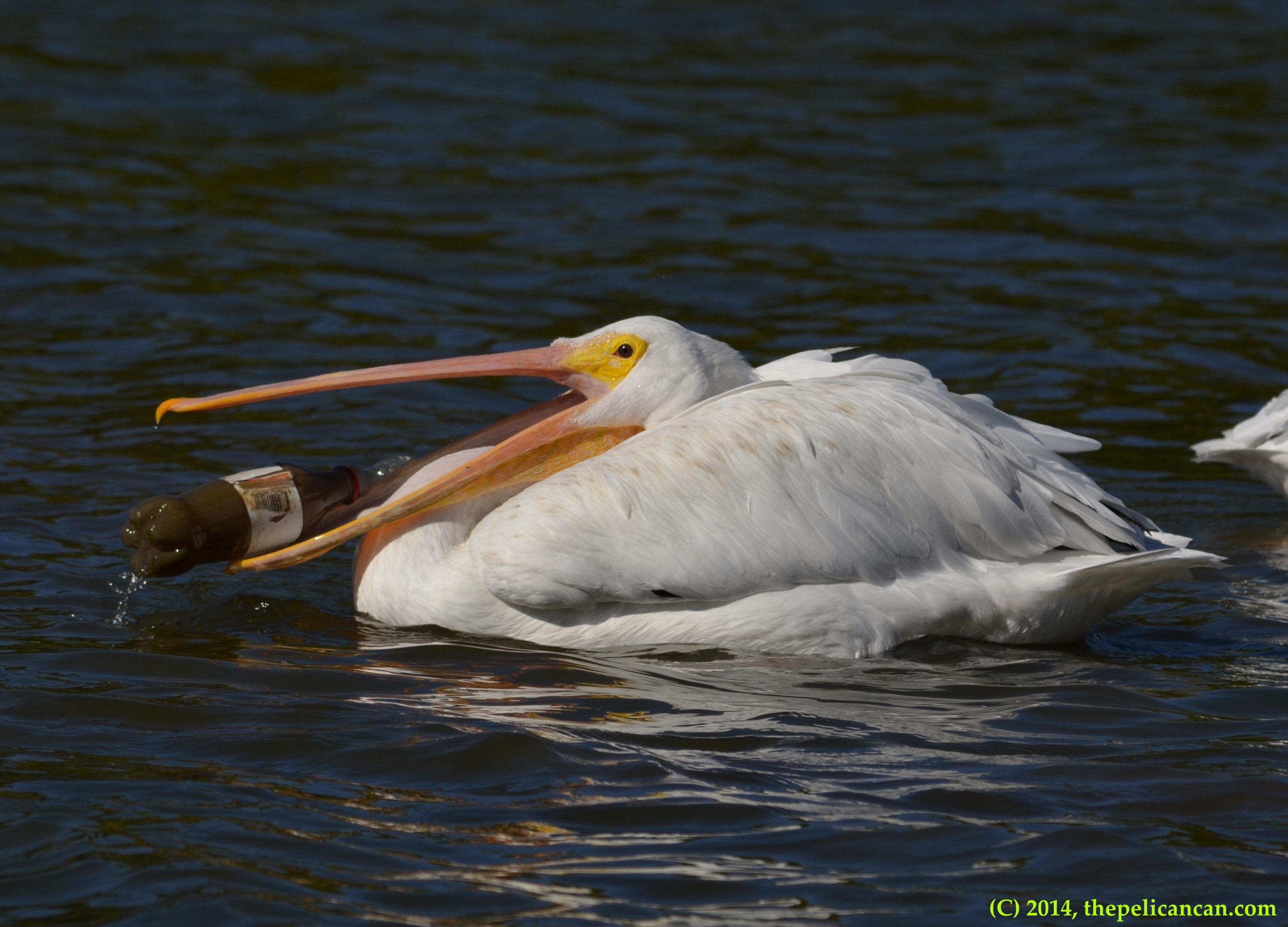
Both pelicans searched for the bottle again, but after several seconds the second pelican got bored and started to swim away. The first pelican was able to retrieve the bottle one last time and even tried to toss it into the air from her pouch, despite its weight.

American white pelican (Pelecanus erythrorhynchos) plays with a soda bottle at White Rock Lake in Dallas, TX

WEEEEEEEEEEE!!!!!!!!!

Another bird tried to play with an old beer can. I think it might have been the same bird who was playing with the paper, but I don’t have any way to verify my belief.

Juvenile American white pelican (Pelecanus erythrorhynchos) plays with a beer can at White Rock Lake in Dallas, TX

What else was going on?

Three American white pelicans (Pelecanus erythrorhynchos) loafing at White Rock Lake in Dallas, TX

Lillian decided that Constance and Taliah’s interpretation of Biff’s final confrontation with his father Willie was too dour and needed a burlesque striptease to liven it up.

Then I saw some action, but surprisingly, it wasn’t on the Queen of the Log log.

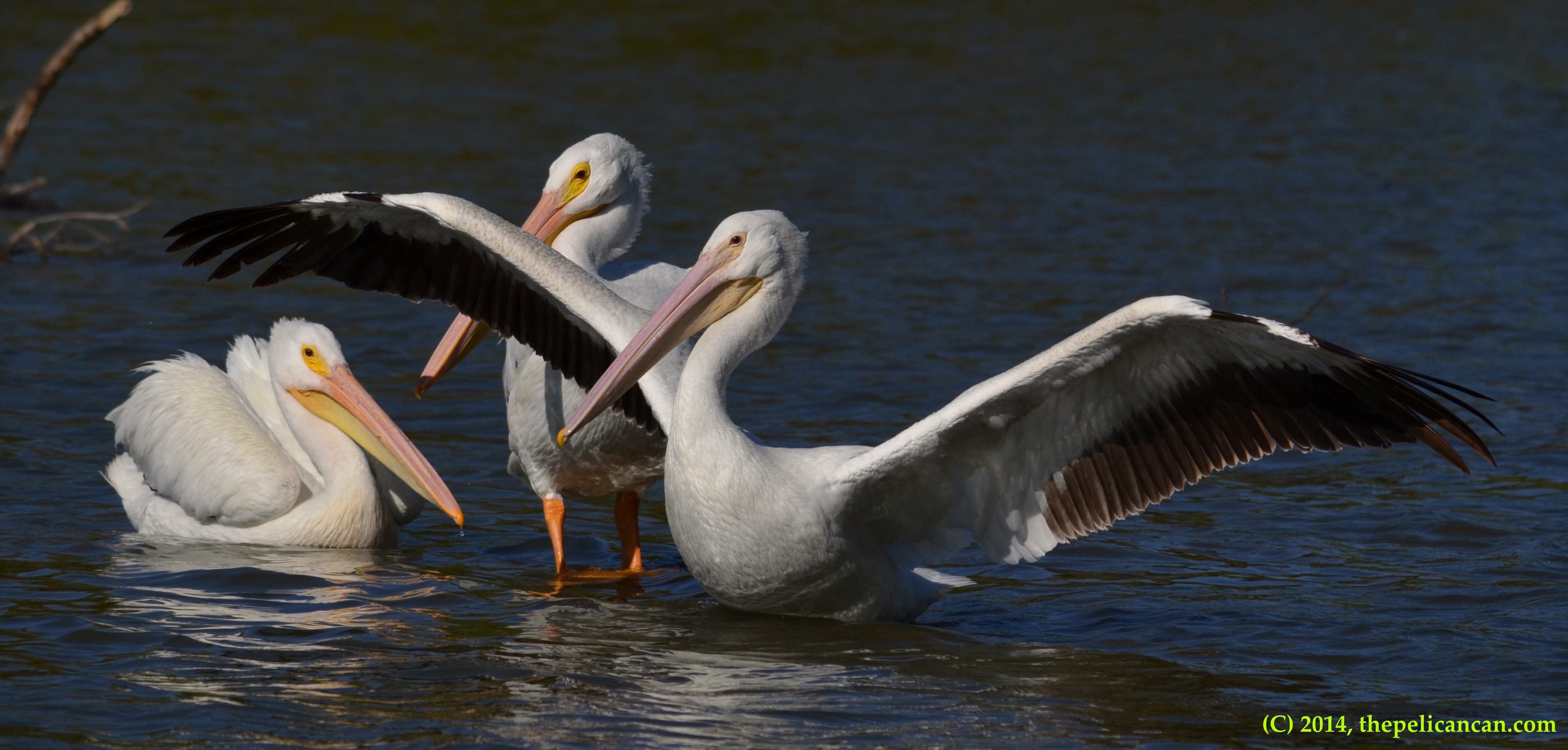
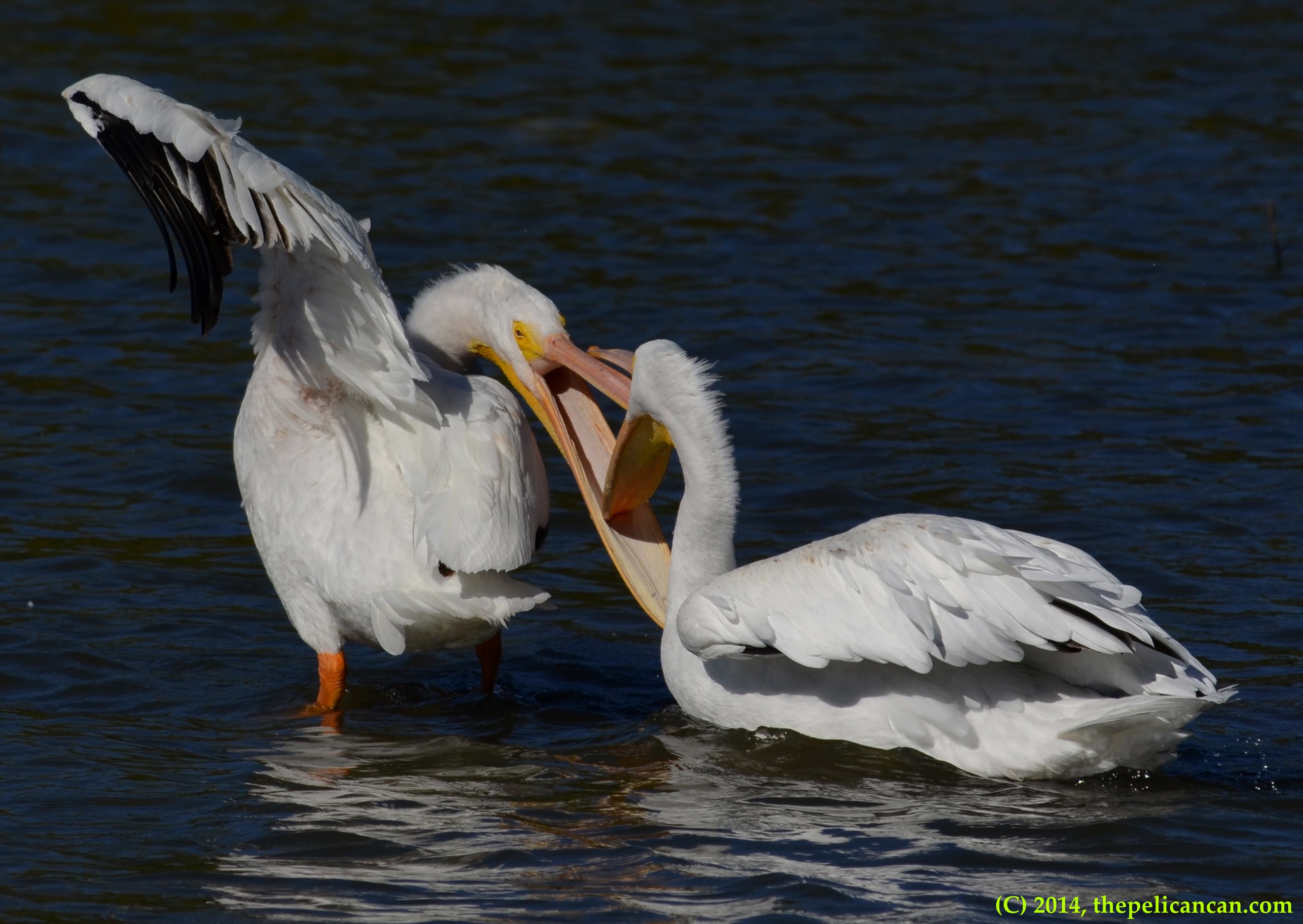
Two American white pelicans (Pelecanus erythrorhynchos) fight for a favored loafing spot at White Rock Lake in Dallas, TX

Two American white pelicans (Pelecanus erythrorhynchos) fight for a favored loafing spot at White Rock Lake in Dallas, TX

Two American white pelicans (Pelecanus erythrorhynchos) squabble over a favored loafing spot at White Rock Lake in Dallas, TX

If there is a pelican equivalent for “looking down one’s nose” at someone, the bird who retained her position is totally embodying it.

The first pelican who had been playing with the soda bottle wandered off and had a good flap.

American white pelican flaps her wings at White Rock Lake in Dallas, TX

Constance, Taliah, can I join your theater group? Watch this: “Double, double, toil and trouble. Fire burn, and cauldron bubble.” Am I in, or am I in?

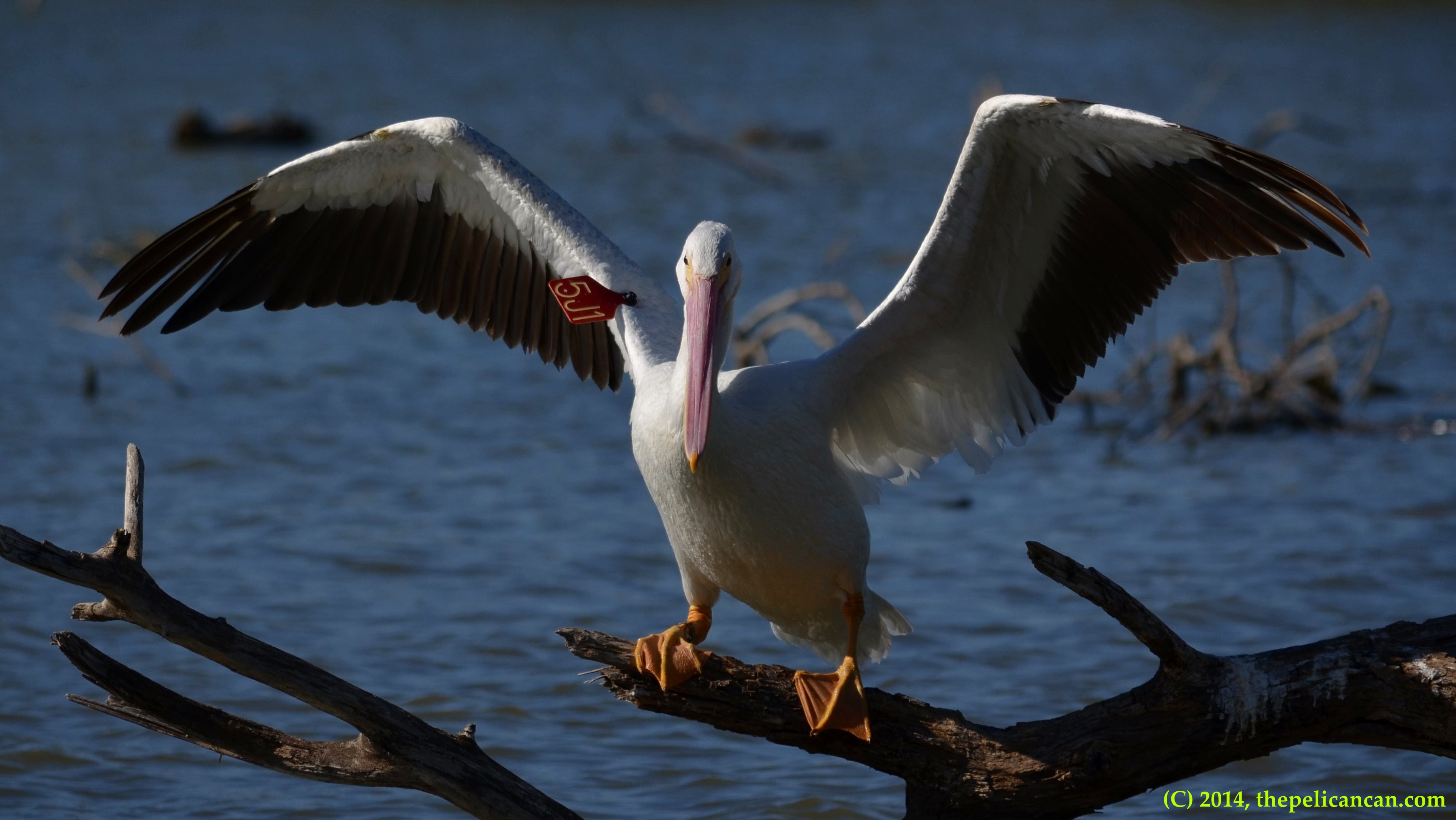
On the 15th I had noticed a new bird with a red wing tag. Based on the color and shape of the tag, I figured that she was from the Minidoka National Wildlife Refuge in Idaho—I had seen a pelican the past year with a tag the same color and shape who turned out to be from there. The problem was that I could only see two characters on the bird’s tag: 5J. There were three characters on the tag of the bird I’d seen the year before. The tag seemed to be tucked under the bird’s wing, and I just couldn’t read if there was another character. I hoped the bird would flap so that maybe the action would let the tag swing freely and I’d be able to read the whole code.

Success!

5J1, an American white pelican (Pelecanus erythrorhynchos) originally from the Minidoka WMR in Idaho, perches on a log at White Rock Lake in Dallas, TX

She grew up in a Minidoka town, had an egg-layin’ Mama, who hunted all around. But she grew up tall, and she grew up white, with those Minidoka birds on a Minidoka night.

5J1 did indeed originate from Minidoka. She was a second-year bird, hatched in 2013.

5J1, an American white pelican (Pelecanus erythrorhynchos) originally from the Minidoka WMR in Idaho, perches on a log at White Rock Lake in Dallas, TX

She flew down here, at an age before 3. She blew the birds away, was more than they’d seen.

At some point in time the Queen of the Log log had been vacated. Although I hadn’t seen the bird leave, I did see when a new bird arrived.

American white pelican (Pelecanus erythrorhynchos) jumps onto a log at White Rock Lake in Dallas, TX

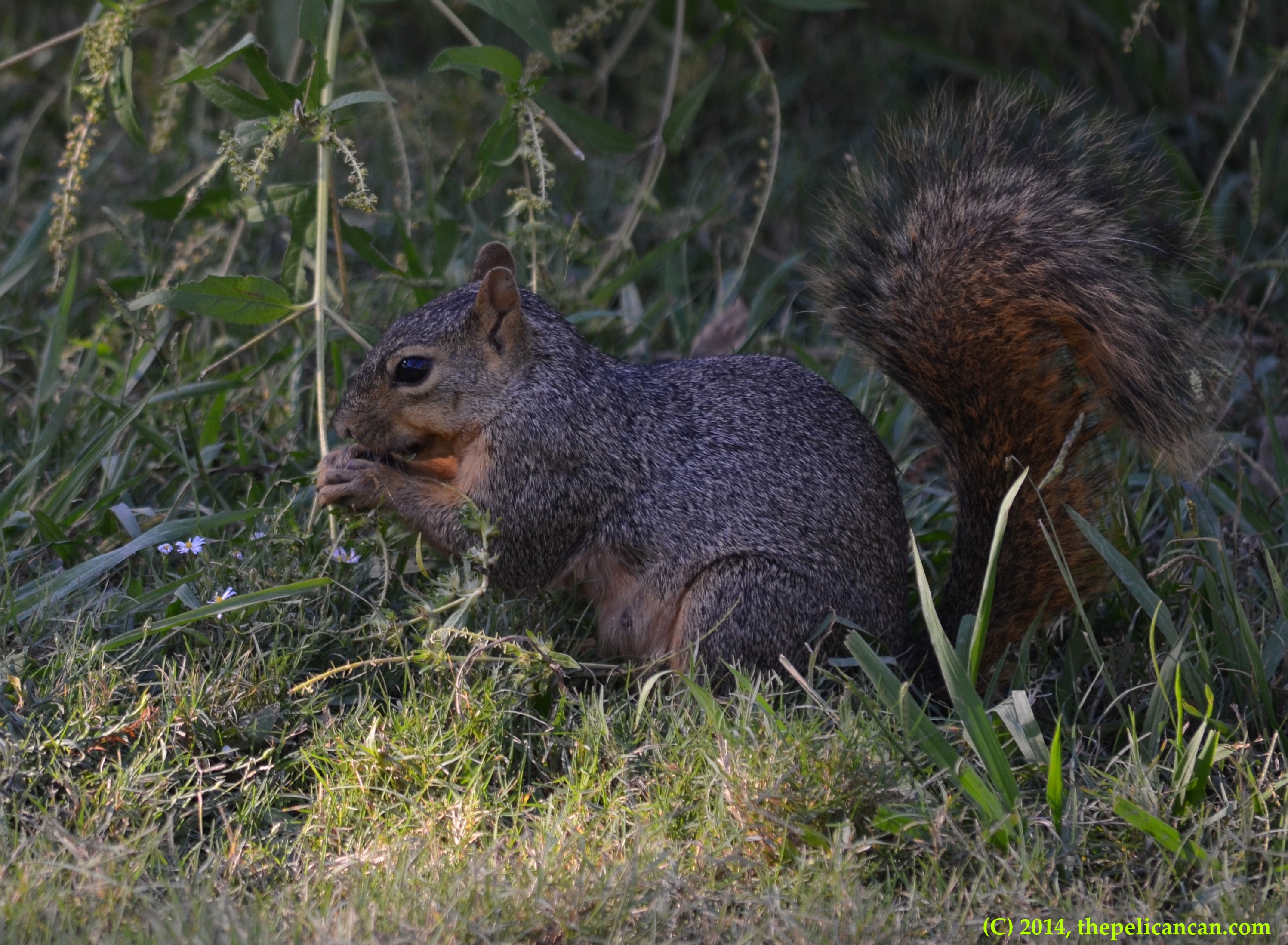
When I left to go home, I noticed a cute little squirrel hanging around near the dock. She would stand up to reach a plant stalk, drag it to the ground, and nibble on whatever seeds or leaves that she liked.

Squirrel nibbling on food at White Rock Lake in Dallas, TX

The next post or two will probably not be about pelicans to give myself and any readers a break, and then I will resume posting about the Migration Madness.

Flapping and Fun: October 16, Part 3

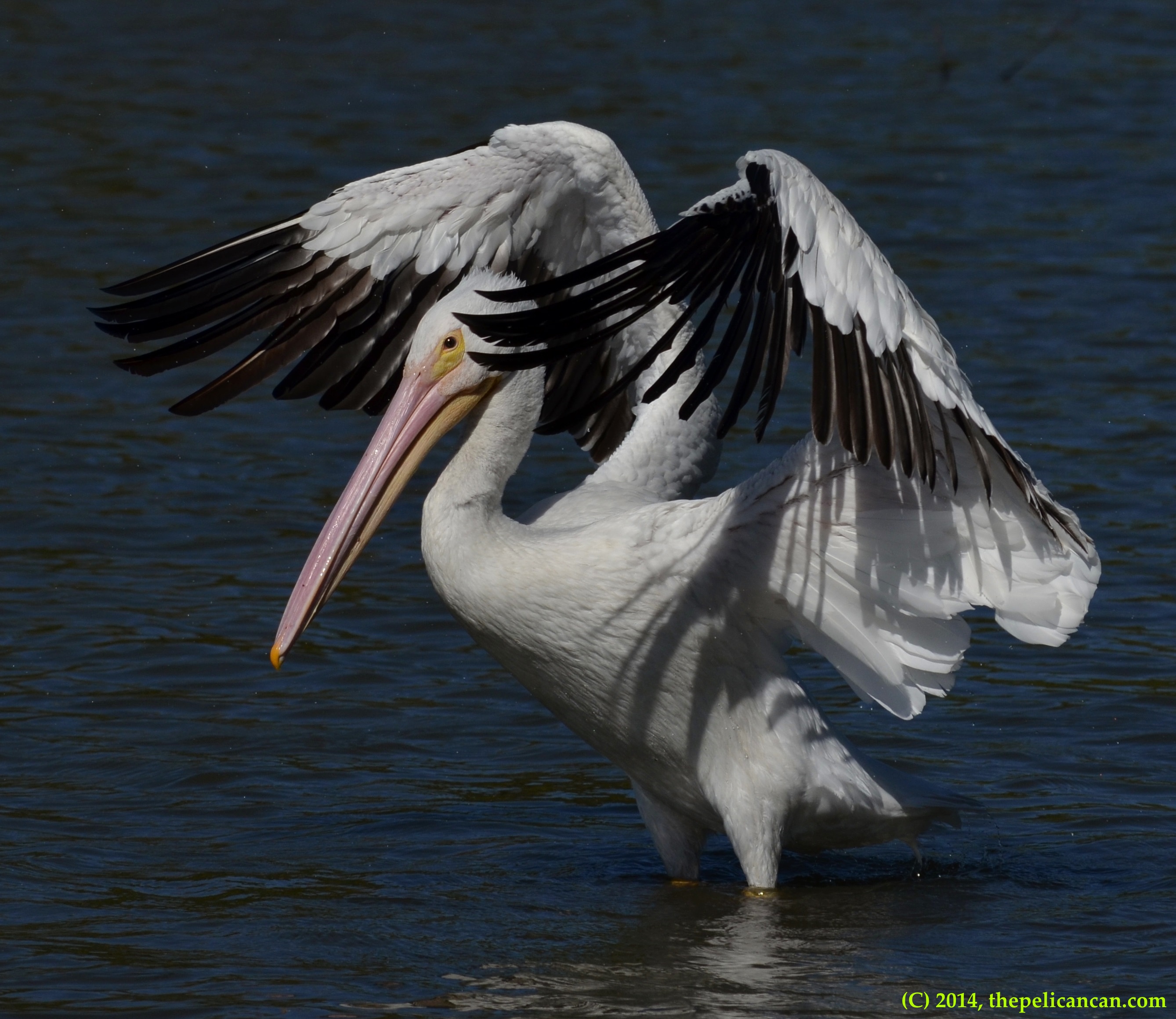
Dread Pirate Roberts had finished her bath and moved slightly closer to the dock to finish grooming.

American white pelican (Pelecanus erythrorhynchos) flaps its wings at White Rock Lake in Dallas, TX

It’s the Dread Pirate Roberts show! Starring Dread Pirate Roberts! Watch Pirate stand!

American white pelican (Pelecanus erythrorhynchos) flaps its wings at White Rock Lake in Dallas, TX

Watch Pirate flap!

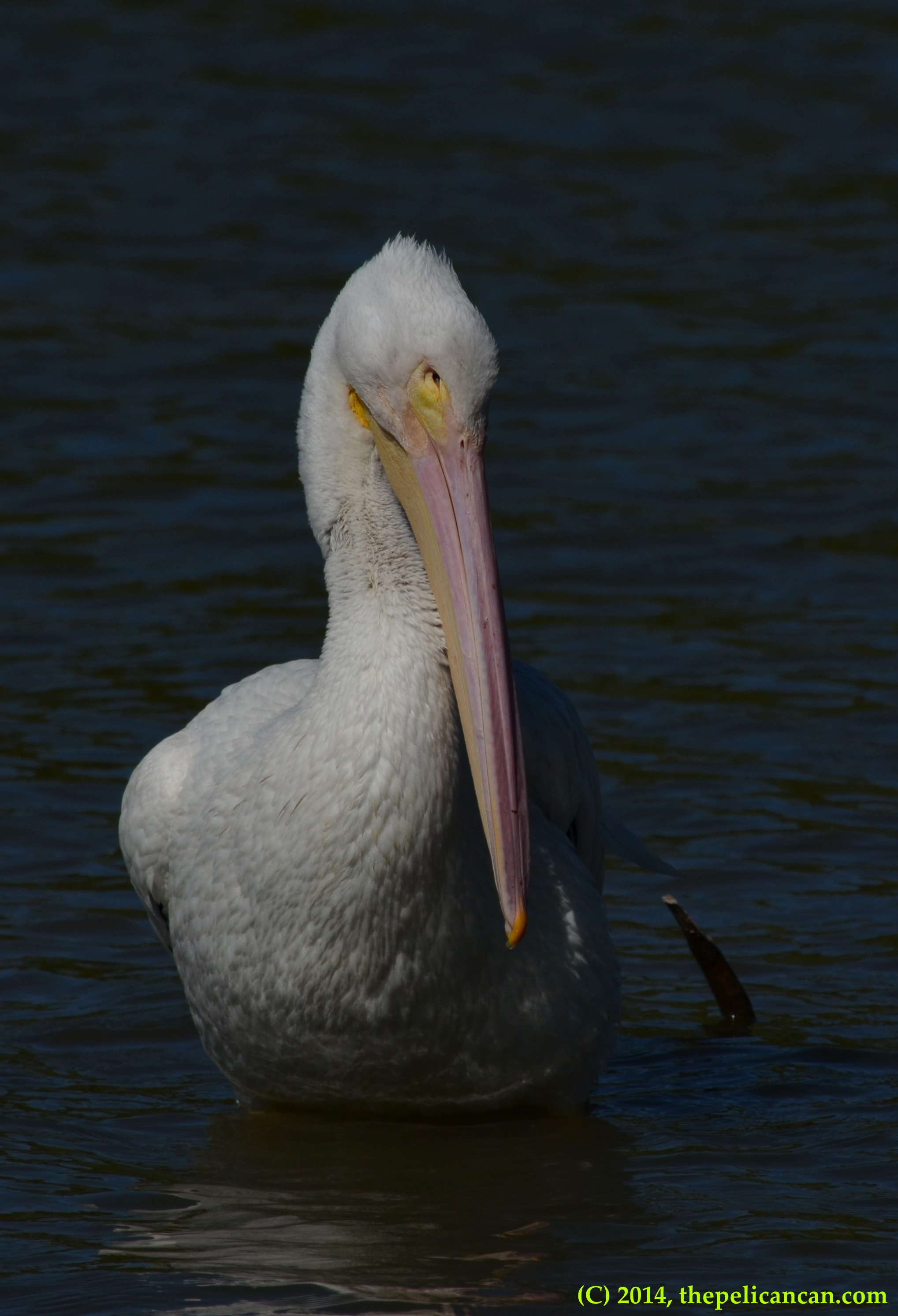
American white pelican (Pelecanus erythrorhynchos) standing in water at White Rock Lake in Dallas, TX

Watch Pirate show off her Halloween costume as a plague doctor!

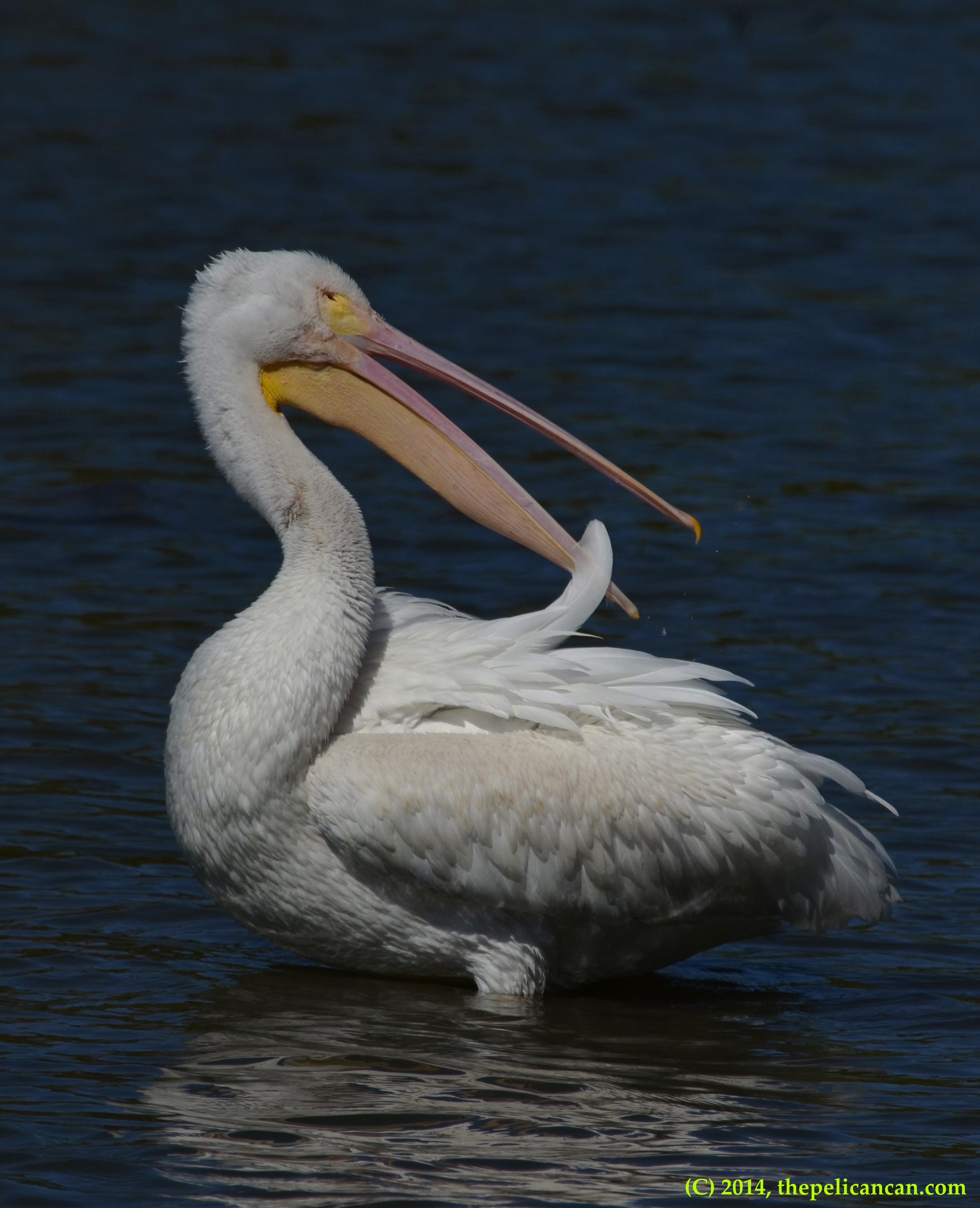
American white pelican (Pelecanus erythrorhynchos) grooming at White Rock Lake in Dallas, TX

Watch Pirate groom!

American white pelican (Pelecanus erythrorhynchos) swimming at White Rock Lake in Dallas, TX

Watch Pirate get sick of this shit and swim to the Shore Log!

As Pirate performed her repertoire, Lady Katherine completed a grooming session and capped it off by rising out of the water with a full-flap.

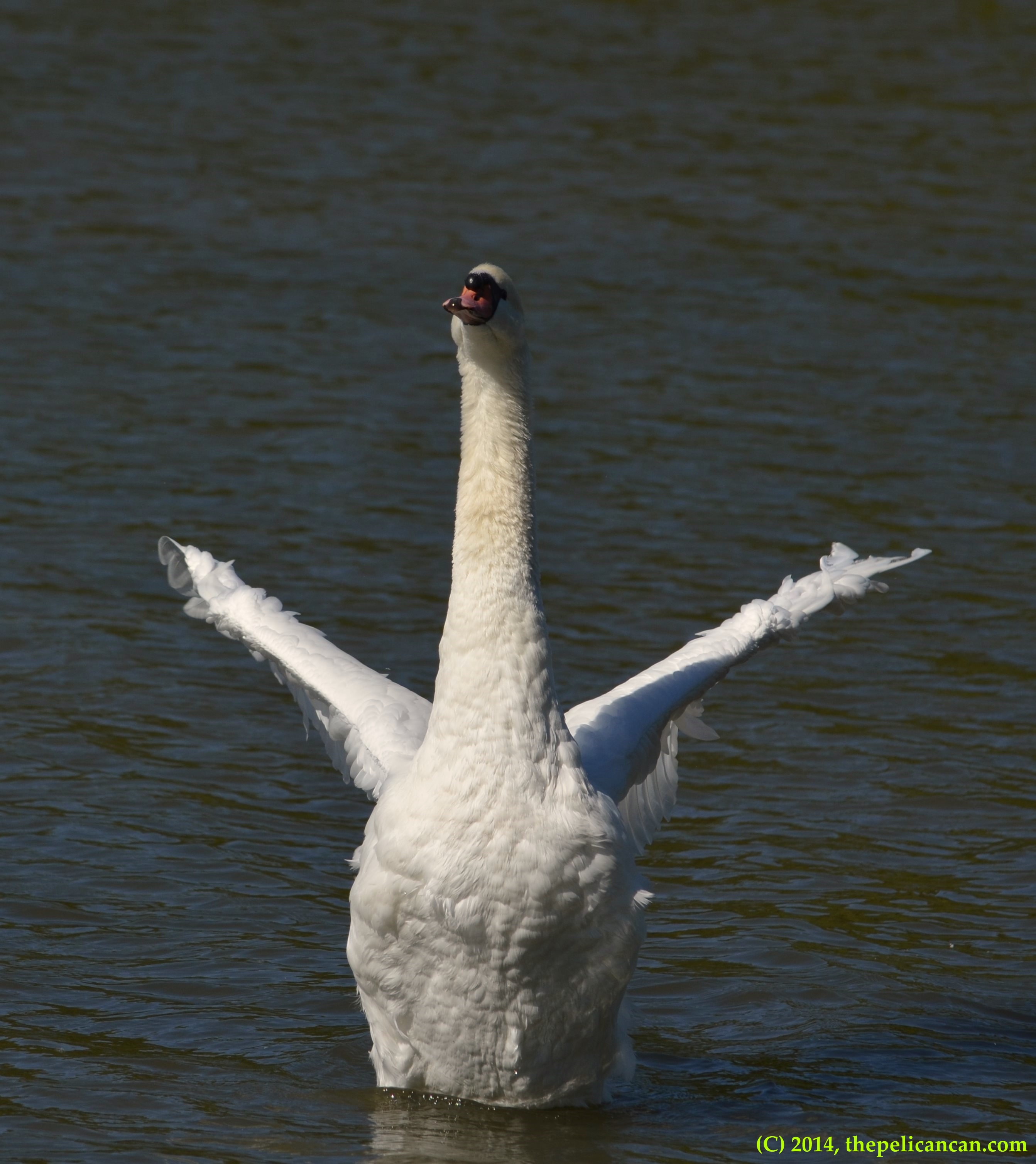
A female mute swan (Cygnus olor) flaps her wings at White Rock Lake in Dallas, TX

Lady Katherine doesn’t always flap after grooming, but she has done it enough that K used to watch her very carefully every time she groomed.

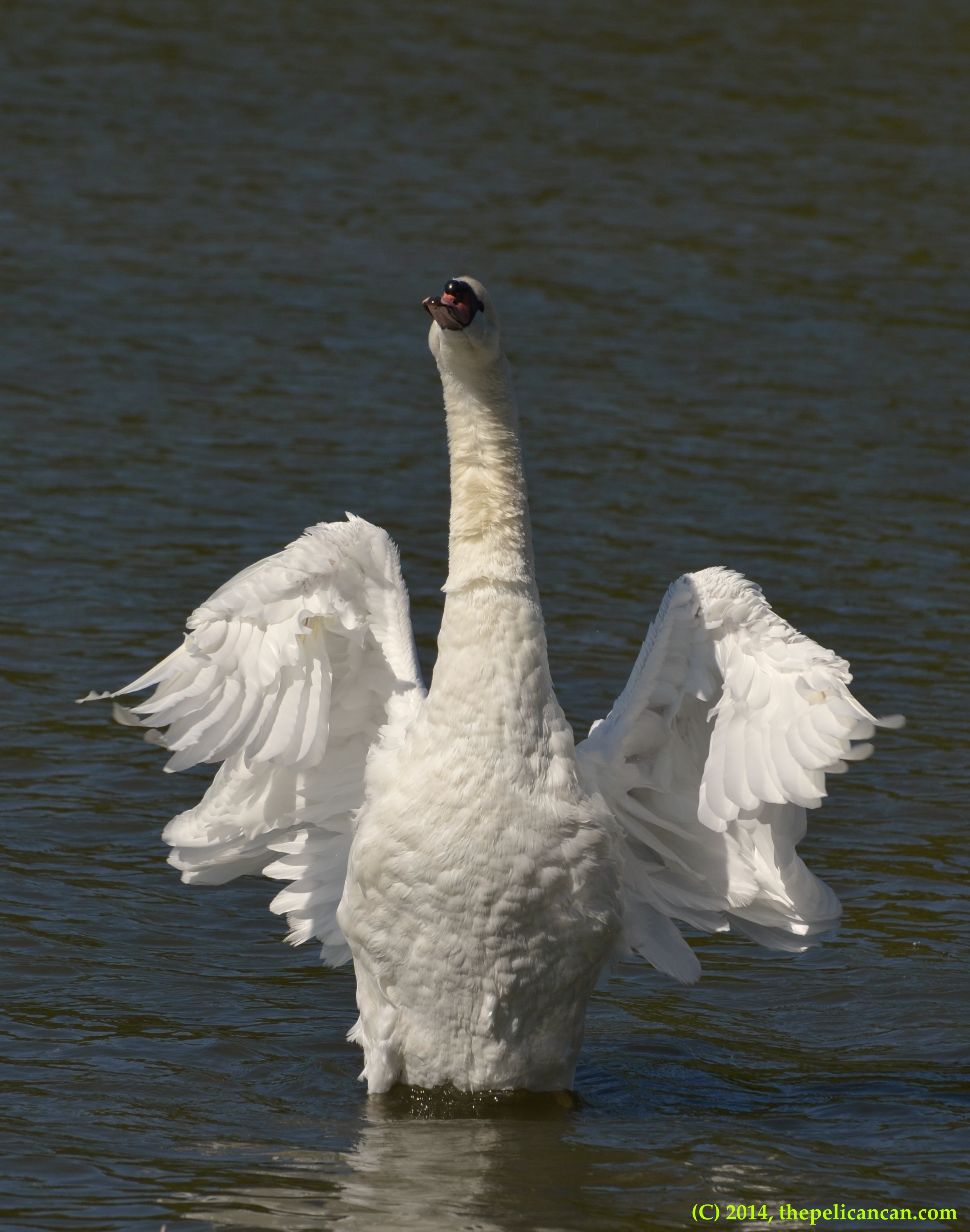
A female mute swan (Cygnus olor) flaps her wings at White Rock Lake in Dallas, TX

A female mute swan (Cygnus olor) flaps her wings at White Rock Lake in Dallas, TX

A female mute swan (Cygnus olor) flaps her wings at White Rock Lake in Dallas, TX

Thank you for fitting into the frame, Lady K!

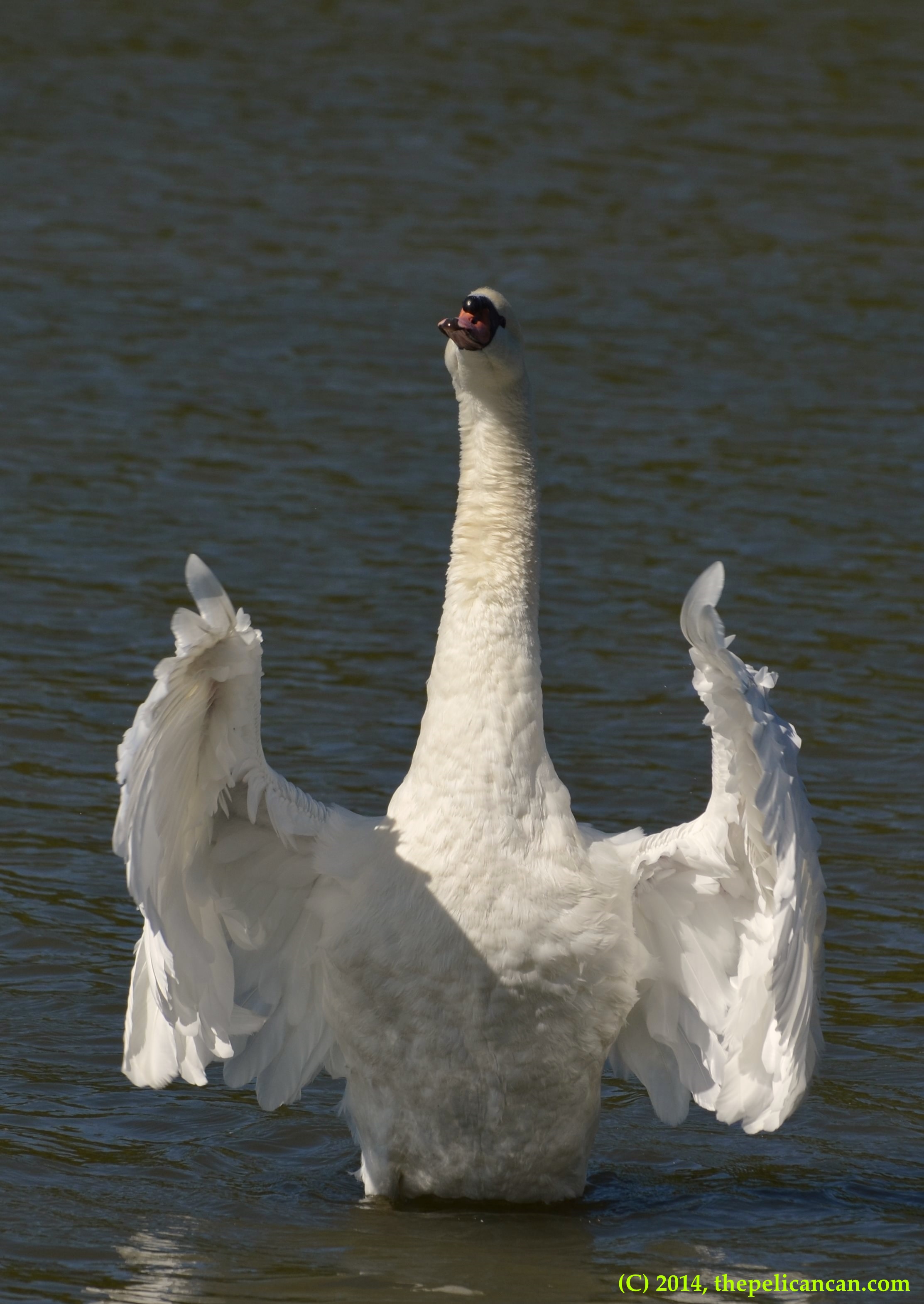
A female mute swan (Cygnus olor) flaps her wings at White Rock Lake in Dallas, TX

When she descends with her wings held out like that, the flight feathers remind me of the fingers on the white gloves of mimes.

I went over to the Shore Log to continue watching Dread Pirate Roberts. She had hopped on near the end of the log and was grooming. The other pelicans on the log were just hanging out.

Two American white pelicans (Pelecanus erythrorhynchos) loaf together on a log at White Rock Lake in Dallas, TX

A funny thing about allopreening among pelicans: almost every time I’ve seen it, the preener was preening a sleeping pelican. Often the pelican being preened would wake up and be pissed off that it was being touched.

American white pelican (Pelecanus erythrorhynchos) preens another pelican as they loaf on a log at White Rock Lake in Dallas, TX

Maybe pelicans are the creepers of the avian world.

American white pelican (Pelecanus erythrorhynchos) flaps its wings as it stands next to another pelican at White Rock Lake in Dallas, TX

Dread Pirate Roberts is pretending to be Olivia Newton John’s Grease character singing in the Shake Shack; the pelican involuntarily cast as John Travolta, however, does not think that she’s the one that he wants.

I went back to the dock.

American white pelican (Pelecanus erythrorhynchos) flapping wings while standing on a log at White Rock Lake in Dallas, TX

She looks like she was interrupted while plotting something and is now plotting against whoever interrupted her.

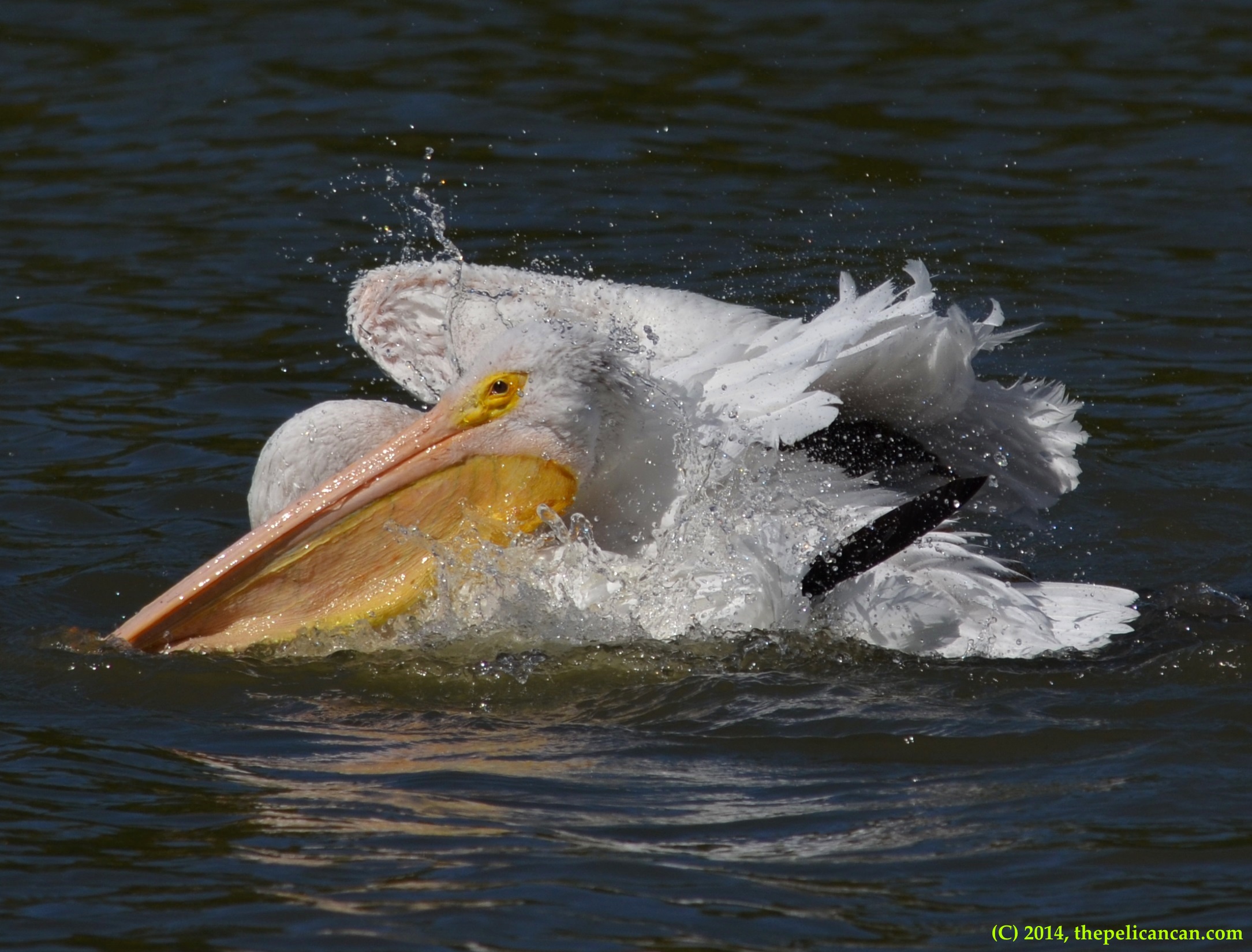
American white pelican (Pelecanus erythrorhynchos) bathing at White Rock Lake in Dallas, TX

I love the way the water looks as it surges up from the splashing pelican.

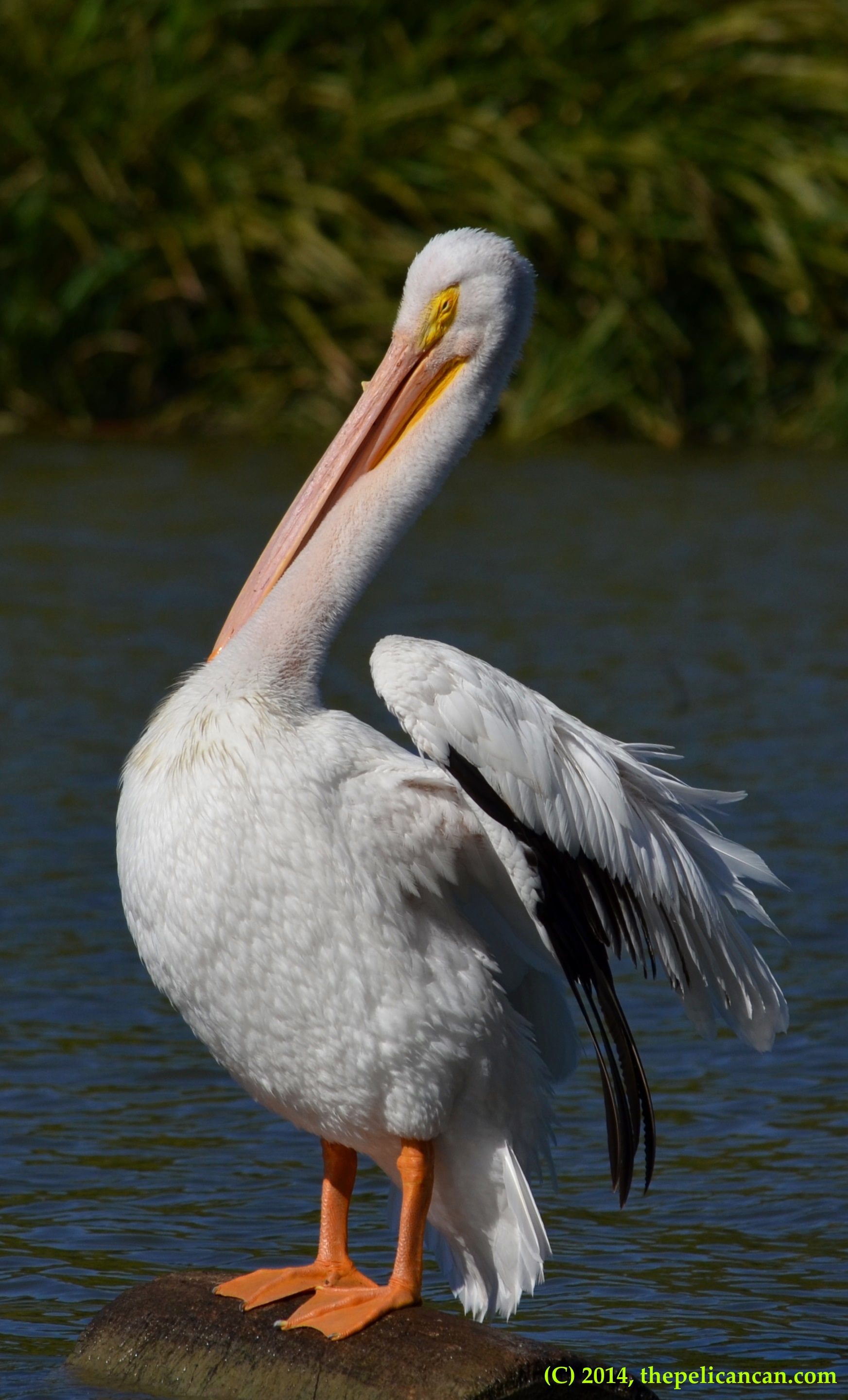
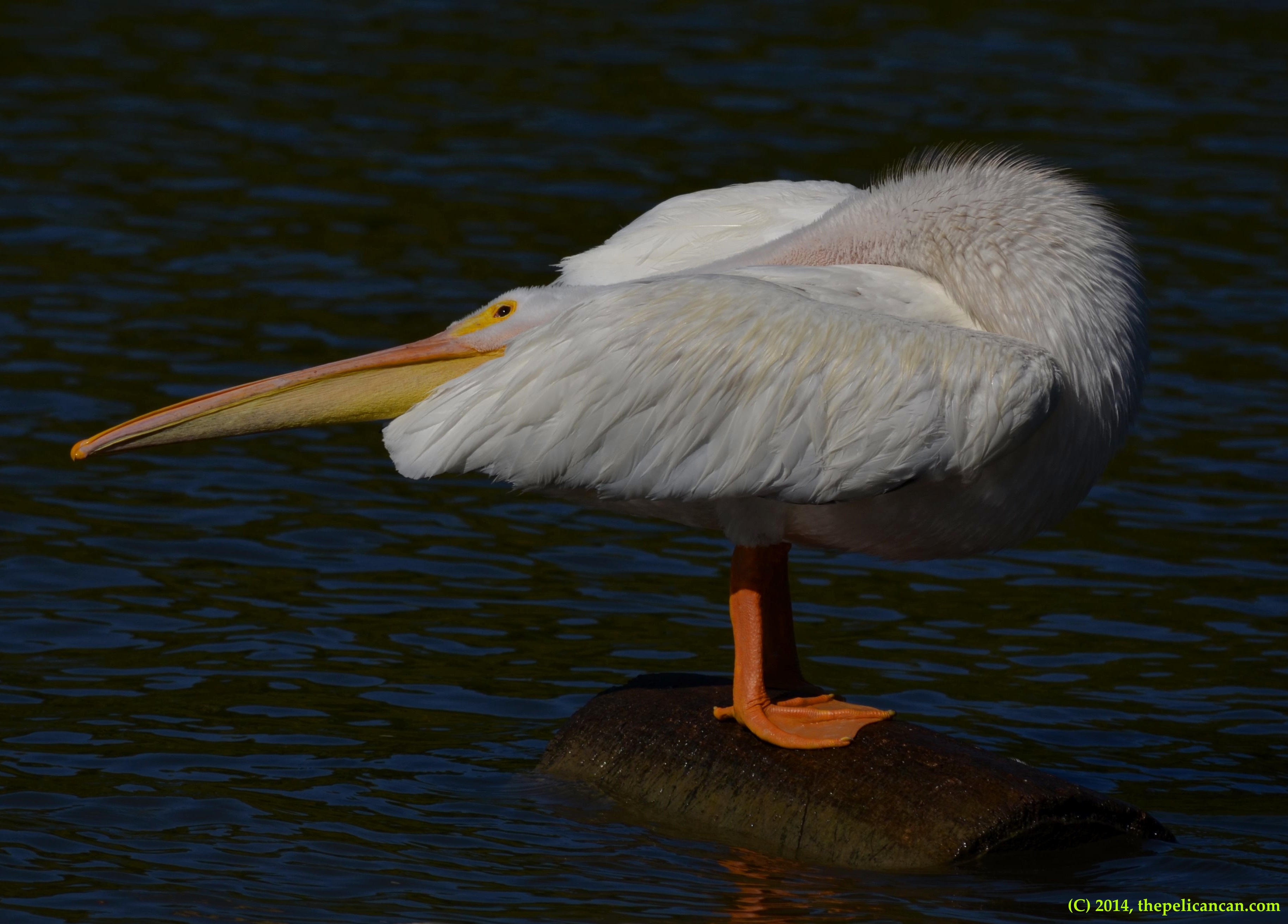
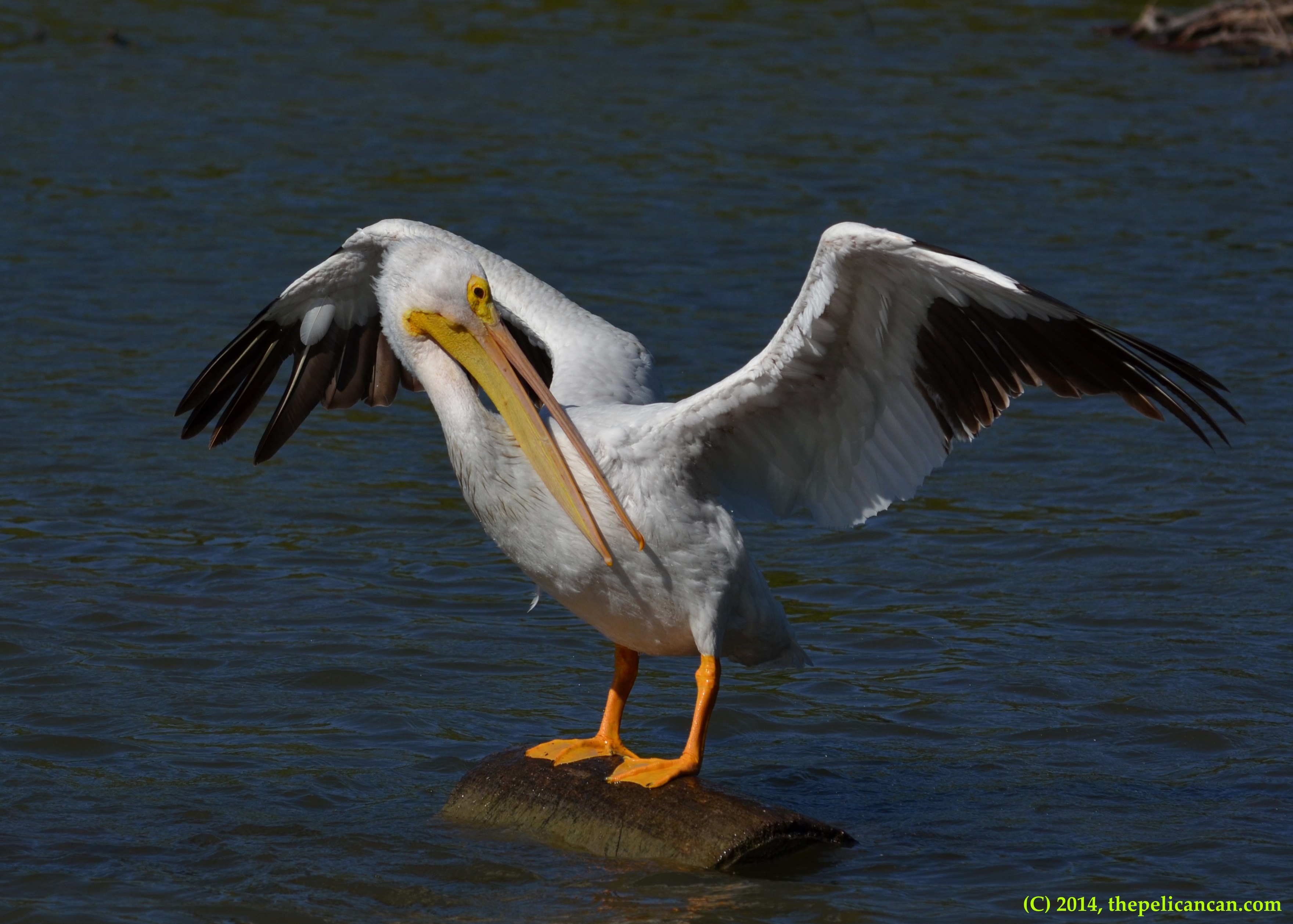
The log pelican began to groom. Pelicans look so silly and adorable when they rub their heads against their preen glands.

American white pelican (Pelecanus erythrorhynchos) rubbing oil on its feathers at White Rock Lake in Dallas, TX

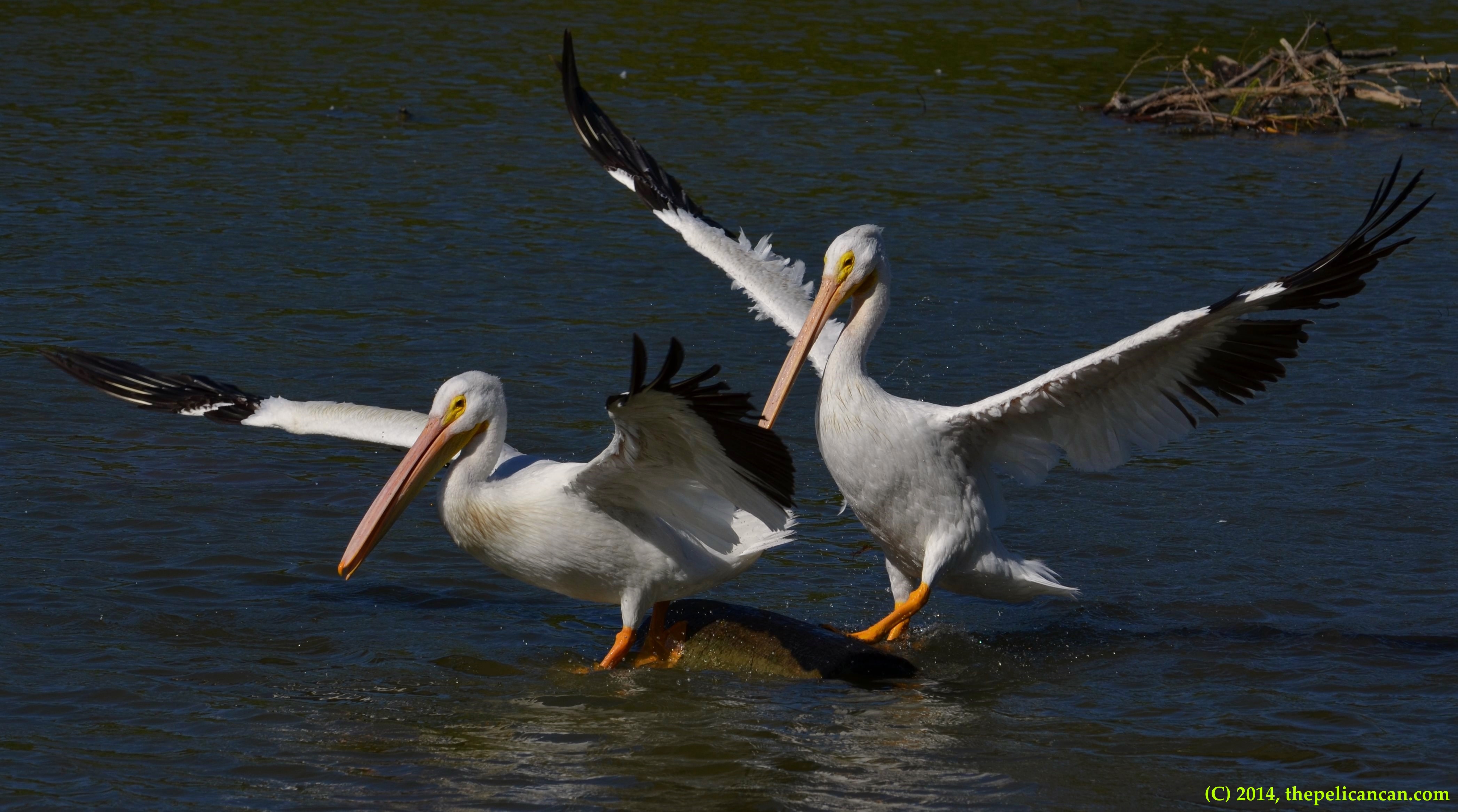
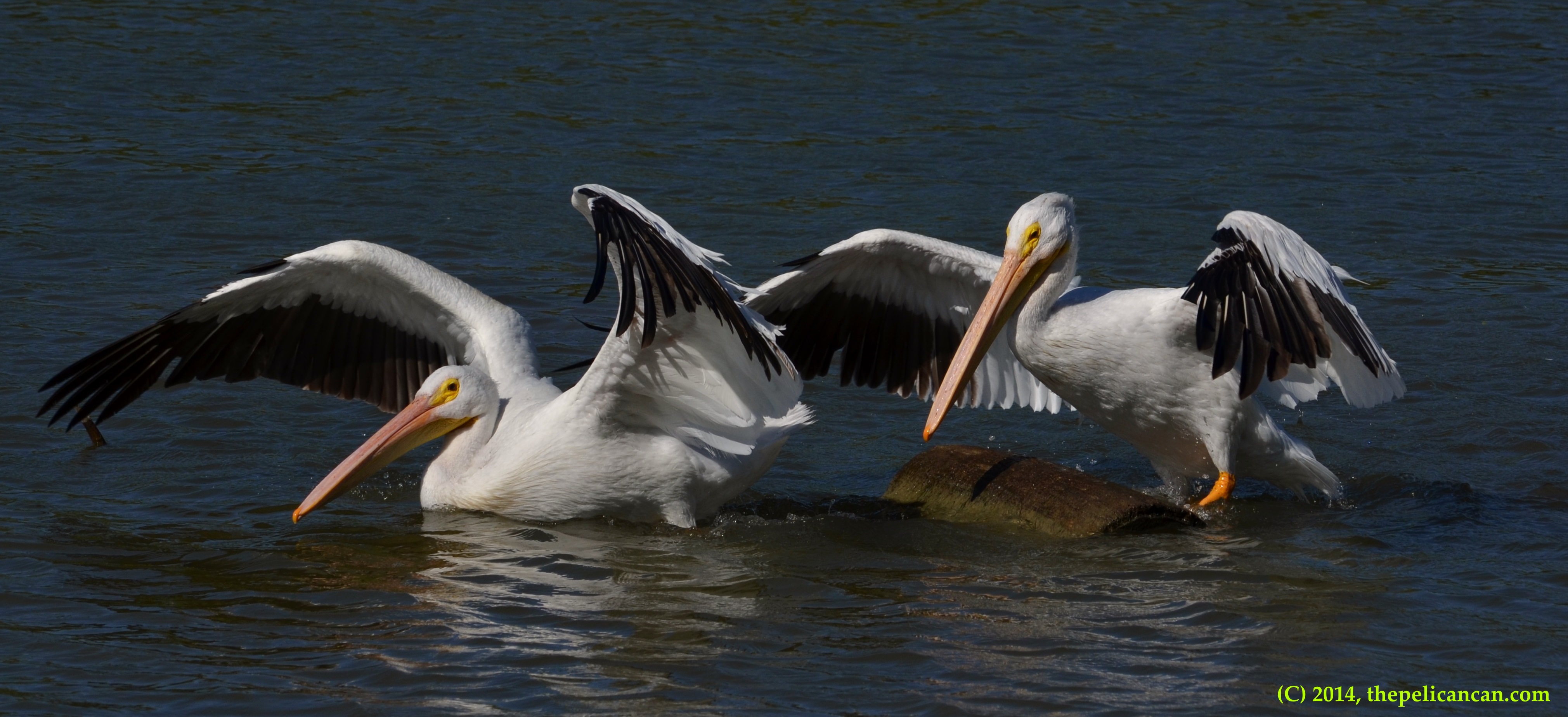
Not all was peaceful in the land of the pelicans, however. From the distant waters came a challenger for the Queen of the Log position.

American white pelican (Pelecanus erythrorhynchos) flapping its wings at White Rock Lake in Dallas, TX

American white pelican (Pelecanus erythrorhynchos) snaps at a rival pelican at White Rock Lake in Dallas, TX

No way! Fuck off!

Flapping really seems to be a response to aggressive/frightening situations, at least based upon what I’ve seen. Challengers will flap; winners of a challenge will flap; losers of a challenge will often flap. When a noise or something frightens the pelicans and they stiffen up and go into alert mode, some will begin to flap.

American white pelican (Pelecanus erythrorhynchos) beats its wings at White Rock Lake in Dallas, TX

Sometimes challengers will flap but then settle down after another pelican threatens to jab them. I really thought that the challenger was going to settle down and start preening after her vigorous flap. That wasn’t what happened.

American white pelican (Pelecanus erythrorhynchos) jumps onto an already occupied log at White Rock Lake in Dallas, TX

Oh, she went for it!

American white pelican (Pelecanus erythrorhynchos) jumps onto an already occupied log at White Rock Lake in Dallas, TX

I am amazed at how high pelicans can jump when they need to.

American white pelican (Pelecanus erythrorhynchos) jumps onto an already occupied log at White Rock Lake in Dallas, TX

At least the power transfer is peaceful.

American white pelican (Pelecanus erythrorhynchos) jumps onto an already occupied log at White Rock Lake in Dallas, TX

The challenger immediately went into a flapping frenzy, then began to preen.

American white pelican (Pelecanus erythrorhynchos) grooms itself after jumping onto a log at White Rock Lake in Dallas, TX

The loser, too, flapped vigorously.

American white pelican (Pelecanus erythrorhynchos) flaps its wings at White Rock Lake in Dallas, TX

The pelican Schmendrick: “Magic, do as you will!”

American white pelican (Pelecanus erythrorhynchos) flaps its wings at White Rock Lake in Dallas, TX

Now she poses as though she is a figurehead on the prow of a ship.

American white pelican (Pelecanus erythrorhynchos) flaps its wings at White Rock Lake in Dallas, TX

The new Queen of the Log pelican flapped again and roused her feathers, secure in the knowledge that no bird in Part 4 would challenge her position.

American white pelican (Pelecanus erythrorhynchos) flaps its wings at White Rock Lake in Dallas, TX

American white pelican (Pelecanus erythrorhynchos) rouses while standing on a log at White Rock Lake in Dallas, TX

Flapping and Fun: October 16, Part 1

Last fall, Q and I had the good luck to be at Sunset Bay at several different times when waves of pelicans would land. A large group would suddenly appear very high above the bay, and the birds would slowly spiral down on the thermals. When the group got low enough, individual birds would begin raining down into the water. Sometimes all of the birds in a group would land, but usually only some of the group landed while the rest flew back up on the thermals and moved on. Sometimes birds on the ground would fly up on the thermals and move on with the other pelicans.

When new birds land, there is great potential for excitement: birds bathing, exploring their new environment, fighting with other birds for the best loafing locations, etc.

I was still seeing scissor-tailed flycatchers in the area, and when I arrived at the lake on the 16th, I saw one hanging out in a tree near a small field.

Scissor-tailed flycatcher (Tyrannus forficatus) in a tree at White Rock Lake in Dallas, TX

Several pelicans were swimming around the bay, exploring. Almost immediately a pelican forced another pelican off a slightly elevated loafing area, then stole her position.

American white pelican (Pelecanus erythrorhynchos) leaps onto a log at White Rock Lake in Dallas, TX

I didn’t want it, anyway. HARUMPH!

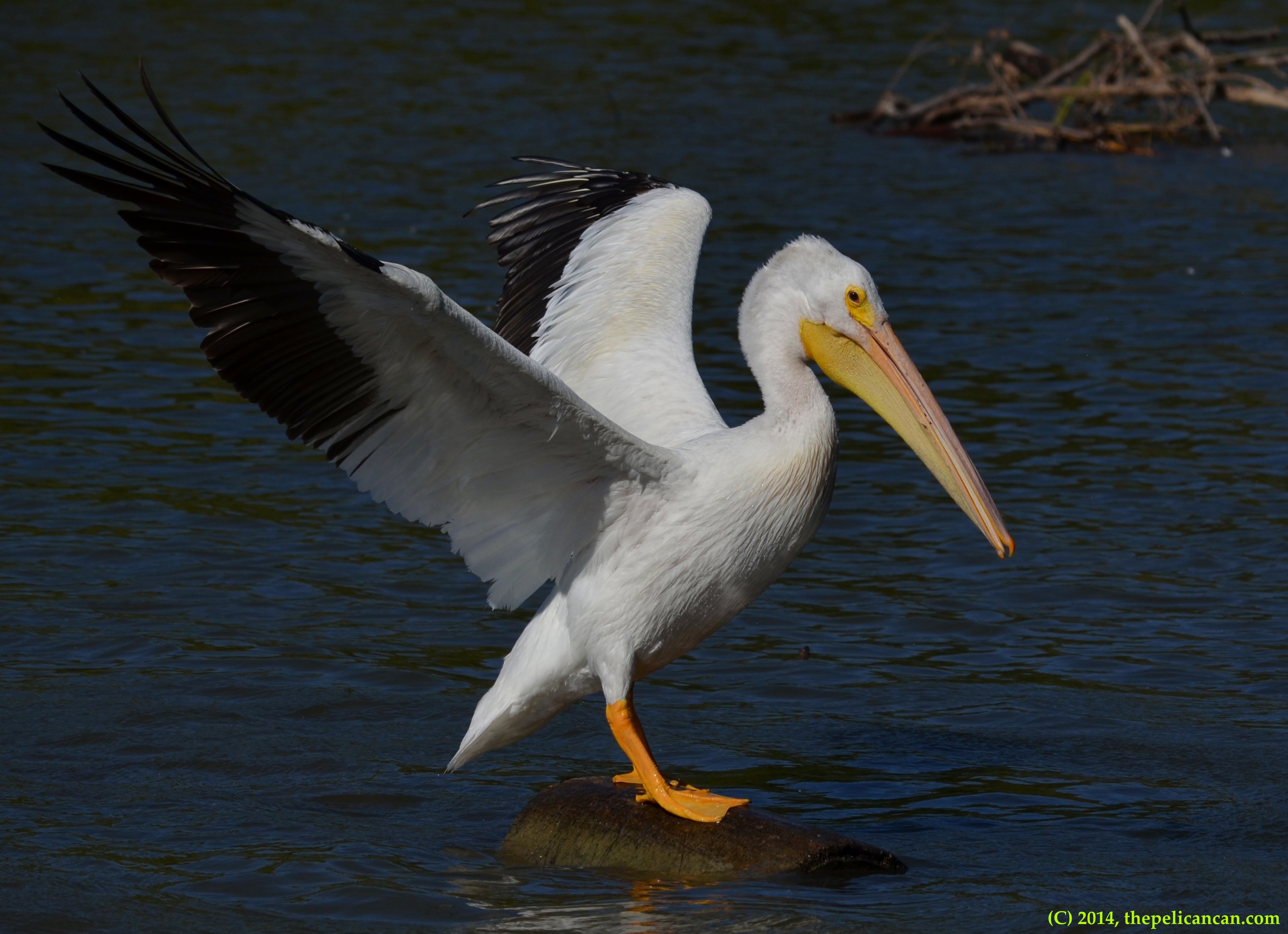
The usurping pelican beat her wings in triumph.

American white pelican (Pelecanus erythrorhynchos) flaps her wings after jumping onto a log at White Rock Lake in Dallas, TX

MINE!

American white pelican (Pelecanus erythrorhynchos) beats her wings after jumping on a log at White Rock Lake in Dallas, TX

American white pelican (Pelecanus erythrorhynchos) beats her wings after jumping on a log at White Rock Lake in Dallas, TX

American white pelican (Pelecanus erythrorhynchos) beats her wings after jumping on a log at White Rock Lake in Dallas, TX

American white pelican (Pelecanus erythrorhynchos) beats her wings after jumping on a log at White Rock Lake in Dallas, TX

Whew! That felt good!

American white pelican (Pelecanus erythrorhynchos) stands on a log at White Rock Lake in Dallas, TX

What are you looking at, human?

The pelican stood there for less than two minutes before deciding that the area just wasn’t good enough for her.

American white pelican (Pelecanus erythrorhynchos) slides into the water at White Rock Lake in Dallas, TX

American white pelican (Pelecanus erythrorhynchos) swims with her wings raised at White Rock Lake in Dallas, TX

I thought she would swim around until she found a better log to jump up onto, but I was in for a surprise. She took off right there from the water!

American white pelican (Pelecanus erythrorhynchos) takes flight from Sunset Bay in Dallas, TX

American white pelican (Pelecanus erythrorhynchos) takes flight from Sunset Bay in Dallas, TX

American white pelican (Pelecanus erythrorhynchos) takes flight from Sunset Bay in Dallas, TX

The pelican she had initially kicked off the log also got in on the action.

American white pelican (Pelecanus erythrorhynchos) takes flight from Sunset Bay in Dallas, TX

The pelican who had taken off first didn’t fly very far, and I tracked her as she went by.

American white pelican (Pelecanus erythrorhynchos) takes flight from Sunset Bay in Dallas, TX

American white pelican (Pelecanus erythrorhynchos) takes flight from Sunset Bay in Dallas, TX

American white pelican (Pelecanus erythrorhynchos) takes flight from Sunset Bay in Dallas, TX

American white pelican (Pelecanus erythrorhynchos) takes flight from Sunset Bay in Dallas, TX

I looked around to see what else was going on around the bay.

American white pelican (Pelecanus erythrorhynchos) swimming at White Rock Lake in Dallas, TX

Don’t mind me.

Then I noticed some familiar activity out on a log.

American white pelicans (Pelecanus erythrorhynchos) standing on a log at White Rock Lake in Dallas, TX

Yes, I definitely knew what was going to happen next!

American white pelicans (Pelecanus erythrorhynchos) fight while standing on a log at White Rock Lake in Dallas, TX

I AM GOING TO EAT YOUR FACE!

American white pelicans (Pelecanus erythrorhynchos) fight while standing on a log at White Rock Lake in Dallas, TX

GAH! What the fuck is wrong with you?

American white pelicans (Pelecanus erythrorhynchos) fight while standing on a log at White Rock Lake in Dallas, TX

How do you like it, asshole?!

The attacked pelican was able to hold her ground and go back to preening. Sometimes when pelicans are hanging out, one bird will attack another for seemingly no reason.

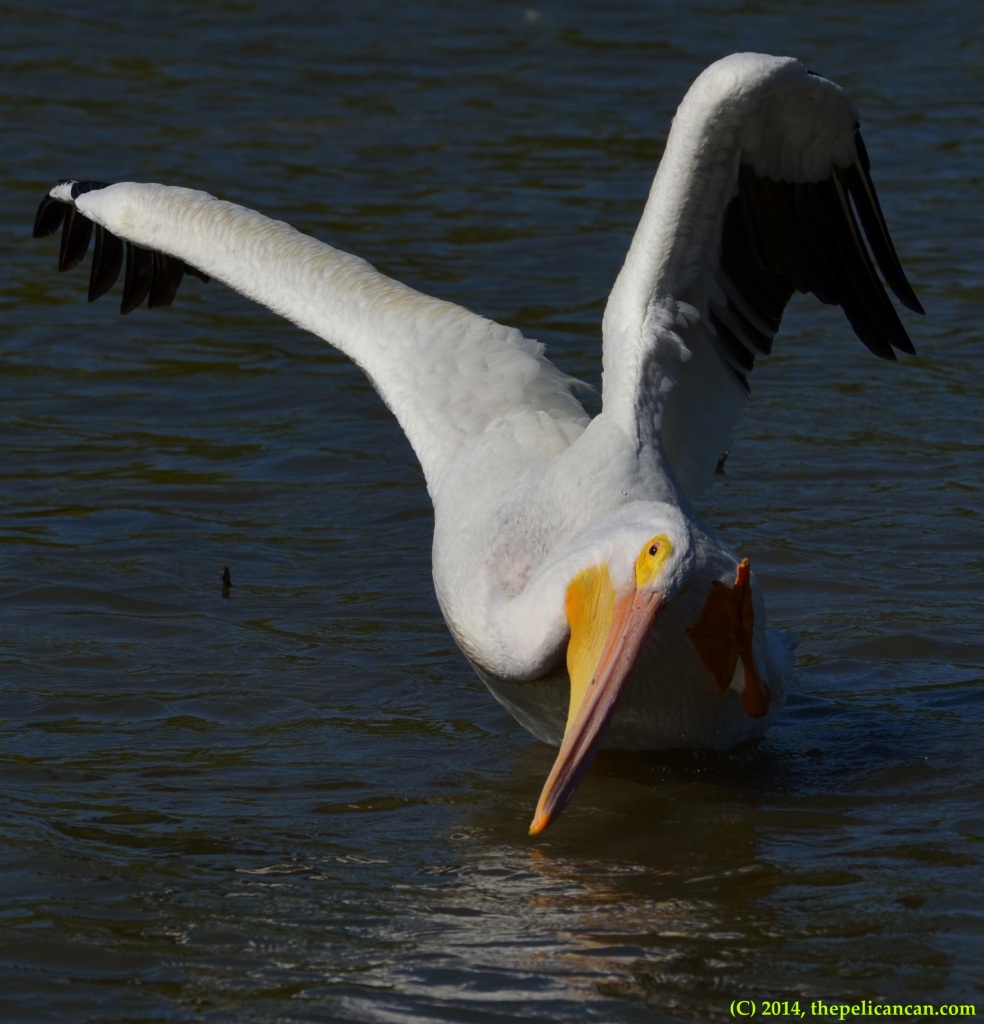
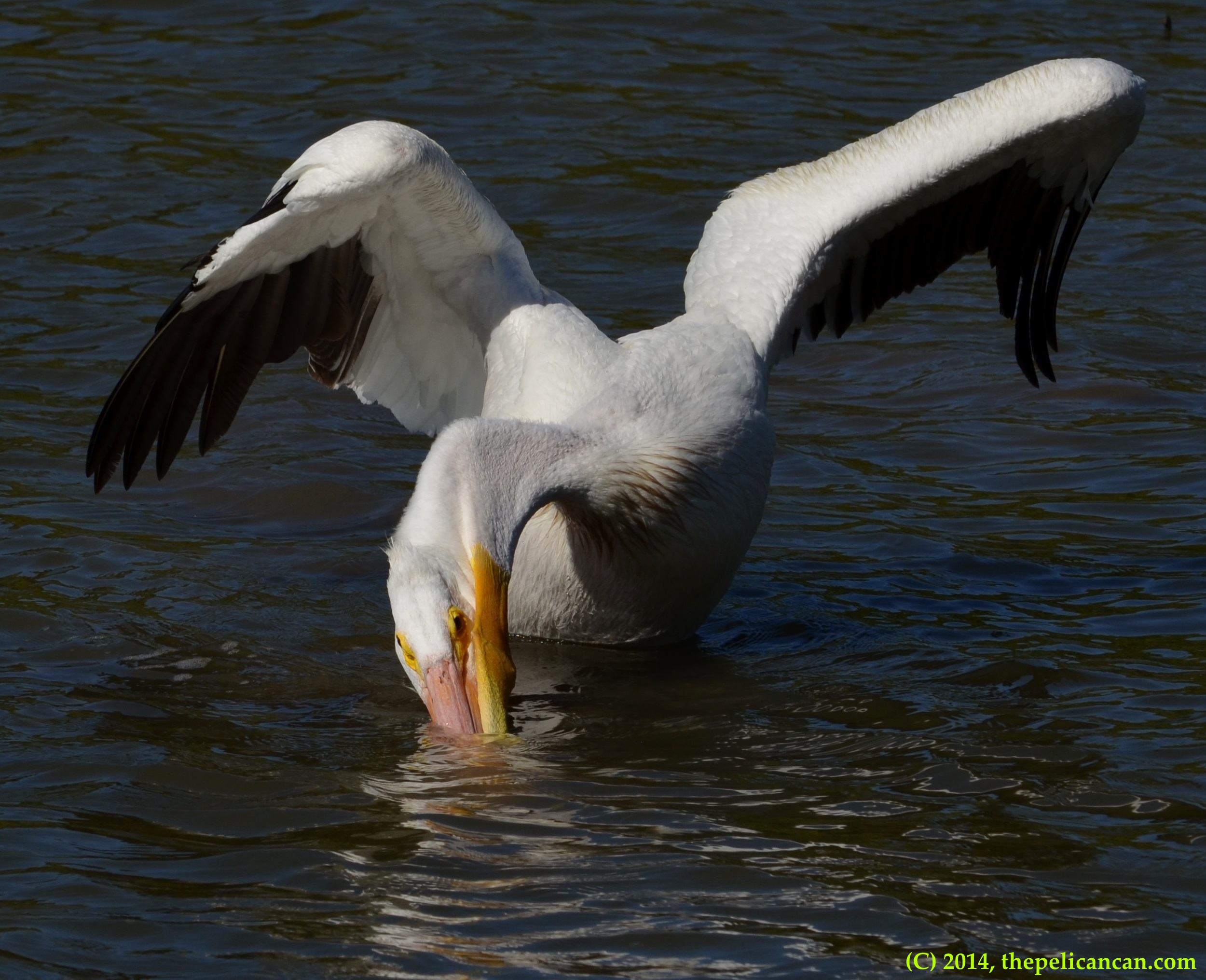
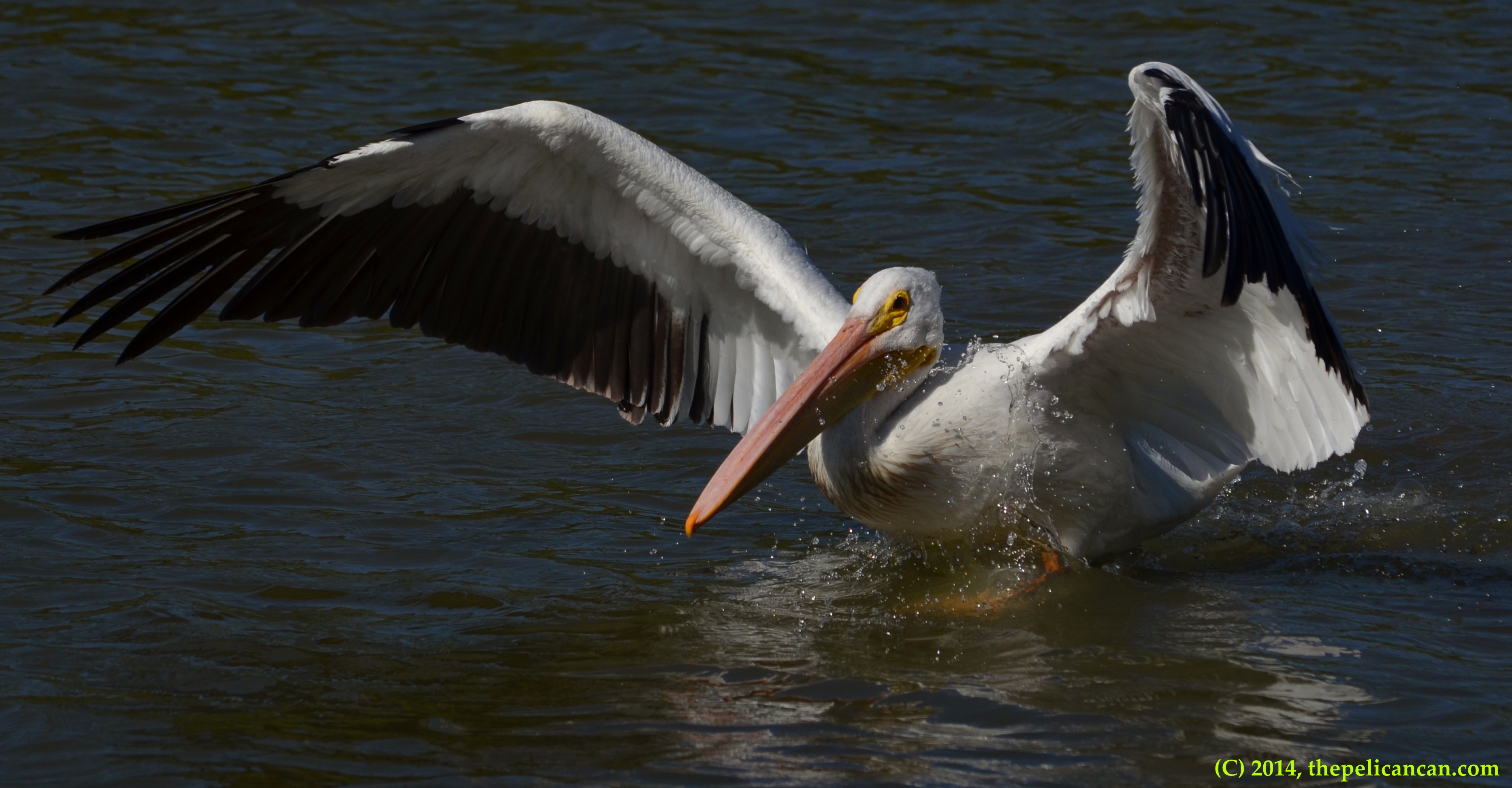
A different bird engaged in a good flapping fit nearby. I love seeing the way they move their wings and what their wings look like in different positions.

American white pelican (Pelecanus erythrorhynchos) flaps her wings at White Rock Lake in Dallas, TX

Right as Lulu stepped on stage to begin her audition, she realized that she had wet herself.

American white pelican (Pelecanus erythrorhynchos) flaps her wings at White Rock Lake in Dallas, TX

MAYBE IF I FLAP REALLY HARD, I CAN DRY OUT AND NO ONE WILL NOTICE.

American white pelican (Pelecanus erythrorhynchos) flaps her wings at White Rock Lake in Dallas, TX

American white pelican (Pelecanus erythrorhynchos) flaps her wings at White Rock Lake in Dallas, TX

American white pelican (Pelecanus erythrorhynchos) flaps her wings at White Rock Lake in Dallas, TX

A sleepy pelican drifted by the Queen of the Log. She looked like a big floating marshmallow.

American white pelican (Pelecanus erythrorhynchos) swims by a log at White Rock Lake in Dallas, TX

And a juvenile was stretched out, scratching.

American white pelican (Pelecanus erythrorhynchos) scratching at White Rock Lake in Dallas, TX

I looked up and noticed a flock of pelicans overhead. Yes! This was the action I’d been hoping for! There were at least twenty birds in the flock, and all of them landed. Unfortunately, they landed out past the far-away logs, but they did eventually start swimming in to interact with the existing birds.

Flock of American white pelicans (Pelecanus erythrorhynchos) flying over White Rock Lake in Dallas, TX

Flock of American white pelicans (Pelecanus erythrorhynchos) flying over White Rock Lake in Dallas, TX

Flock of American white pelicans (Pelecanus erythrorhynchos) flying over White Rock Lake in Dallas, TX

Flock of American white pelicans (Pelecanus erythrorhynchos) flying over White Rock Lake in Dallas, TX

Flock of American white pelicans (Pelecanus erythrorhynchos) flying over White Rock Lake in Dallas, TX

A new bird waddled up to the Queen of the Log pelican. I waited for her to jump on or for the pelican on the log to snap at her. Instead, the intruding pelican began to preen. Nooooo!

Two American white pelicans (Pelecanus erythrorhynchos) at White Rock Lake in Dallas, TX

A juvenile attempted to explore and conquer the log that a different juvenile had experienced difficulty with the day before.

Juvenile American white pelican (Pelecanus erythrorhynchos) tries to keep her balance on a log at White Rock Lake in Dallas, TX

And everyone said this log is so difficult to loaf on! You just need to step carefully . . .

Juvenile American white pelican (Pelecanus erythrorhynchos) tries to keep her balance on a log at White Rock Lake in Dallas, TX

. . . and get the other foot up on there.

Juvenile American white pelican (Pelecanus erythrorhynchos) tries to keep her balance on a log at White Rock Lake in Dallas, TX

I’ve got it!

Juvenile American white pelican (Pelecanus erythrorhynchos) tries to keep her balance on a log at White Rock Lake in Dallas, TX

Uh-oh.

Juvenile American white pelican (Pelecanus erythrorhynchos) tries to keep her balance on a log at White Rock Lake in Dallas, TX

No; this can’t be happening! I told EVERYONE how easy it was going to be to stay on the log!

Juvenile American white pelican (Pelecanus erythrorhynchos) tries to keep her balance on a log at White Rock Lake in Dallas, TX

I got it, everyone! Nothing to worry about! Go on back to hunting! Nothing to see here!

Juvenile American white pelican (Pelecanus erythrorhynchos) tries to keep her balance on a log at White Rock Lake in Dallas, TX

GODDAMMIT, THEY’RE ALL STILL WATCHING ME.

The juvenile’s brave attempts to conquer the log ultimately ended in a SPLASH. She swam over to the Stump and seemed to be debating whether she wanted to jump on when she decided to move along.

Two American white pelicans (Pelecanus erythrorhynchos) relax at White Rock Lake in Dallas, TX

OH MY GOD, JUVENILE, HOW ARE YOU MISSING PART OF YOUR BODY?

Another pelican posed on the Shore Log.

American white pelican (Pelecanus erythrorhynchos) loafing on a log at White Rock Lake in Dallas, TX

Do you find me mysterious? I am trying to pose mysteriously.

Part 2 will be up soon, with more flapping and another fight.

Juvenile Bird Day! Starring: Ibis! Heron! Egret! And Last But Not Least . . . Vulture!

It was July 6, a Sunday. Q and I were visiting the rookery at UT Southwestern. It was getting near the end of the season, and most of the birds had already left. We first had to check on the Thothlings, our collective name for the three juvenile American white ibises that had hatched that spring.
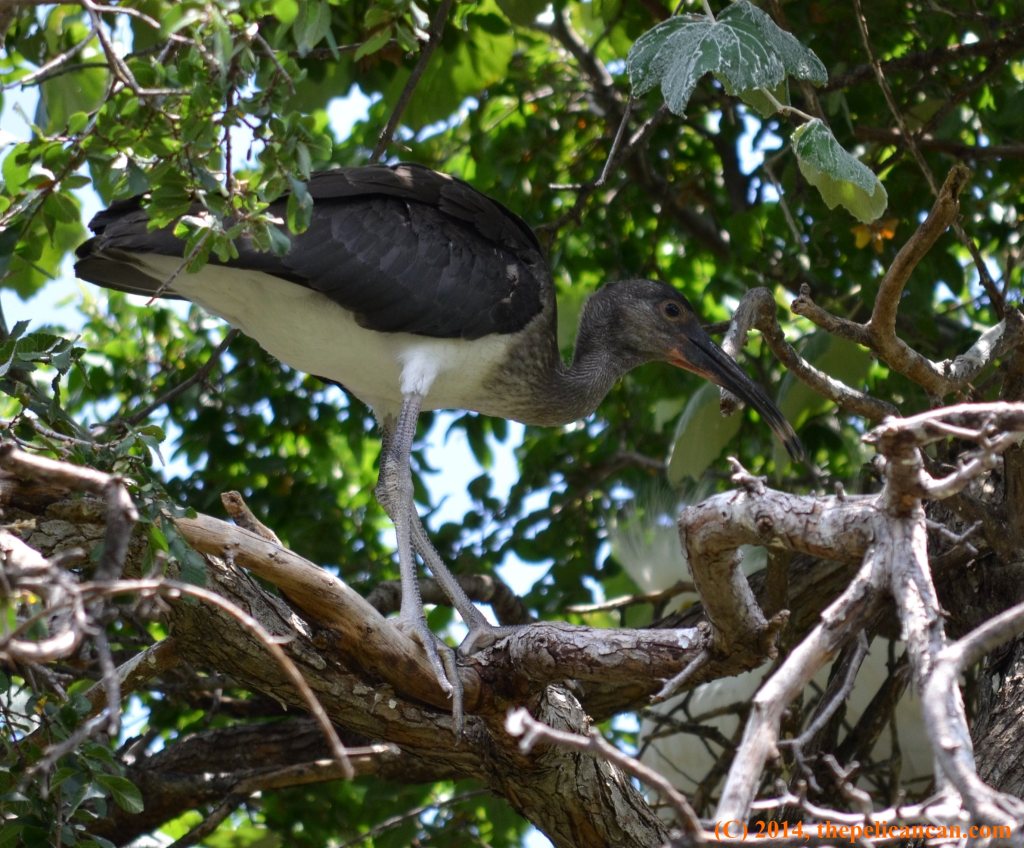
Juvenile American white ibis (Eudocimus albus) perched in a tree at the UT Southwestern rookery in Dallas

PINK EYE IS PRESENT AND ACCOUNTED FOR!

We loved watching those ibises. I liked them best when they were getting just big enough to squirm out from underneath their parent in the nest, and I liked watching the parent’s desperate attempts to keep them tucked under her/his body. They were so cute, with their black heads and small, black-and-pink–striped, curved beaks. Once the Thothlings were distinctive enough that I could tell them apart, I named them. At first I was worried that I might not be able to keep them straight because their coloration would continue to change, but I realized that they would be long gone from the rookery before that became a problem. Watching them explore their nest tree was always fun. Eventually that exploration changed to short flights to other trees, then flights above the rookery. Then they left.
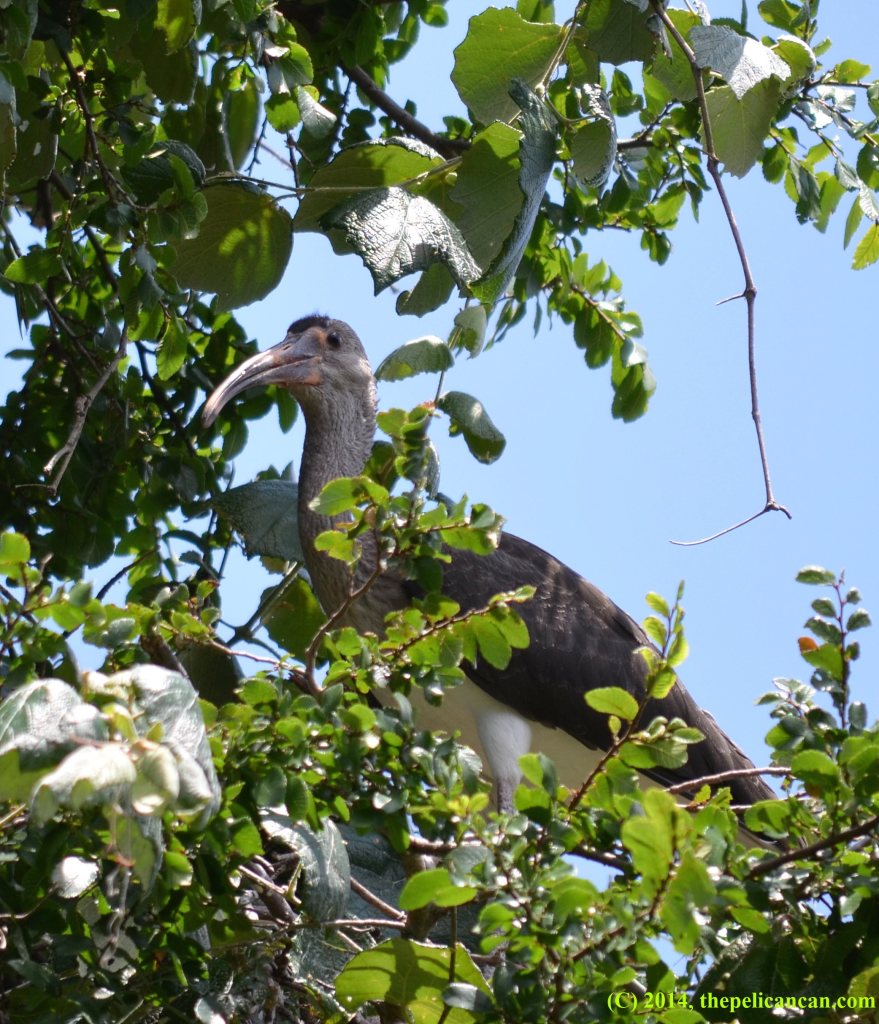
Juvenile American white ibis (Eudocimus albus) perched in a tree at the UT Southwestern rookery in Dallas

I AM CUDDLE MONSTER, AND I AM HERE ON JULY 6!
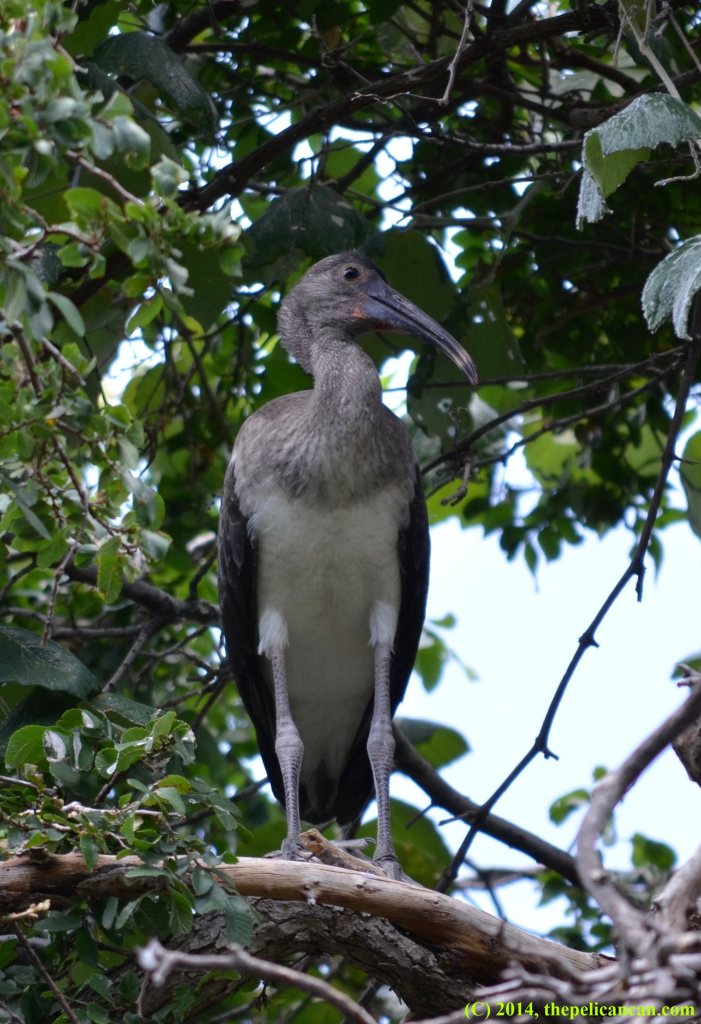
Juvenile American white ibis (Eudocimus albus) perched in a tree at the UT Southwestern rookery in Dallas

Pink Eye stands proudly in her nest tree.

We could see Pink Eye and Cuddle Monster, but where was Zebra?
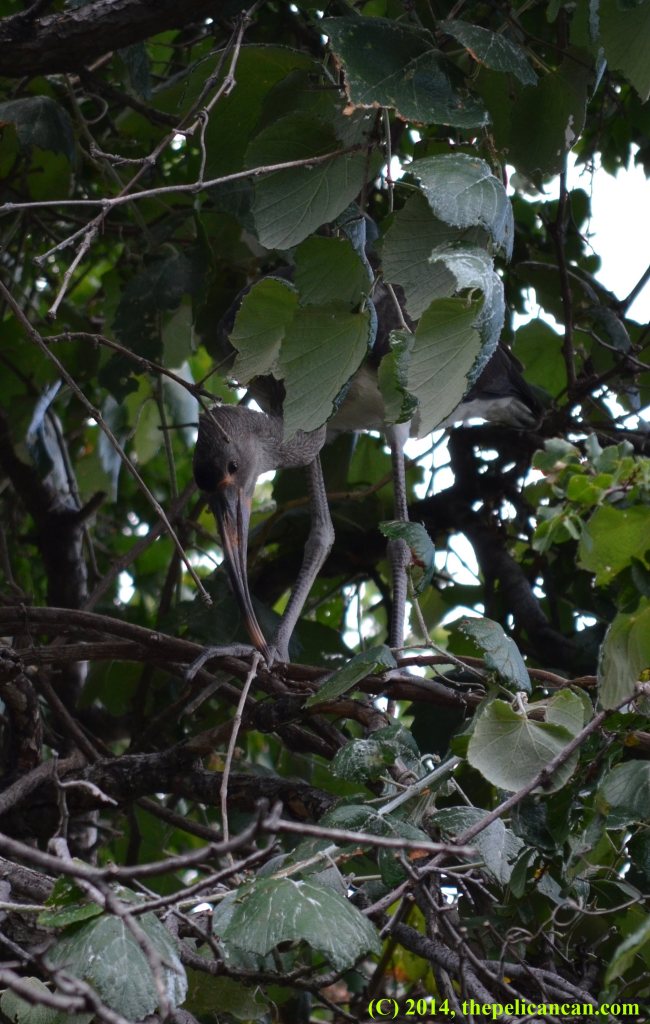
Juvenile American white ibis (Eudocimus albus) perched in a tree at the UT Southwestern rookery in Dallas

I’M BACK HERE, SILLY HUMANS!

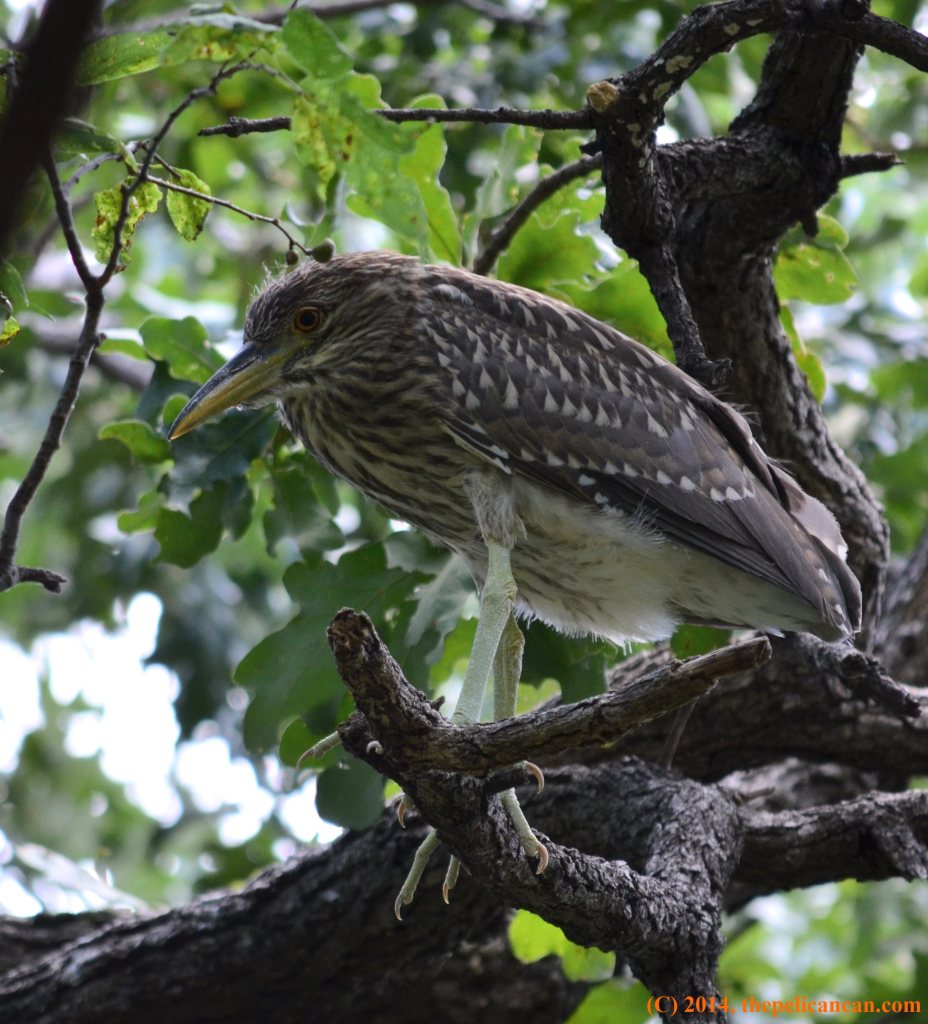
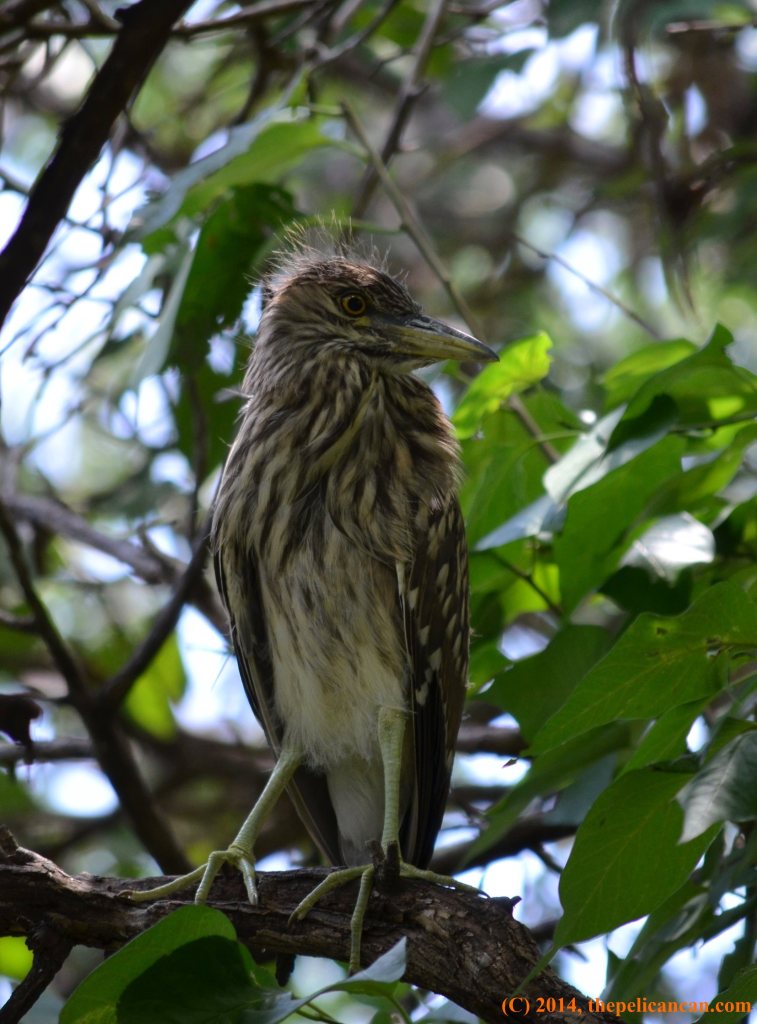
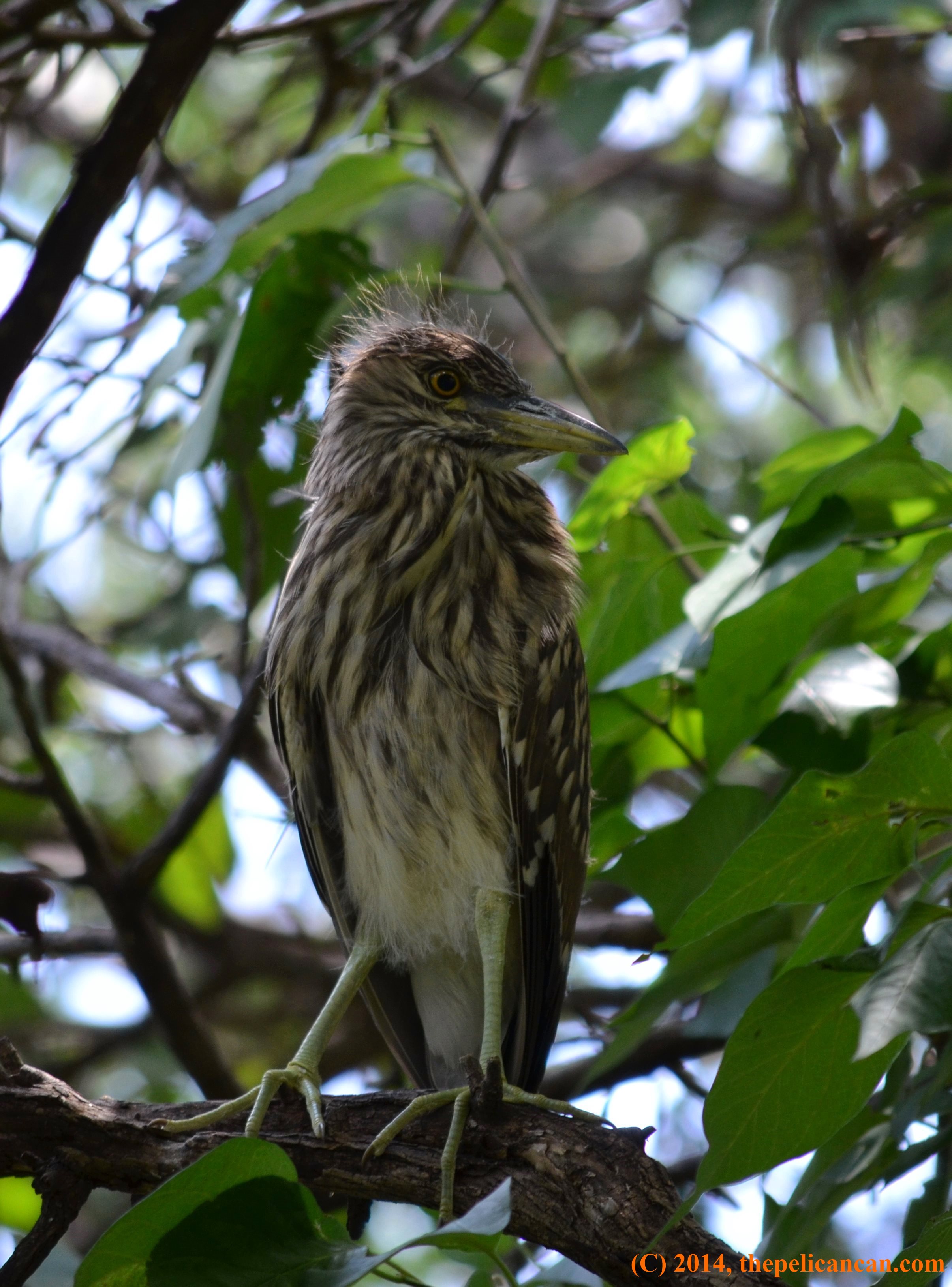
There were still a few large black-crowned night heron juveniles hanging around the rookery.
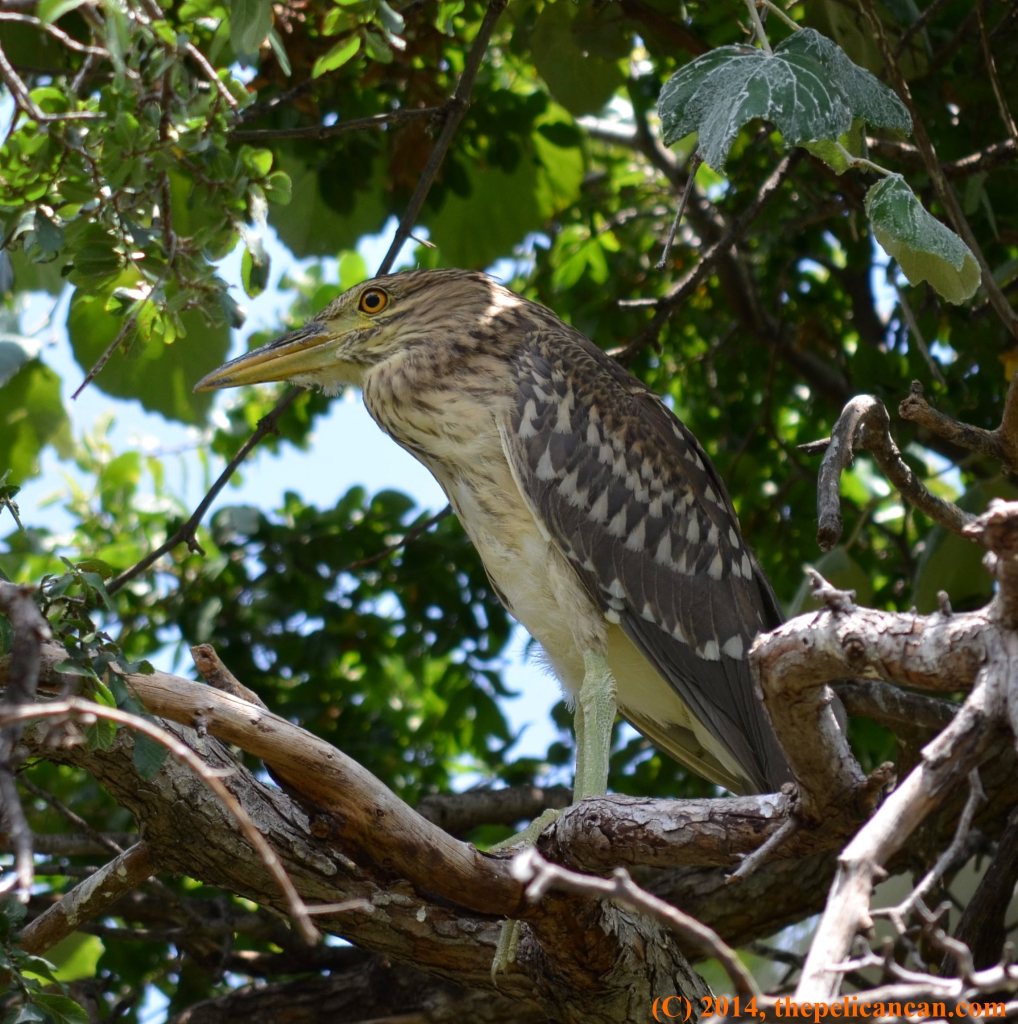
Juvenile black-crowned night heron (Nycticorax nycticorax) stands in a tree at the UT Southwestern rookery in Dallas

Juvenile black-crowned night heron (Nycticorax nycticorax) stands in a tree at the UT Southwestern rookery in Dallas

Juvenile black-crowned night heron (Nycticorax nycticorax) stands in a tree at the UT Southwestern rookery in Dallas

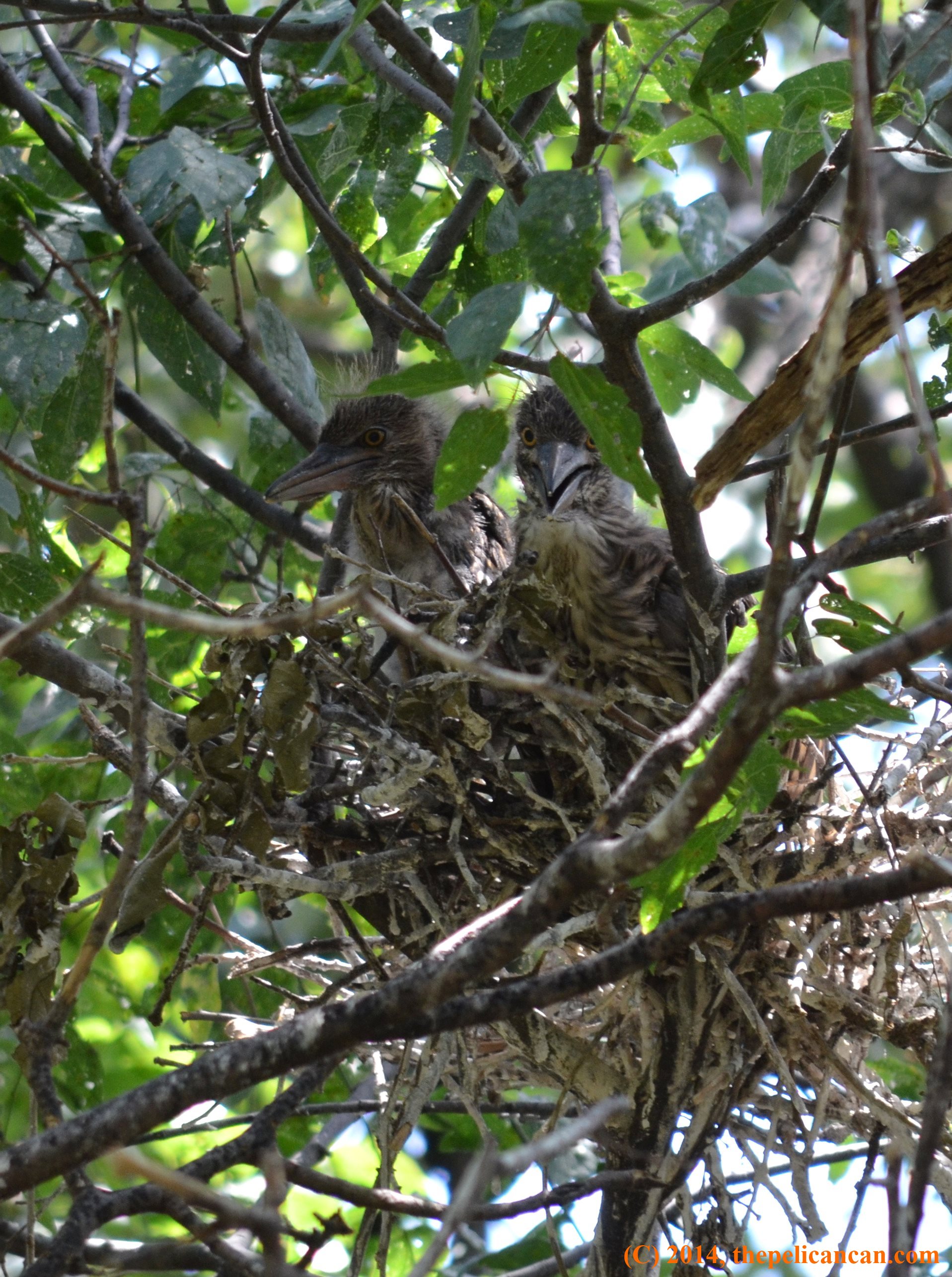
And some not-so-large black-crowned night heron juveniles.
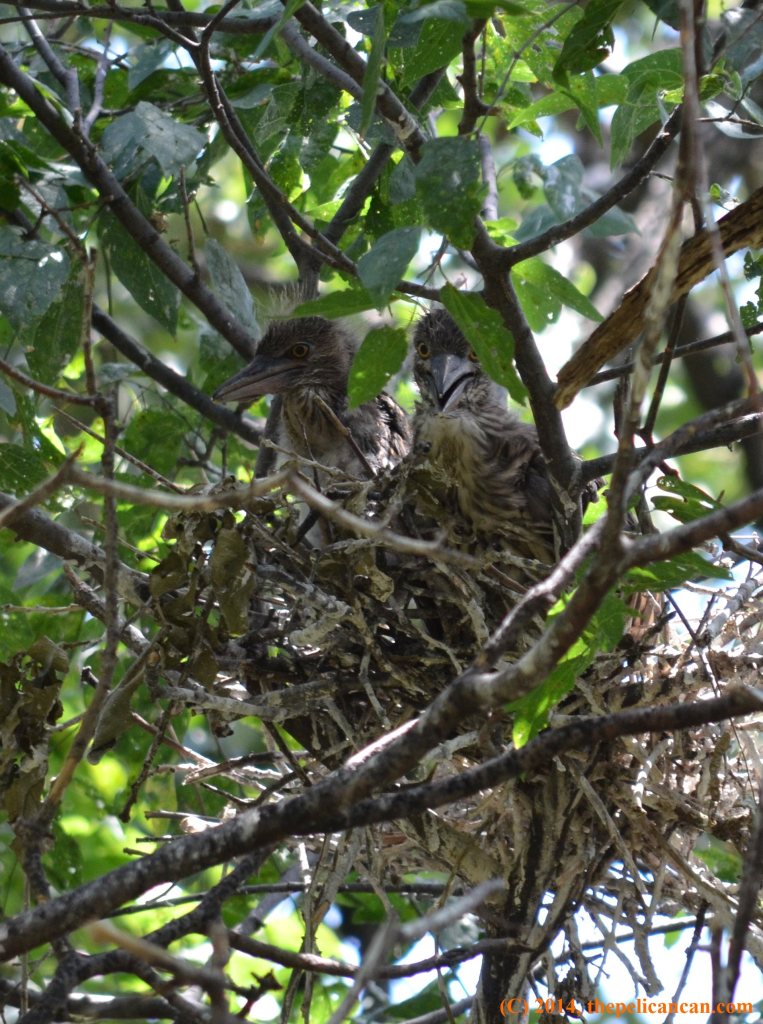
Two baby black-crowned night herons (Nycticorax nycticorax) sit in a nest at the UT Southwestern rookery in Dallas

They look like tiny dinosaurs.

Throughout the spring several tricolored heron couples tried to nest at the rookery, but only three couples were able to make it to egg hatching. The most successful couple made a nest that, while visible, was far back in the foliage. The female in that couple was the first to lay eggs, and all three of the chicks survived to adolescence. The second couple had a much more visible nest near the ibis nest. The female laid at least two eggs. A few days after the first chick hatched and was able to move, I stopped seeing movement in the nest. By that time the second chick should have hatched. I hoped the babies were just asleep. The next day the heron couple had vanished, and a cattle egret was steadily pilfering sticks from the abandoned nest.

One day the adolescent tricolored birds disappeared. It happened right after a storm. I was sure they were dead, and although I never saw a corpse, I always kept watch for one. Q thought that the birds had simply grown too old for the nest and dispersed to other locations.

Q was right.
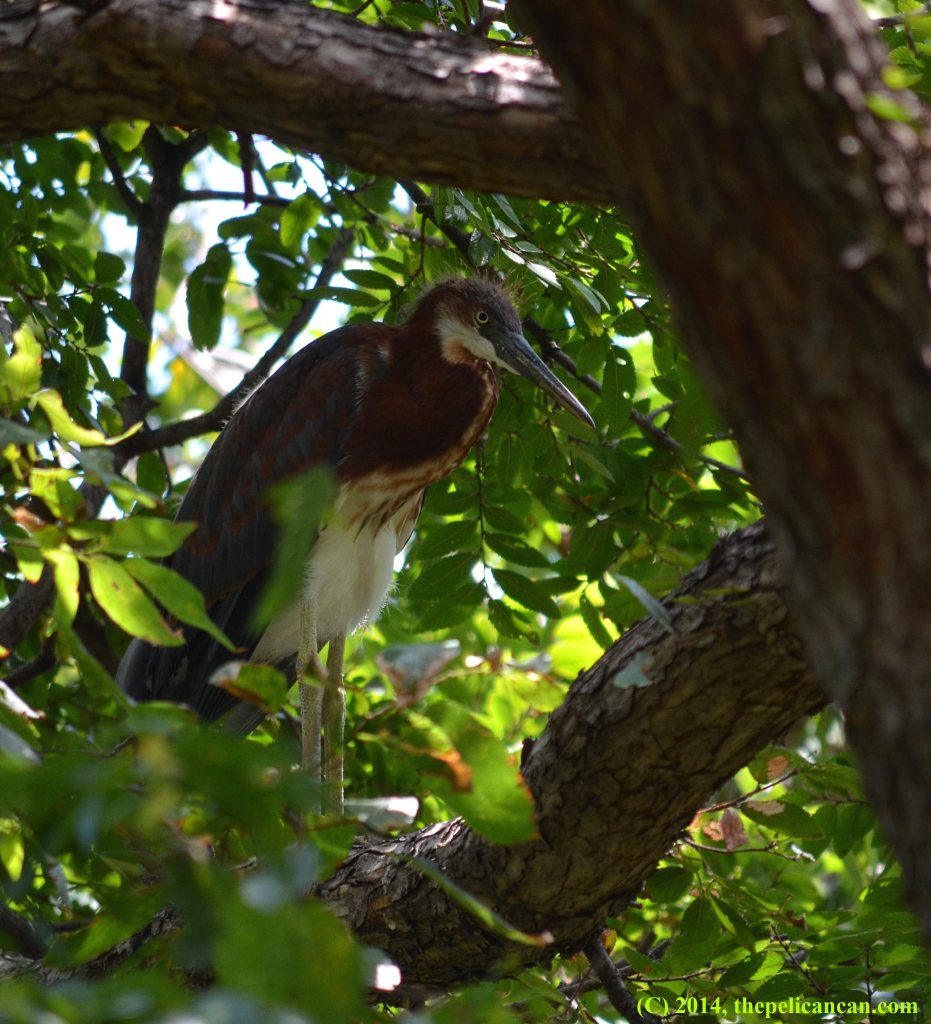
Juvenile tricolored heron (Egretta tricolor) stands in a tree at the UT Southwestern rookery in Dallas

I’M ALIVE!

After the reappearance, I only saw the tricolored juveniles when I was with Q. Maybe that was because we visited the rookery at different times when we were together than when I was alone. Or maybe they liked him better than they liked me. Once we even saw two of the juveniles flying to their old nest. That was nice.

As we were finishing our circuit around the rookery, Q and I saw a great egret juvenile wandering around near the Memorial Garden. Rescue time! The first time I rescued a great egret juvenile, I was concerned about the baby I saw staggering on the lawn in the hot sun, but I knew some types of juvenile birds would explore on the ground while their parent watched from a safe distance away. I didn’t want to interfere with that. I called up Rogers and explained my worry. “Do great egrets do that?” I asked.

“No. If a great egret is on the ground, the parents have forgotten it. It needs help.”

After that day, I started carrying a cardboard box in my car and plenty of towels in case I needed to make a rescue at the rookery.

Great egrets are shitty-ass parents. Really awful. If a bird falls out or is pushed out of the nest and can’t make its way back, it’s fucked. No one will help it. To make matters worse, like baby American white pelicans, baby great egrets often commit siblicide. Smaller/younger siblings who aren’t outright killed but who are still harassed may end up falling out of or intentionally leaving the nest to escape from their murder-inclined siblings.

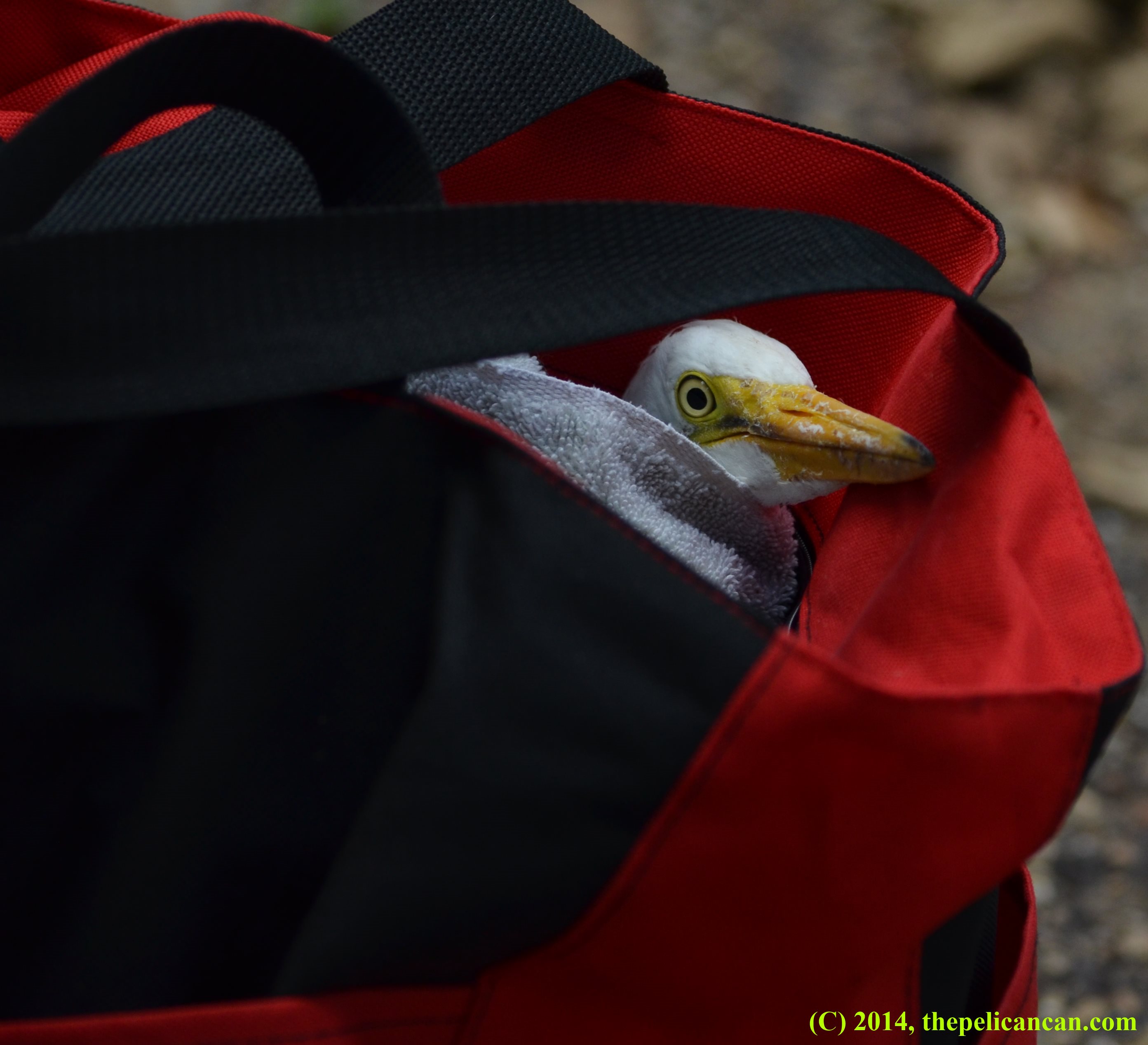
By this time I had started carrying not only towels with me but a large bag I dubbed the “Birdie Bag.” If I found a bird too young to be on the ground outside the rookery, I would catch it, wrap it up in a large towel, and place it in the Birdie Bag to keep it secure until I got to Rogers. Using the Birdie Bag worked better than just holding a wrapped-up baby to my chest, and I hoped it made the experience less traumatic for the bird.
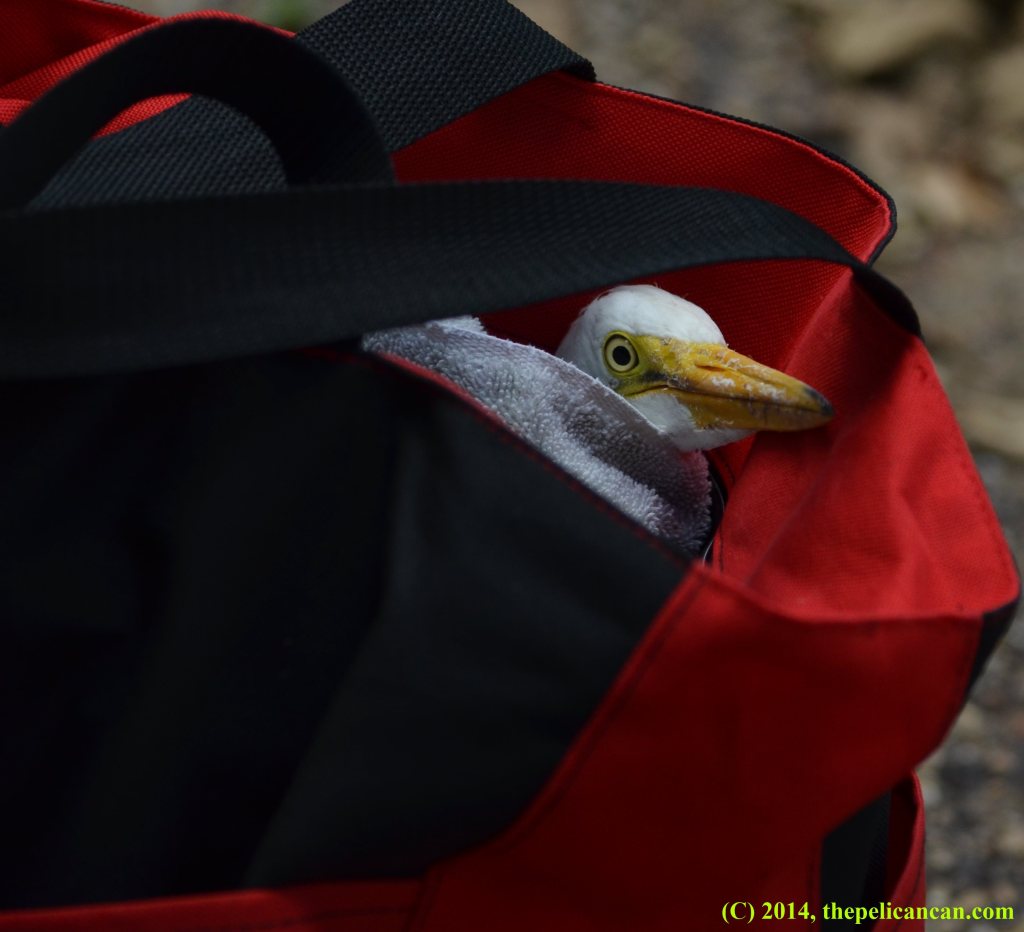
Abandoned juvenile great egret (Ardea alba) rescued and put in a bag for transport to Rogers Wildlife Rehabilitation Center

The wandering egret juvenile secured in the Birdie Bag, awaiting transport to Rogers.

When Q and I got to Rogers, we went to look at their birds after dropping off the egret. A few great blue herons live there and have the run of the place. The first time I saw them, I was very nervous. They were so close! I felt strange walking by them: “Uh, excuse me? Wild bird that is just standing there? Don’t you need to move? Run away? May I please get by?”

I almost always get a kick out of seeing a “wild” bird chilling next to human-made objects. This was no exception.
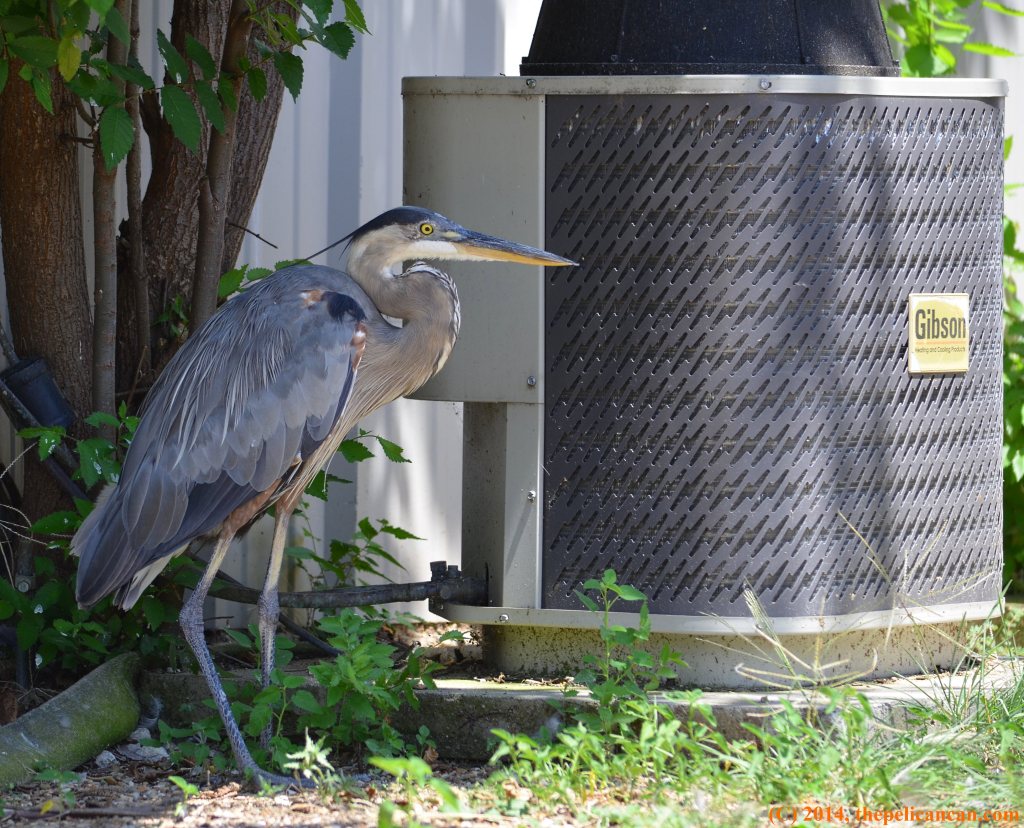
Great blue heron (Ardea herodias) lounges next to an air conditioning unit at Rogers Wildlife Rehabilitation Center south of Dallas

The heron looks like she’s just skipped class to go smoke near the back of the high school.

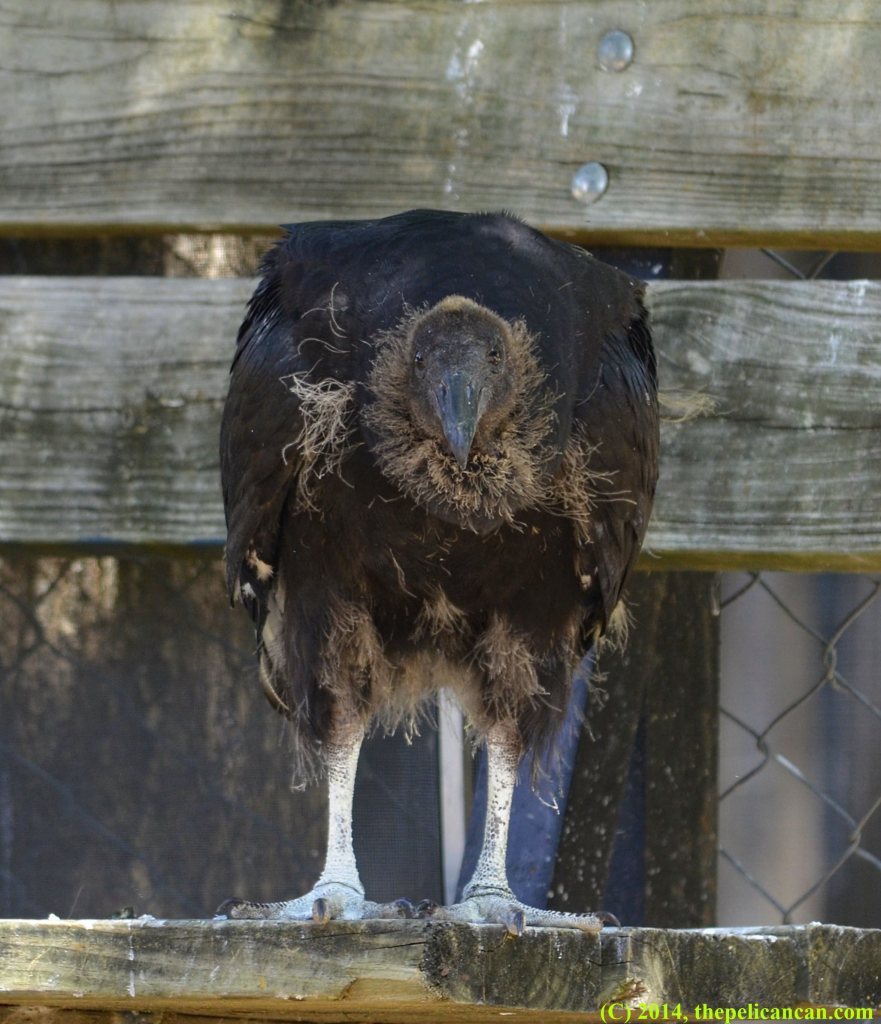
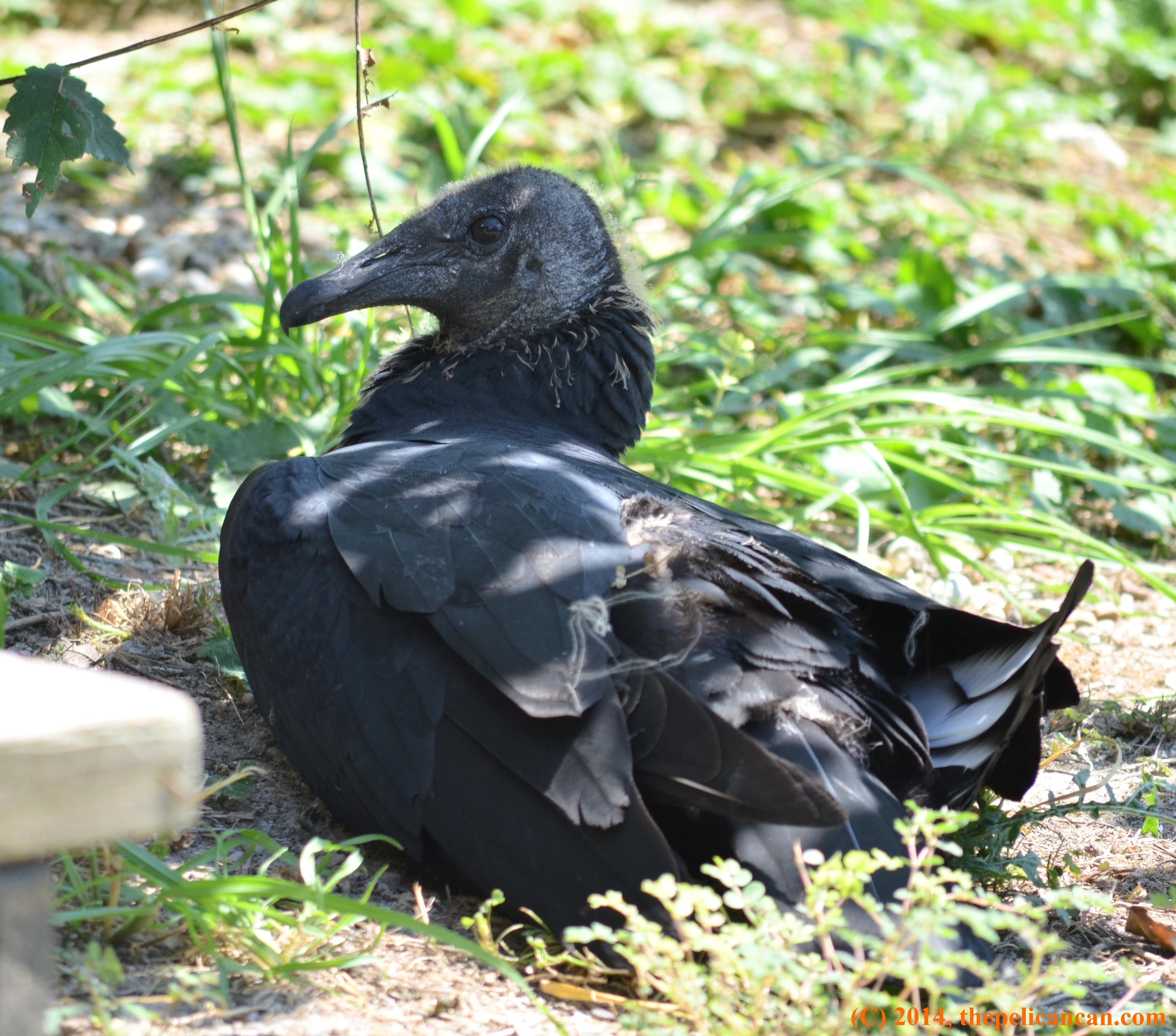
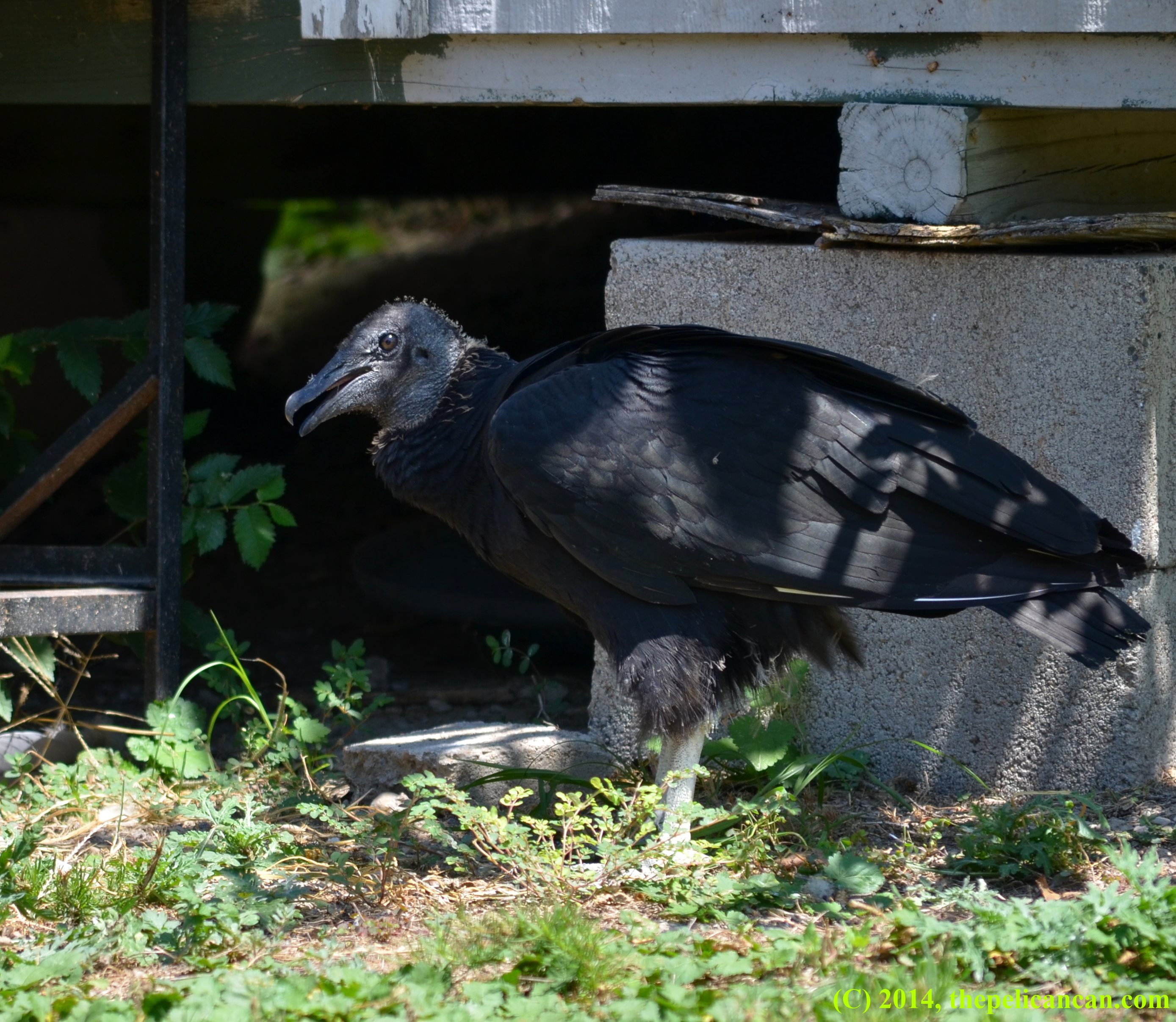
One of the baby vultures was hanging out by herself in the shade.
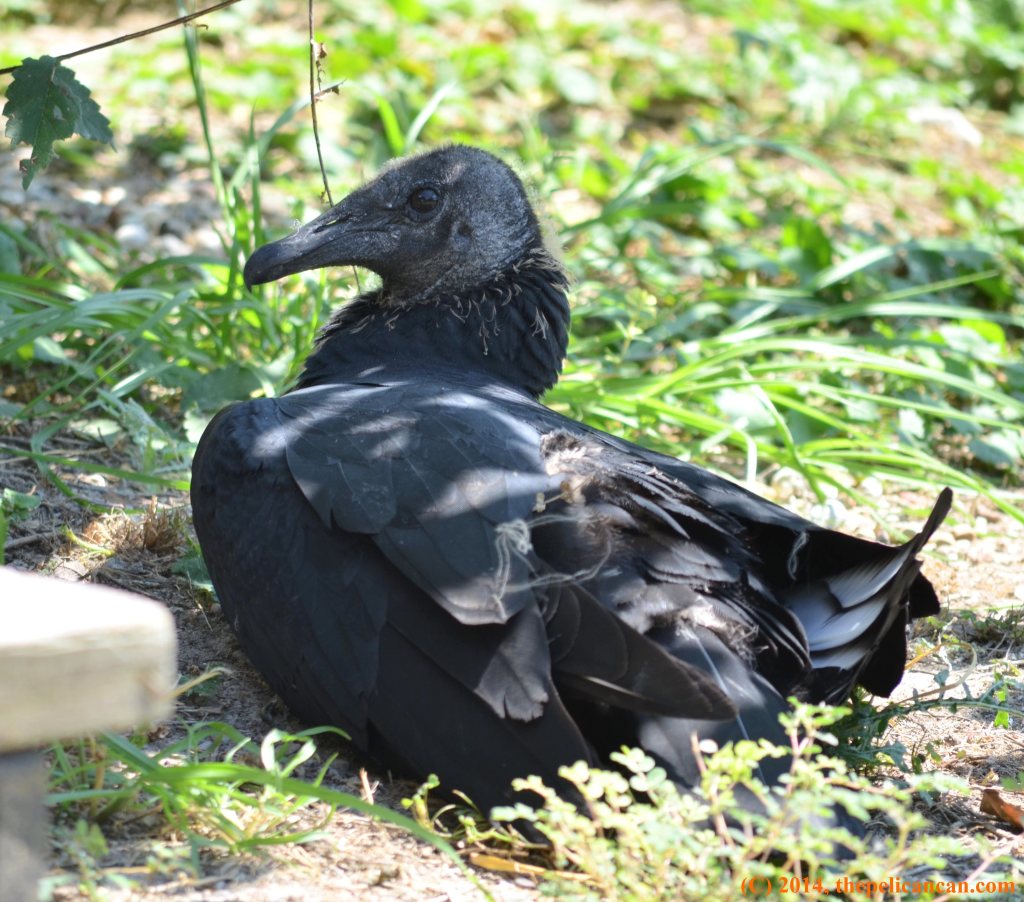
Juvenile black vulture (Coragyps atratus) lounges in the grass at Rogers Wildlife Rehabilitation Center south of Dallas

Greetings, humans!

THE STORY OF THE ROGERS VULTURES

Kathy Rogers told Q and me the story of the vulture family when we were at Rogers at the end of May. I’ve forgotten some of the details, but hopefully I can remember enough to do justice to the story.

Black vultures nest on the ground, in places with lots of cover. Ms. Rogers had noticed a pair of black vultures hanging around Rogers, and one day discovered that they had made a nest in a large cage that had been empty. Ms. Rogers said she was extremely excited to see the nest—because the birds nest on the ground, one cannot easily observe adult breeding behavior and juvenile behavior. She was looking forward to learning more about the vultures. She kept the cage empty for the vultures to continue using and observed them.

The black vulture couple laid two eggs. While they were incubating the eggs, Ms. Rogers received two abandoned black vulture eggs. She wondered if she could get the black vulture couple to care for the abandoned eggs/chicks along with the couple’s own offspring. Unlike great egrets, black vultures are excellent parents.

All four of the eggs hatched within the same week. Ms. Rogers introduced the extra chicks to the parents and supplied the parents with supplemental food to feed the new additions. The strategy worked: the parents accepted all four babies as their own and cared for them. Ms. Rogers said this news was especially excellent because the birds from the abandoned nest will have a pretty good chance of surviving in the wild due to the socialization and teaching they will learn from their adopted parents—black vultures are highly social and gregarious birds. For a while the babies had open access, but after they wound up in the woods, Ms. Rogers put them in a large pen with access outside to a “porch” where the parents could hop in and check on them. Once the babies got older, they had more access to the grounds. The last time I was at Rogers, they were old enough and strong enough to roost in trees and on roofs. They are heart-meltingly ADORABLE.
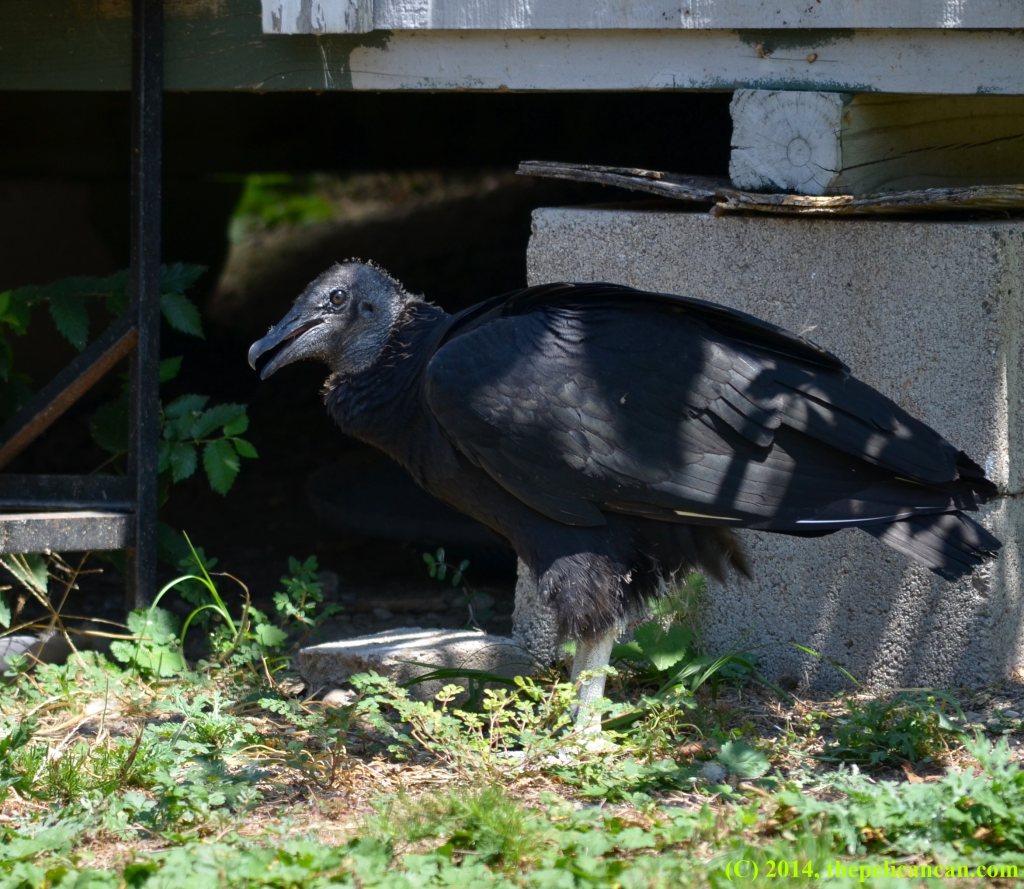
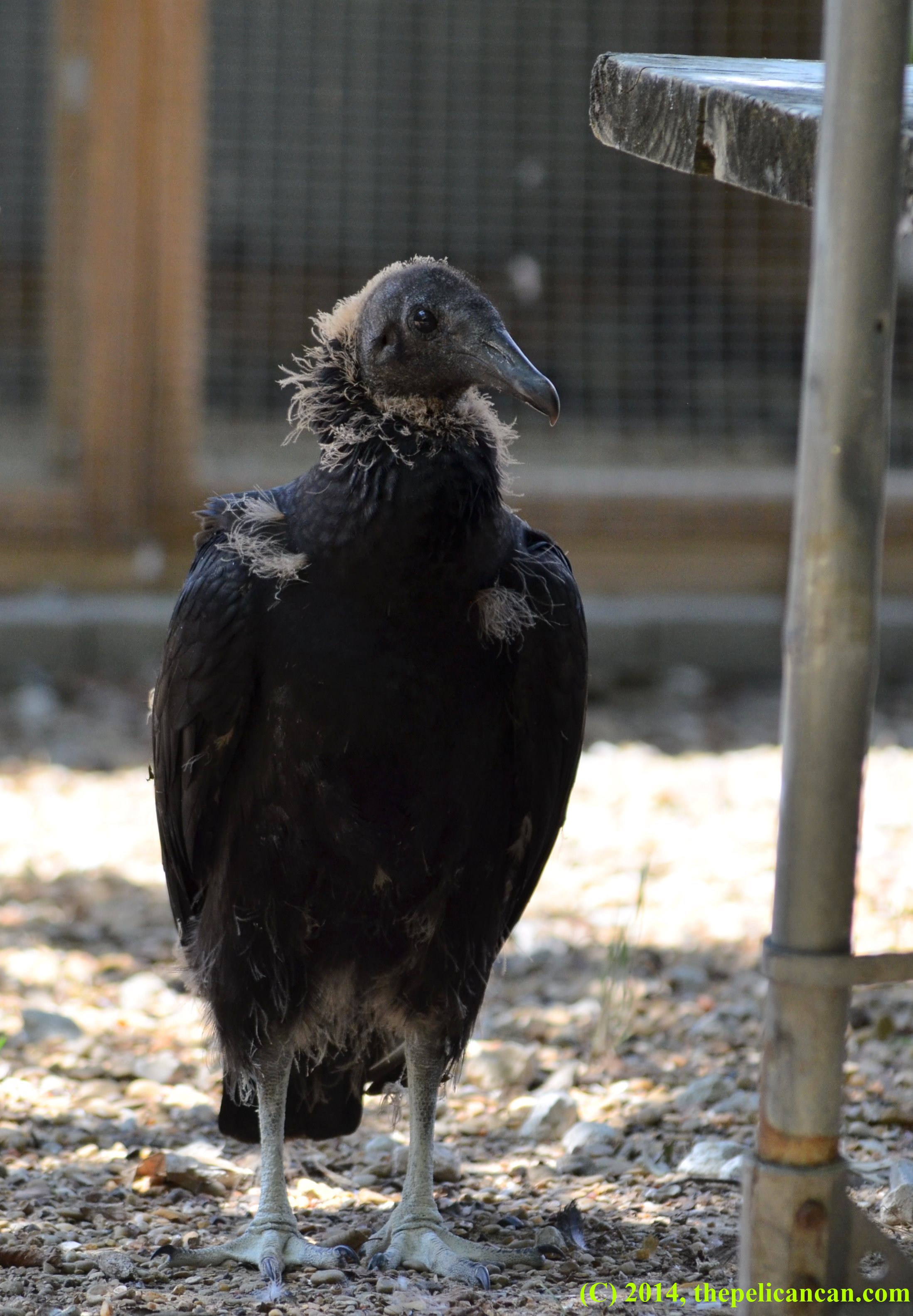
Juvenile black vulture (Coragyps atratus) stands in shade at Rogers Wildlife Rehabilitation Center, south of Dallas

You can still see little threads of yellow down around her neck.

We left that juvenile and saw another hanging out by herself under a bench, although four more juveniles were lounging under another bench near her.
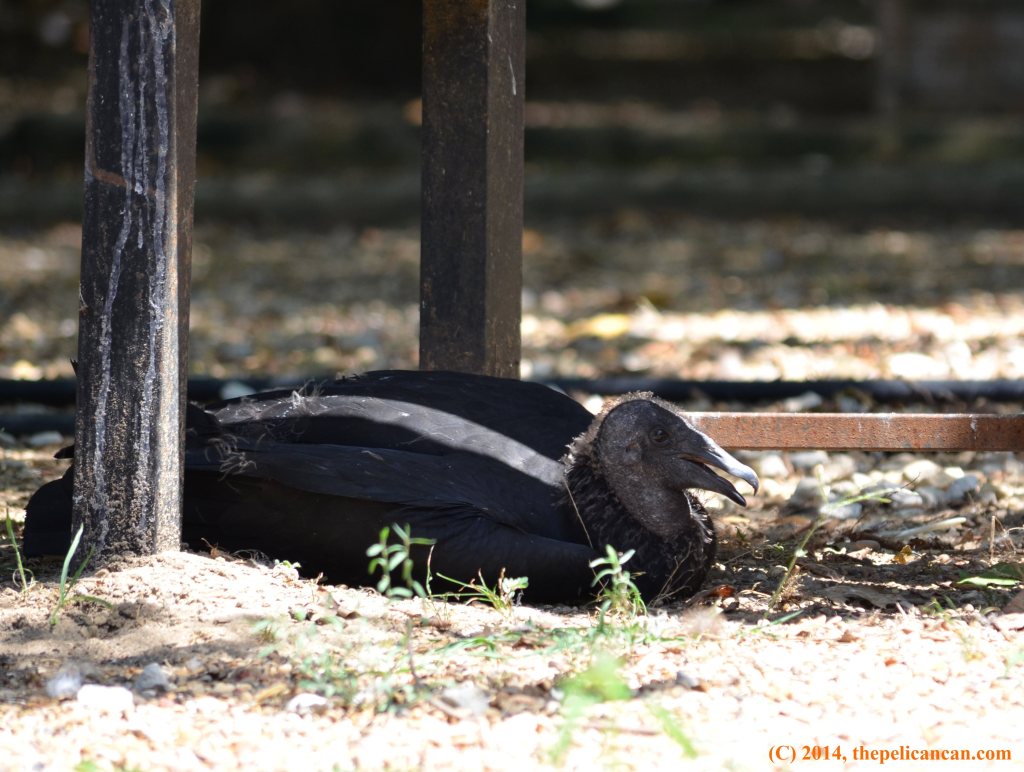
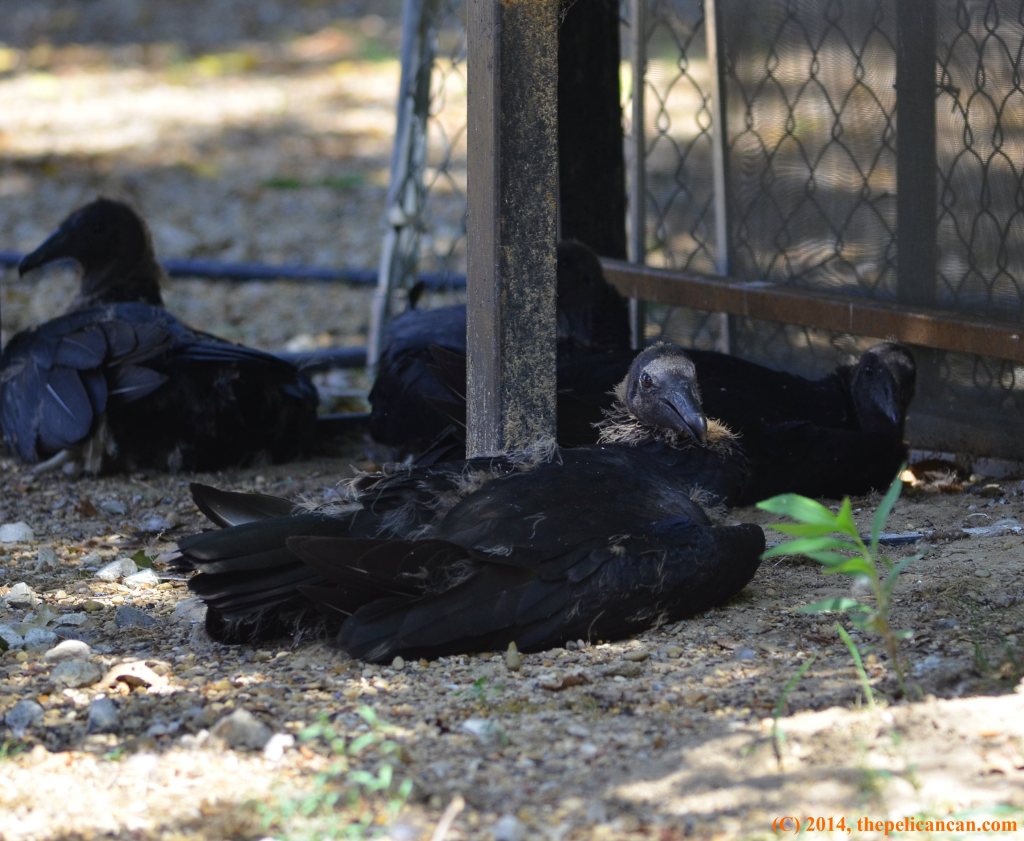
Juvenile black vulture (Coragyps atratus) lies in the shade at Rogers Wildlife Rehabilitation Center, south of Dallas

Four juvenile black vulture (Coragyps atratus) lies in the shade at Rogers Wildlife Rehabilitation Center, south of Dallas

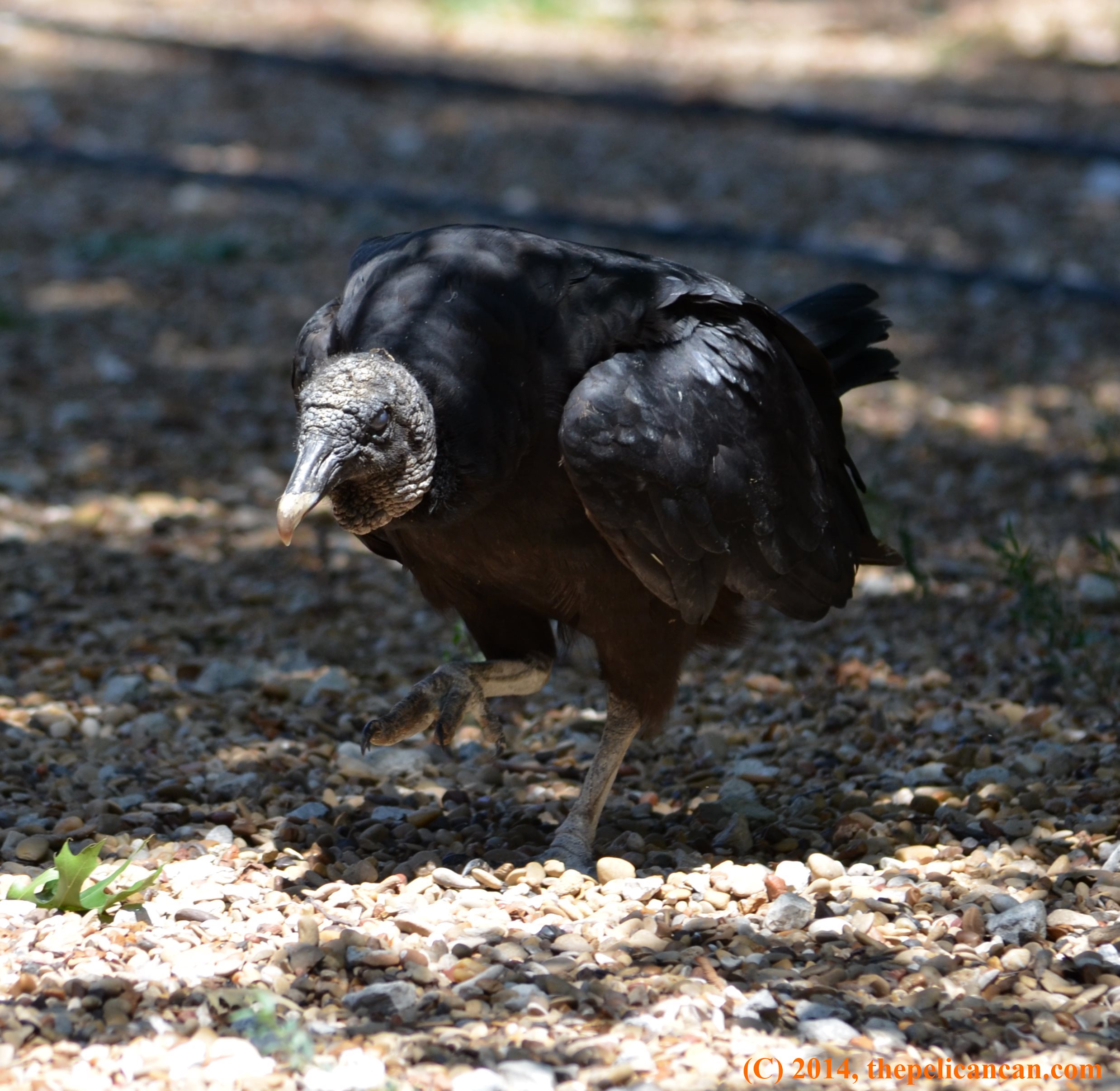
An adult had been sitting near the foursome, but she got up and walked out into the sunlight.
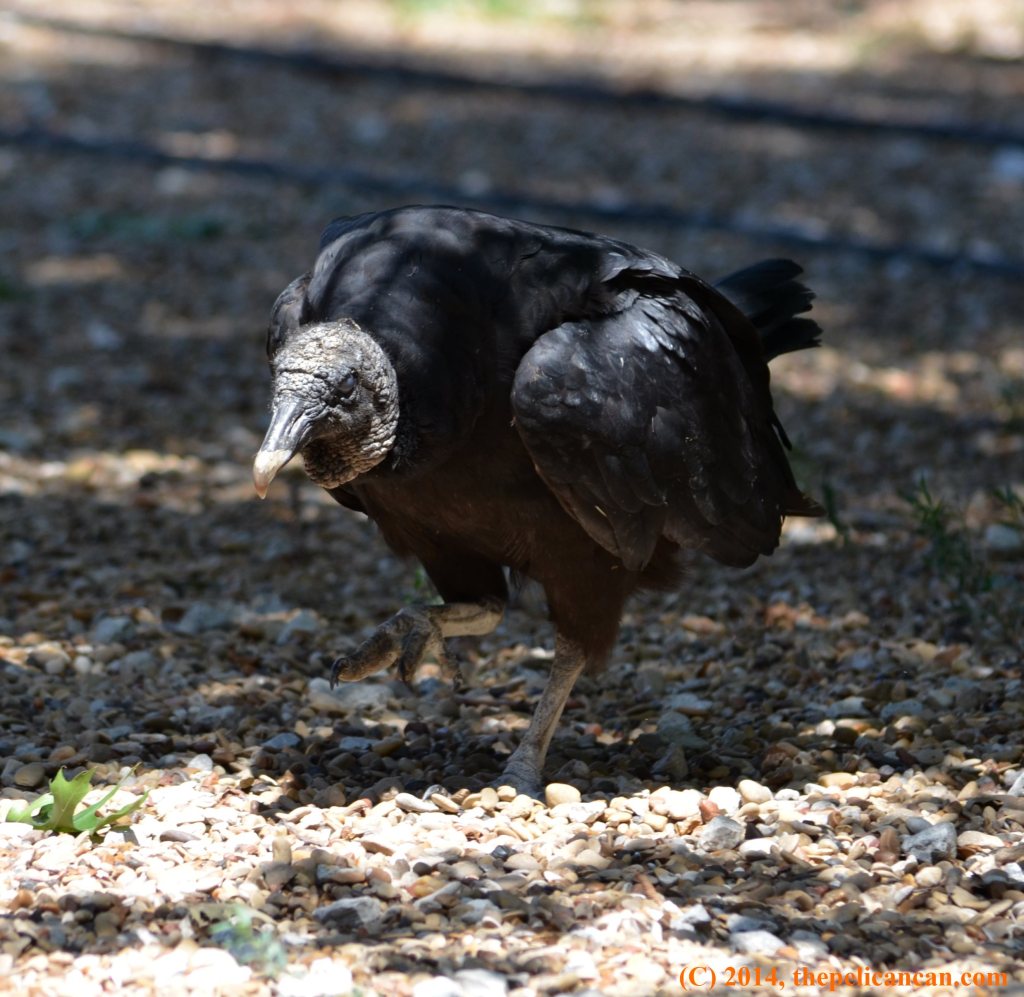
A black vulture (Coragyps atratus) walks on the grounds at Rogers Wildlife Rehabilitation Center, south of Dallas

Walter M. Miller, Jr was right: I do lovingly feed my young.
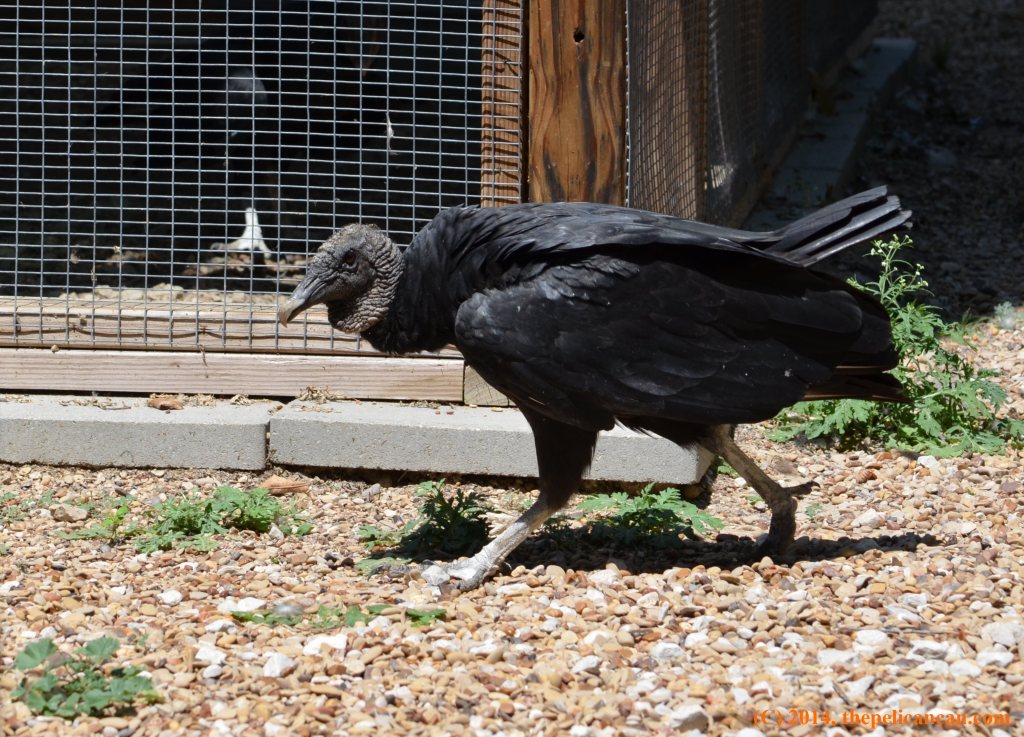
A black vulture (Coragyps atratus) walks on the grounds at Rogers Wildlife Rehabilitation Center, south of Dallas

She is walking past a cage that has a black vulture in it. I always wondered how the caged black vultures felt about the vulture family. Glad to see conspecifics? Sad that they couldn’t move freely, while the other birds could?
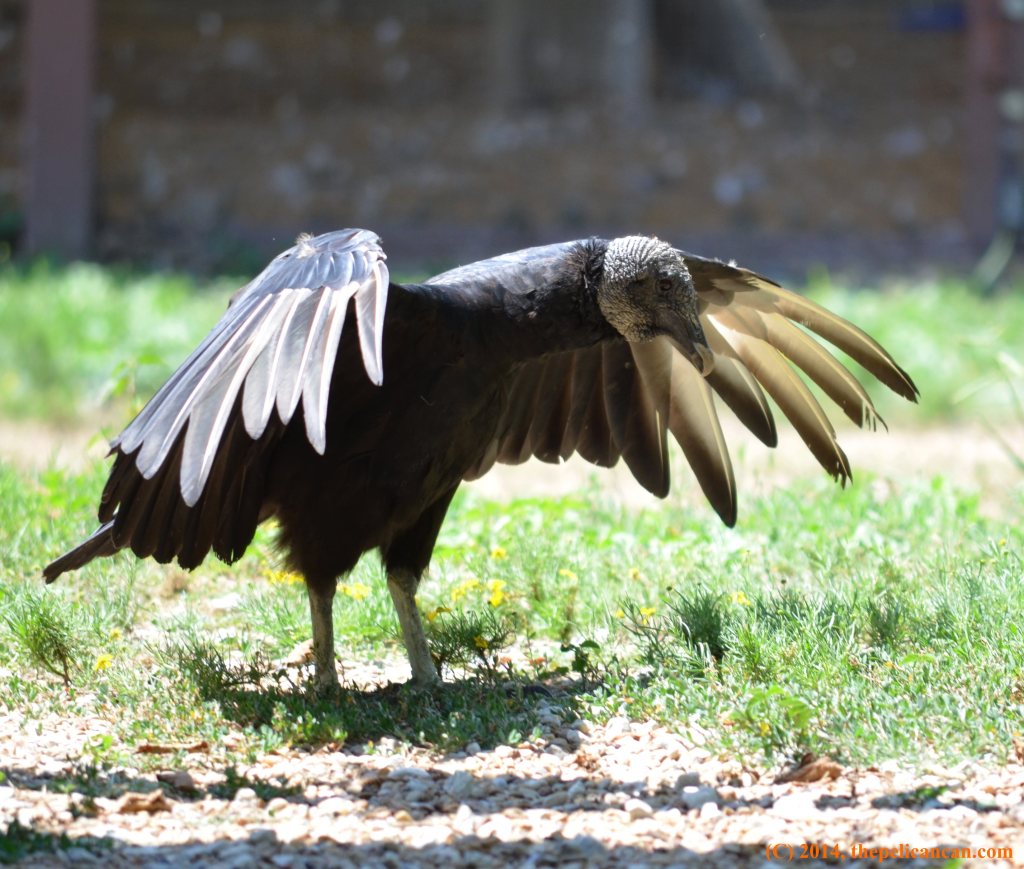
A black vulture (Coragyps atratus) stands in the sun at Rogers Wildlife Rehabilitation Center, south of Dallas

The juvenile who had been lying by herself near the foursome got up and looked adorable.
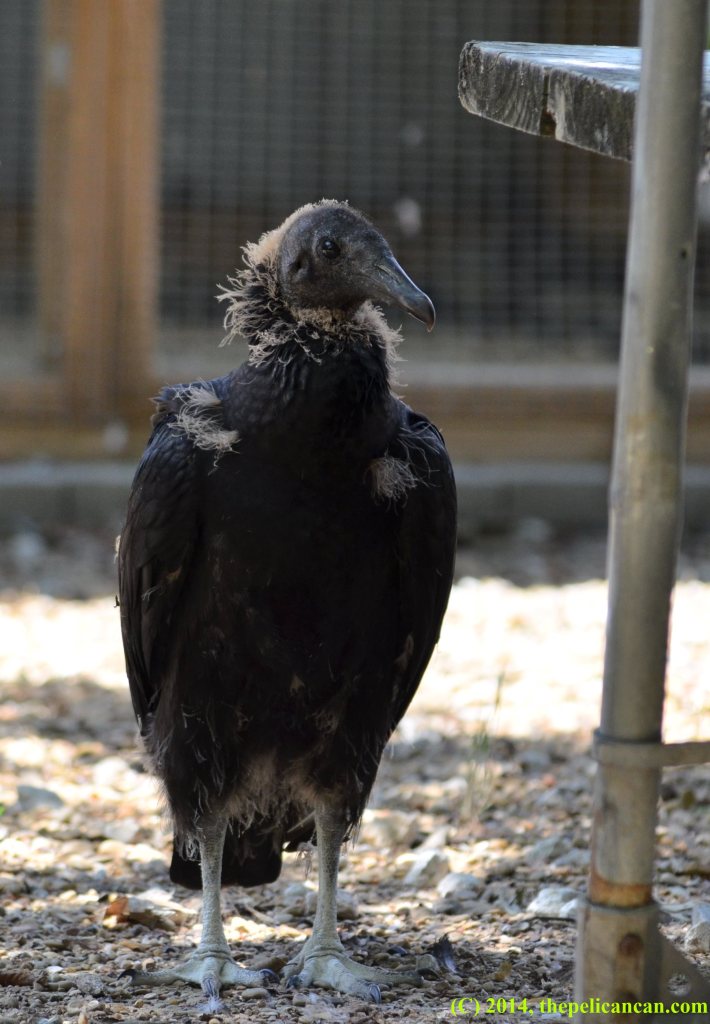
Juvenile black vulture (Coragyps atratus) standing in the shade at Rogers Wildlife Rehabilitation Center, south of Dallas

Then I realized something. The vulture family had four juveniles. When Q and I had first arrived, we’d seen a juvenile vulture. Then we saw the juvenile who had been lying down by herself. Next to her were the four juveniles resting together. The adult had joined another adult elsewhere on the property. That’s six juveniles and two adults.

I returned to all of the locations to see if any of the birds had moved—maybe I had mistakenly counted the same bird twice. Nope. Six juveniles. Four of them were obviously the Rogers birds, but who were the other two? Perhaps the count was four Rogers juveniles, one Rogers adult, and a different adult with its two juveniles who had come to visit the Rogers vultures. Do vultures even do that?! The next time I went to Rogers, there were only the four juveniles there.

UPDATE: I ran into a woman who works at Rogers (she was the person who taught me, after I had a near-miss experience, that egrets go for the eyes and I should wear safety glasses), and when I asked about the vulture family, she was able to make sense of what I’d seen. Not only had the vulture parents taken in the two newly hatched birds along with their own chicks, but later on in the season two more vulture chicks that had been abandoned were brought to Rogers, and the vulture parents adopted those birds as well. So there were six juveniles, total. The next time I was at Rogers and had only seen four, the two others might have been somewhere else on the property.

She also said that the vulture couple has been spotted visiting Rogers again with a couple of their offspring. She suspects that the parents might be looking to scope out the area for a possible nesting site. She said this year, they are only making one specific cage available to the parents to use, not the one the birds chose last year. It would be adorable if the vulture pair chose to raise young there again this coming year!
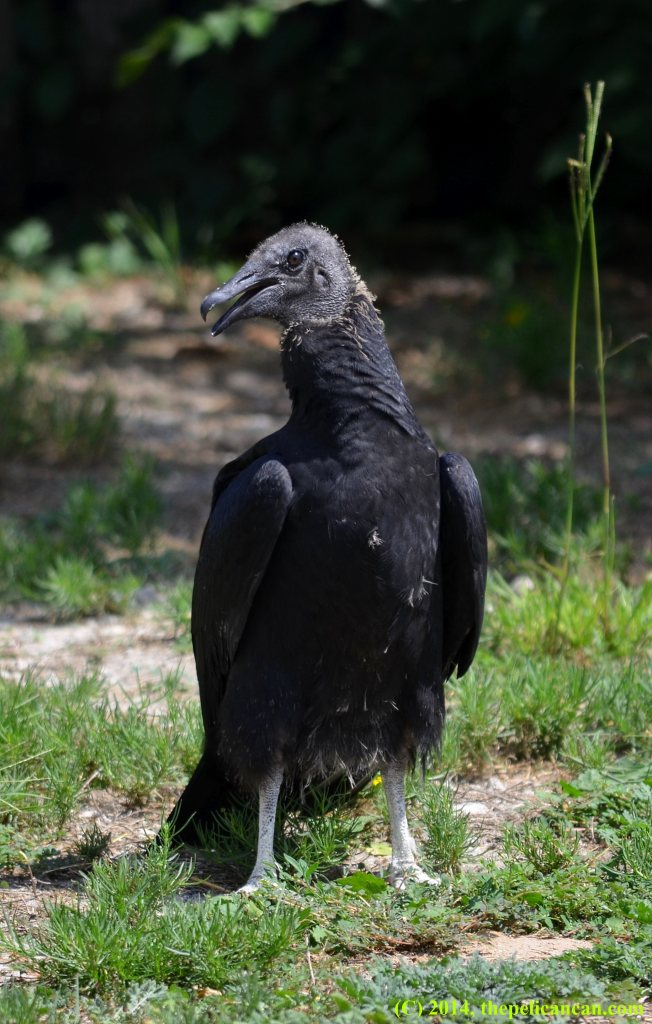
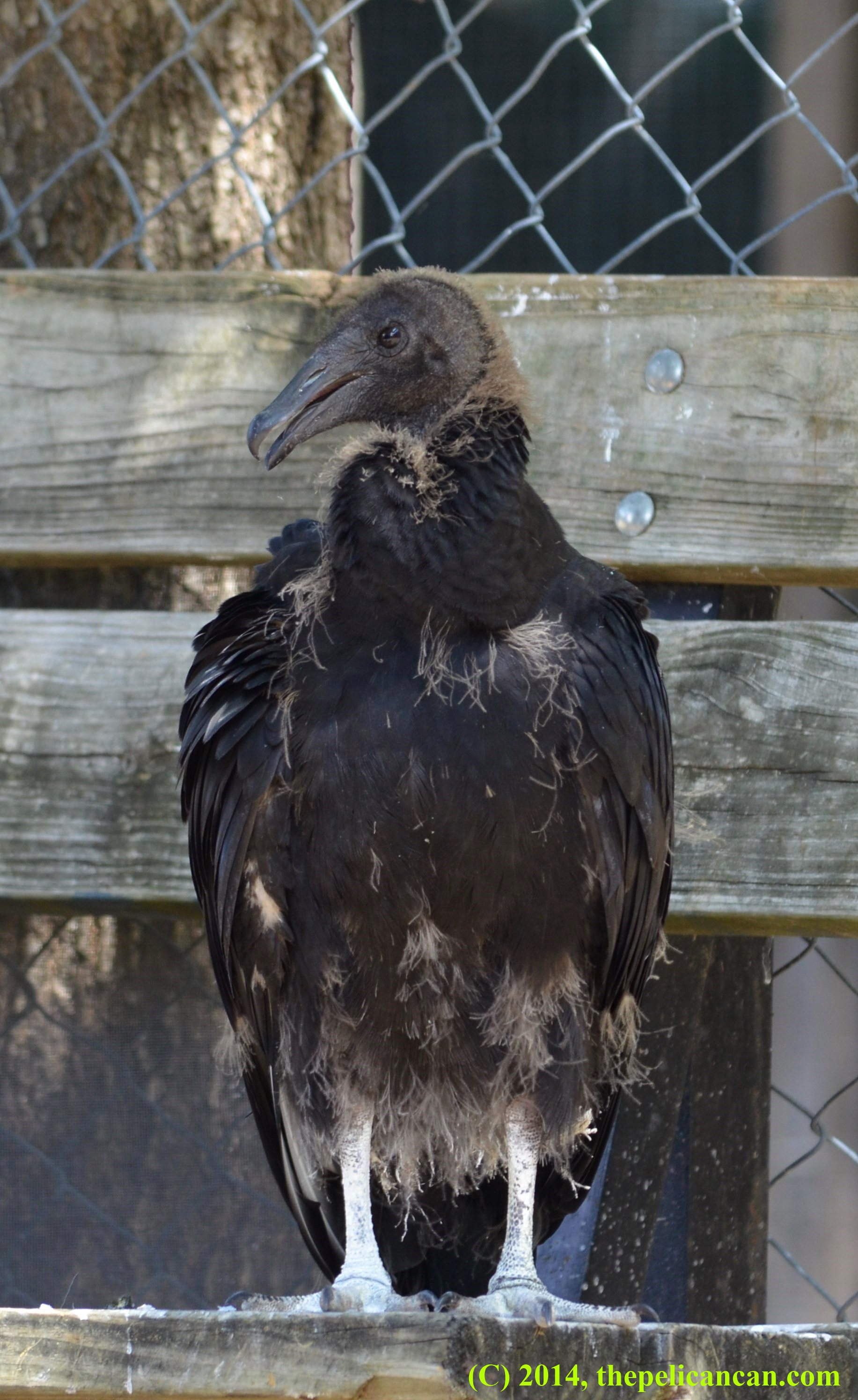
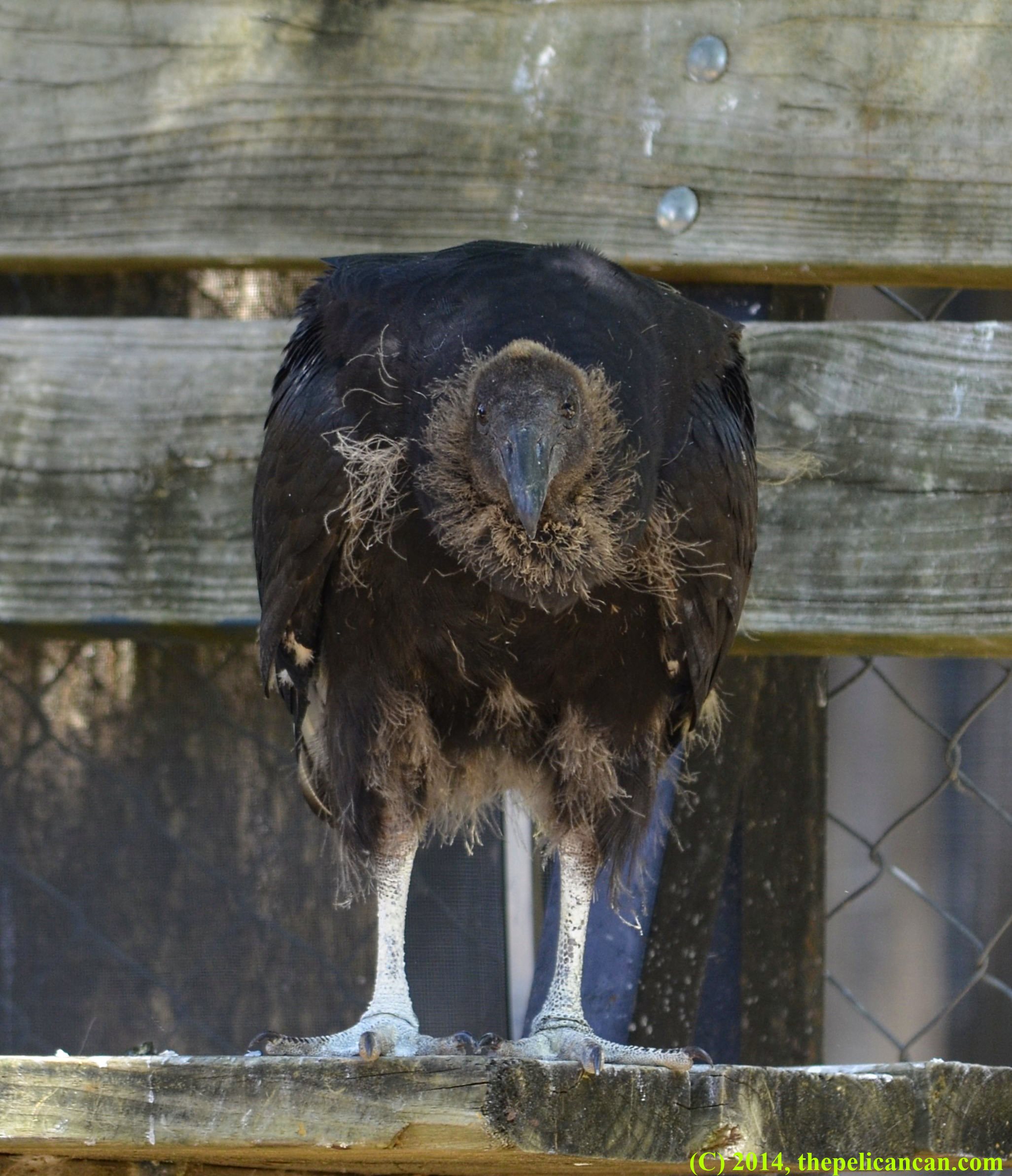
Juvenile black vulture (Coragyps atratus) standing at Rogers Wildlife Rehabilitation Center, south of Dallas

All right you humans, listen up. My name is Fluffy, and I’m here to instruct you in the fine art of being a vulture.

Back where the majority of the juveniles were hanging out, the vulture who had stood up decided to hop onto the bench.
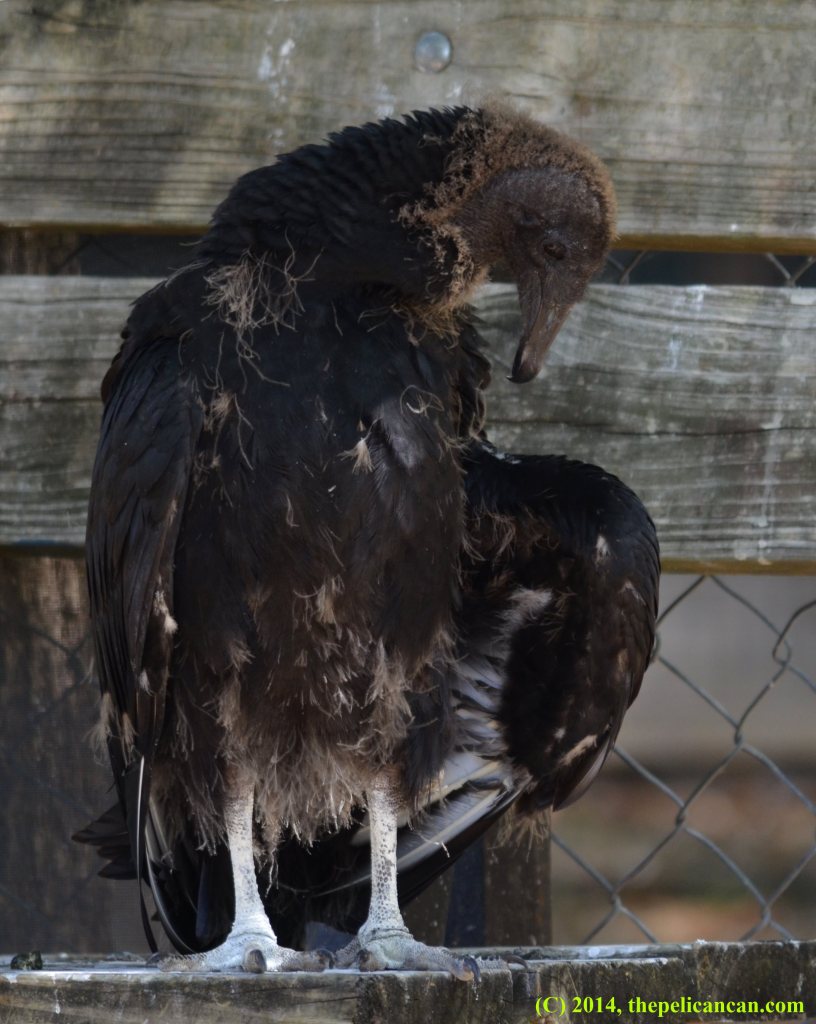
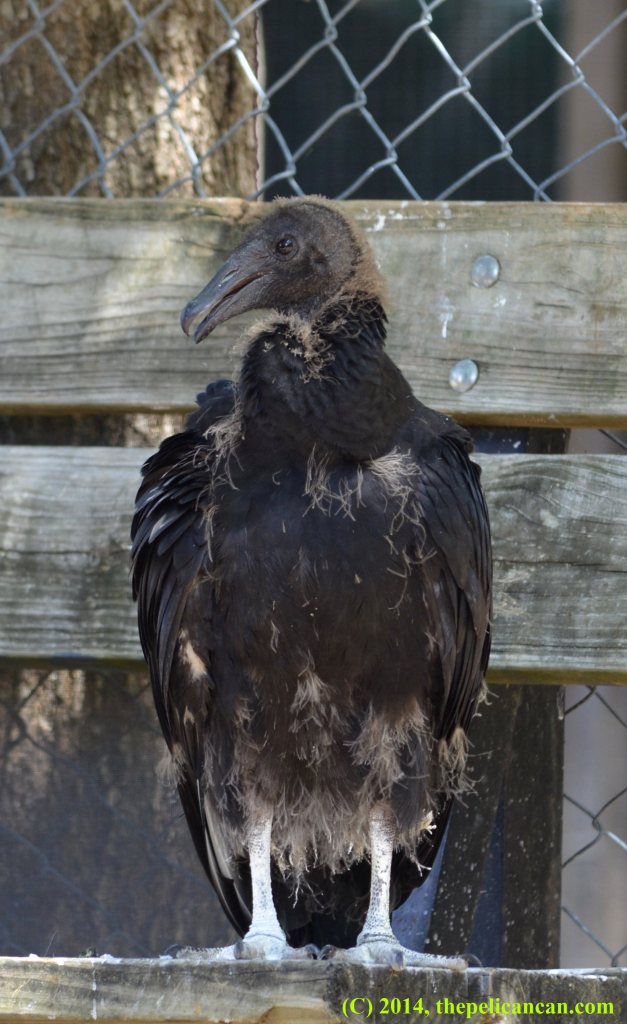
Juvenile black vulture (Coragyps atratus) standing on a bench at Rogers Wildlife Rehabilitation Center, south of Dallas

Juvenile black vulture (Coragyps atratus) standing on a bench at Rogers Wildlife Rehabilitation Center, south of Dallas

Juvenile black vulture (Coragyps atratus) standing on a bench at Rogers Wildlife Rehabilitation Center, south of Dallas

The other vultures were still lounging on the ground.
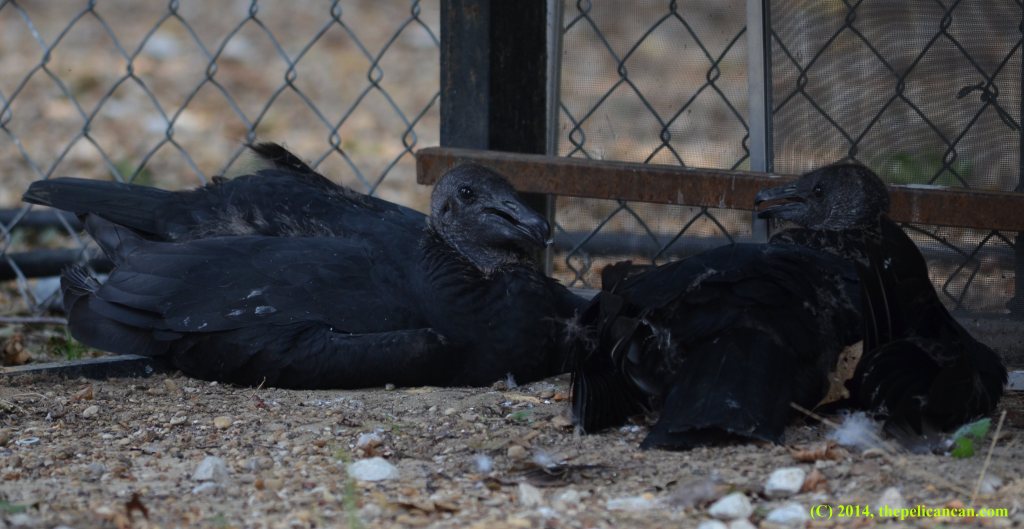
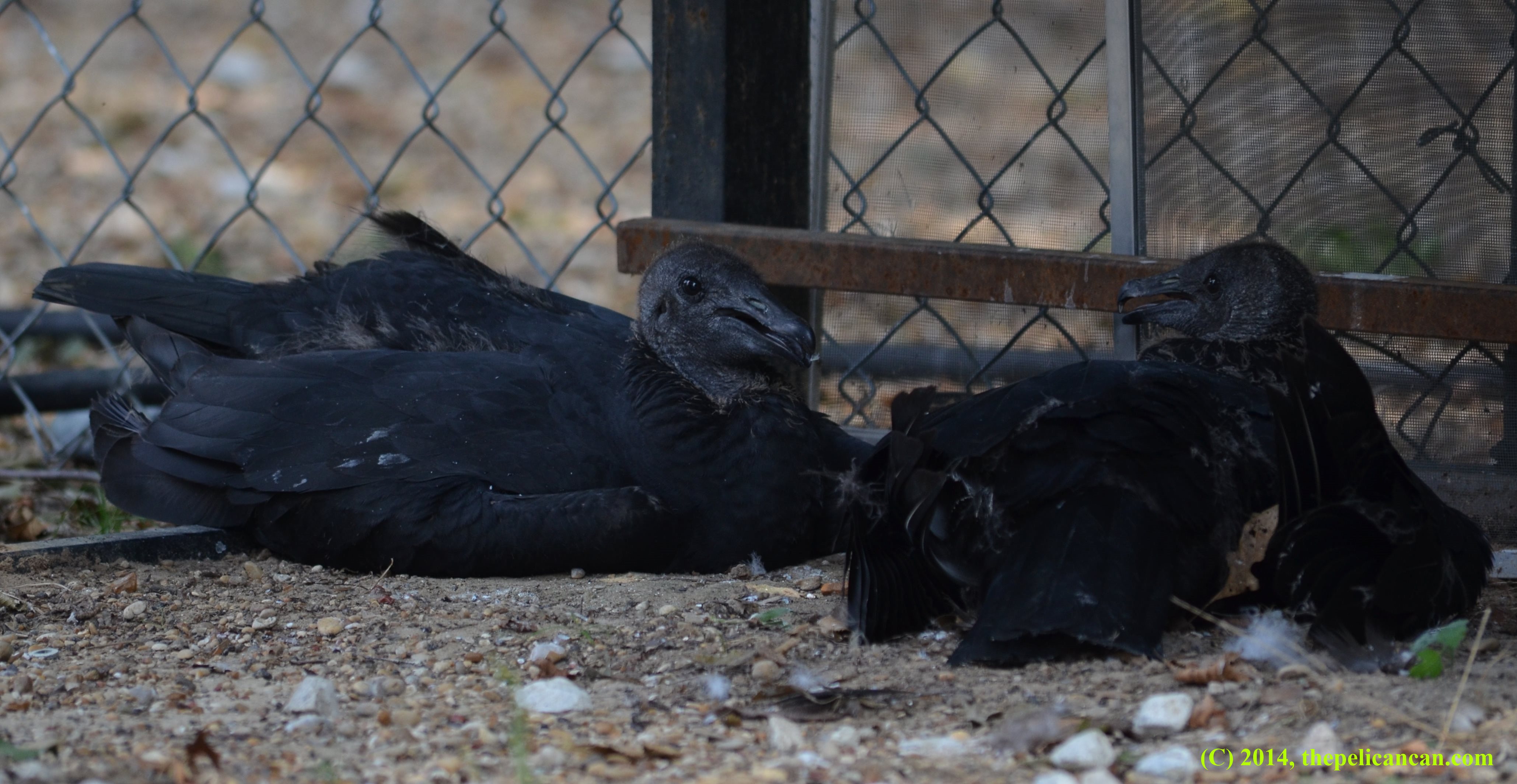
Two black vultures lying on the ground at Rogers Wildlife Rehabilitation Center, south of Dallas

The vulture on the bench hopped down and went out to strut her stuff in the sun.
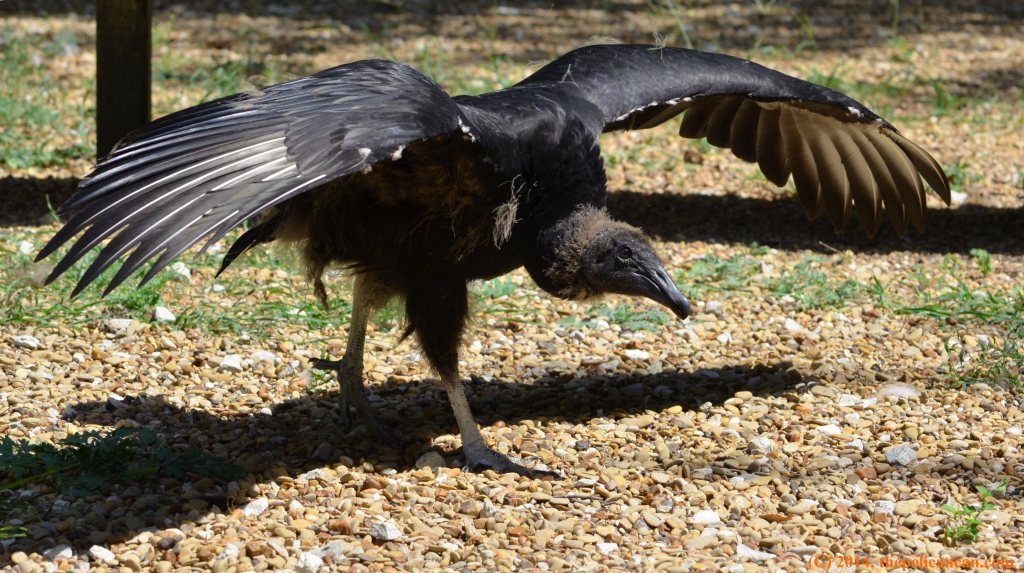
Juvenile black vulture (Coragyps atratus) standing at Rogers Wildlife Rehabilitation Center, south of Dallas

I WILL BE SO SEXY WHEN I AM A GROWN-UP.
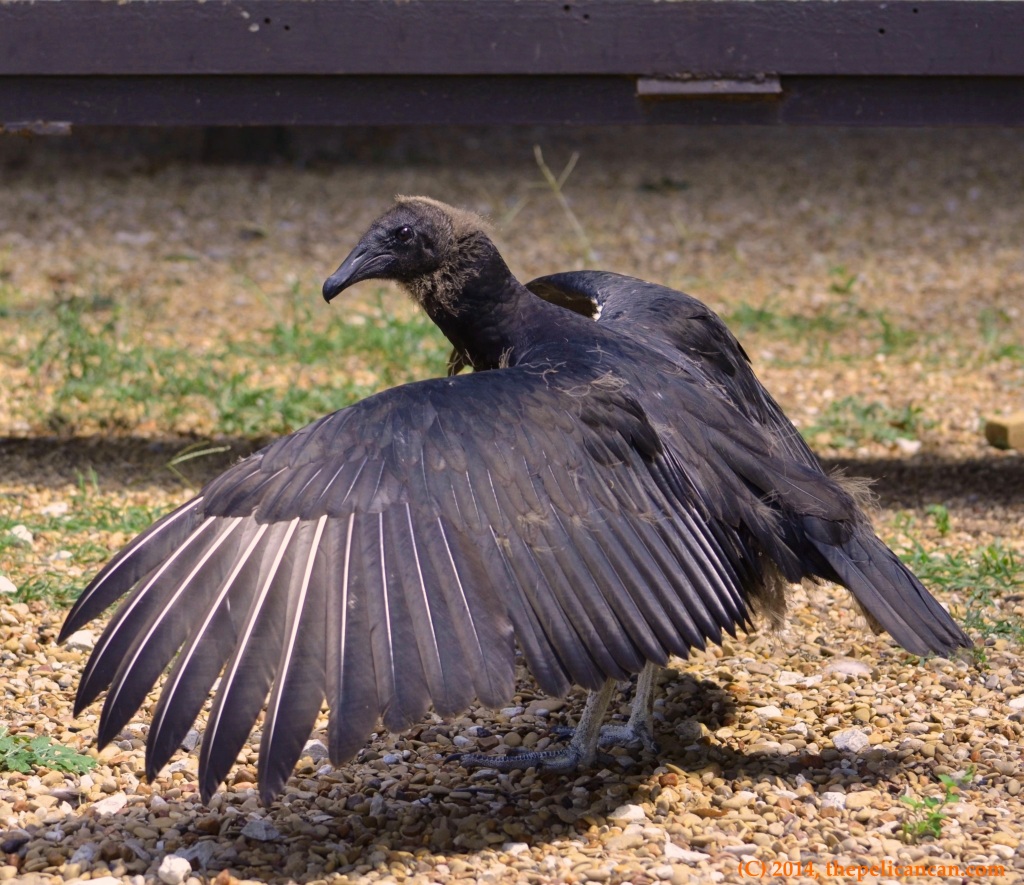
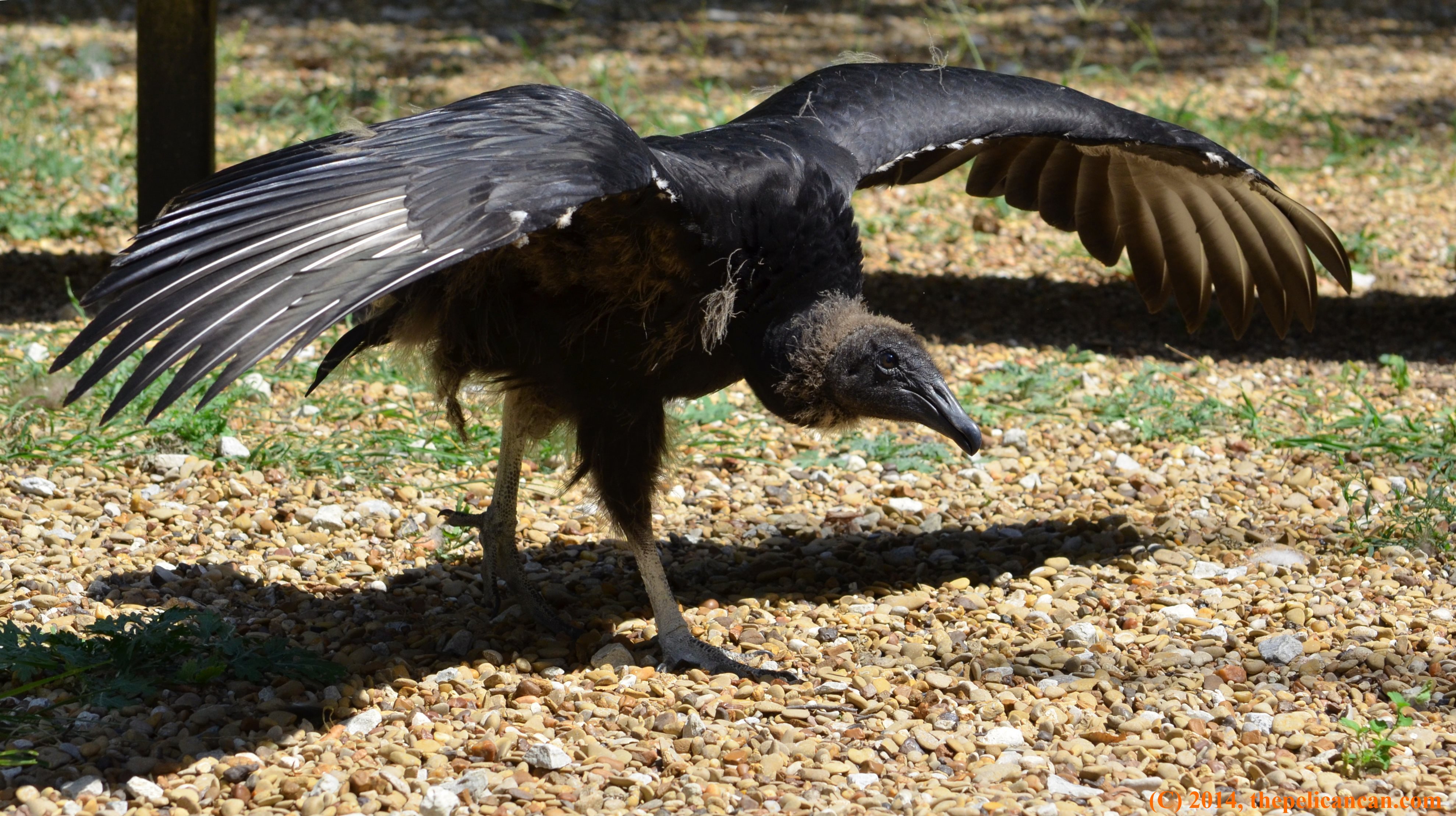
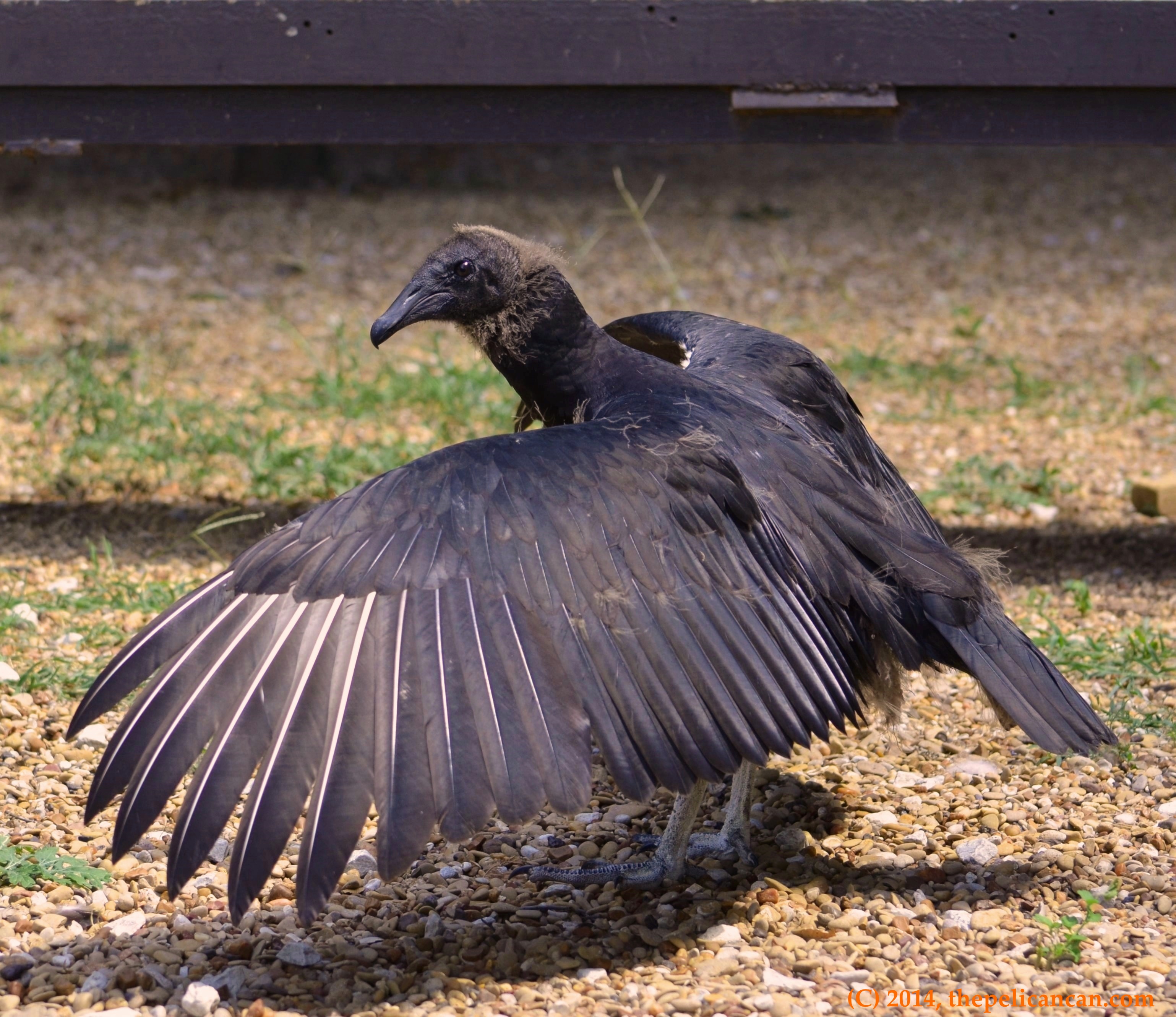
Juvenile black vulture (Coragyps atratus) holds wings out at Rogers Wildlife Rehabilitation Center, south of Dallas

WHY IS NO ONE PAYING ATTENTION TO ME? NOW I AM ANGRY! GRRRR!

Q and I went back home, where I saw a pretty black bee hanging out on my gaillardia blooms. Does anyone know what kind of bee it might be? It was small, much closer to the size of a honey bee than a carpenter bee.
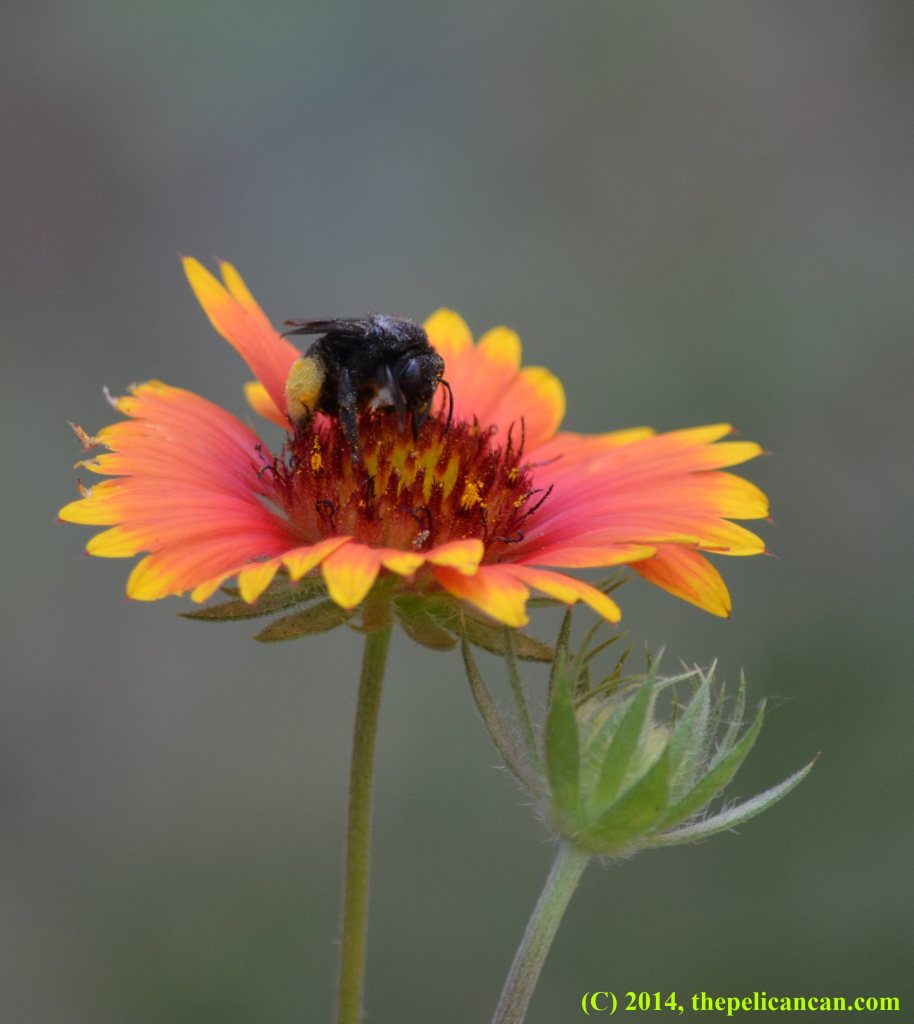
Black bee on a gaillardia flower in Dallas

One last thing: I hope that anyone reading this will strongly consider donating to Rogers Wildlife Rehabilitation Center. They do excellent work rehabilitating and caring for birds.

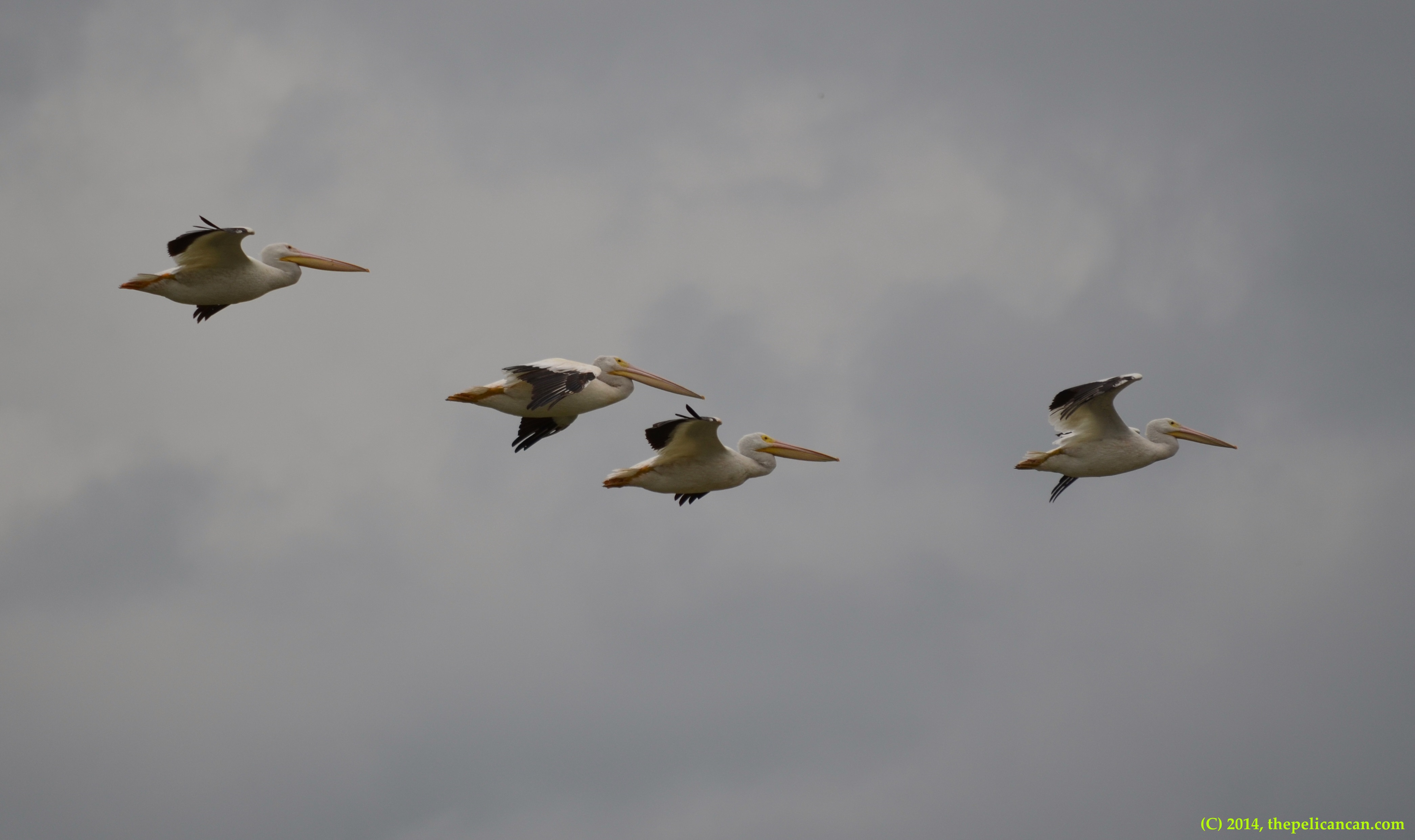
A Fish Fight and a Much More Vicious Fight: October 15

When I first went out to watch the pelicans, they were pretty chill. Several pelicans were sitting and standing on the Shore Log. Some were grooming; some were trying to sleep. None of them looked like they wanted to start a fight or go exploring.

(Pelecanus erythrorhynchos)

Four American white pelicans (Pelecanus erythrorhynchos) loaf on a log at White Rock Lake in Dallas, TX

Can someone order out for sushi?

I went to the dock to see if there was any action there.

Two American white pelicans (Pelecanus erythrorhynchos) loaf on a log at White Rock Lake in Dallas, TX

What is this “action” of which you speak?

A juvenile was out in the water playing with a feather. She bounced it in her pouch before dropping it and picking it up a few times.

An American white pelican (Pelecanus erythrorhynchos) plays with a feather at White Rock Lake in Dallas, TX

No pelicans were loitering around the Queen of the Log log, and the Queen who was there was busy grooming.

An American white pelican (Pelecanus erythrorhynchos) grooms at White Rock Lake in Dallas, TX

I watched a pelican swimming by, hoping that she might try to jump on a log or do something interesting. She didn’t.

An American white pelican (Pelecanus erythrorhynchos) swims at White Rock Lake in Dallas, TX

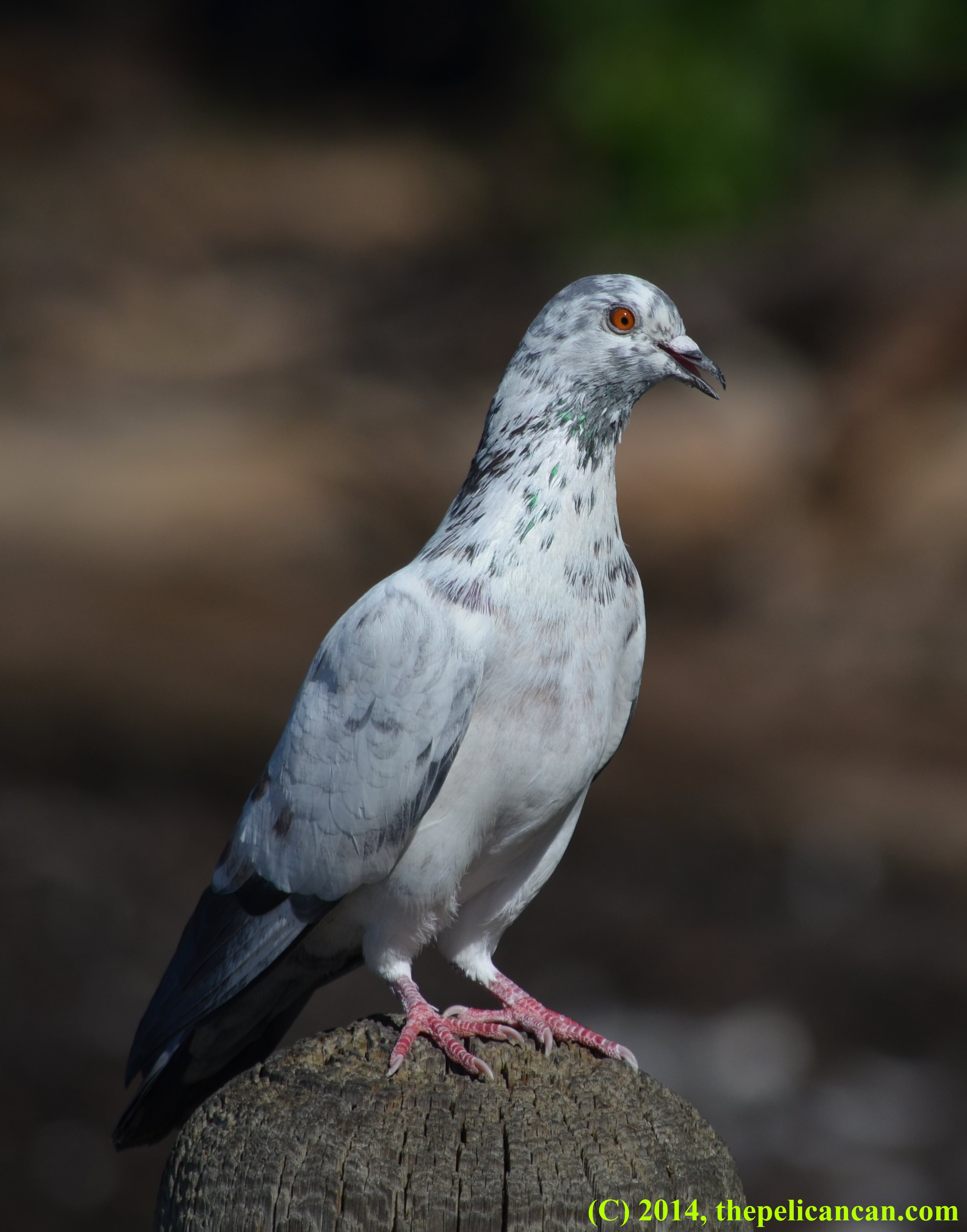
At least the pigeon that landed on the dock was pretty.

A pigeon perches on a dock at White Rock Lake in Dallas, TX

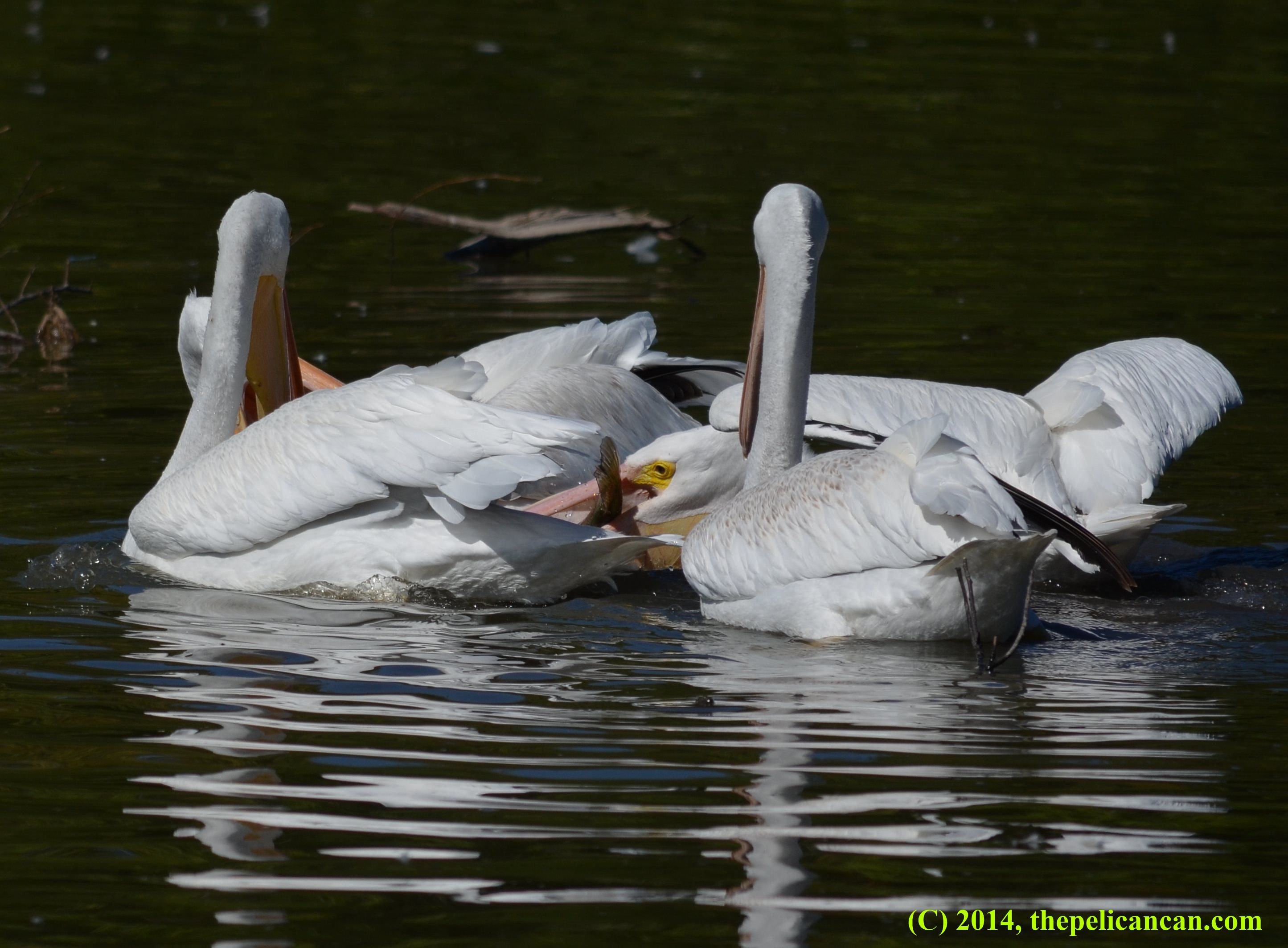
I noticed a commotion out past the Queen of the Log log. Four pelicans had suddenly drawn together. At first I thought they were playing—a few of them seemed to duck down as though they were trying to pick something up out of the water—but they didn’t seem to be moving in such a way that I associate with object play. Then I saw a flash of green. A fish!

Four American white pelicans (Pelecanus erythrorhynchos) hunting for fish at White Rock Lake in Dallas, TX

FISHIE IS MINE!

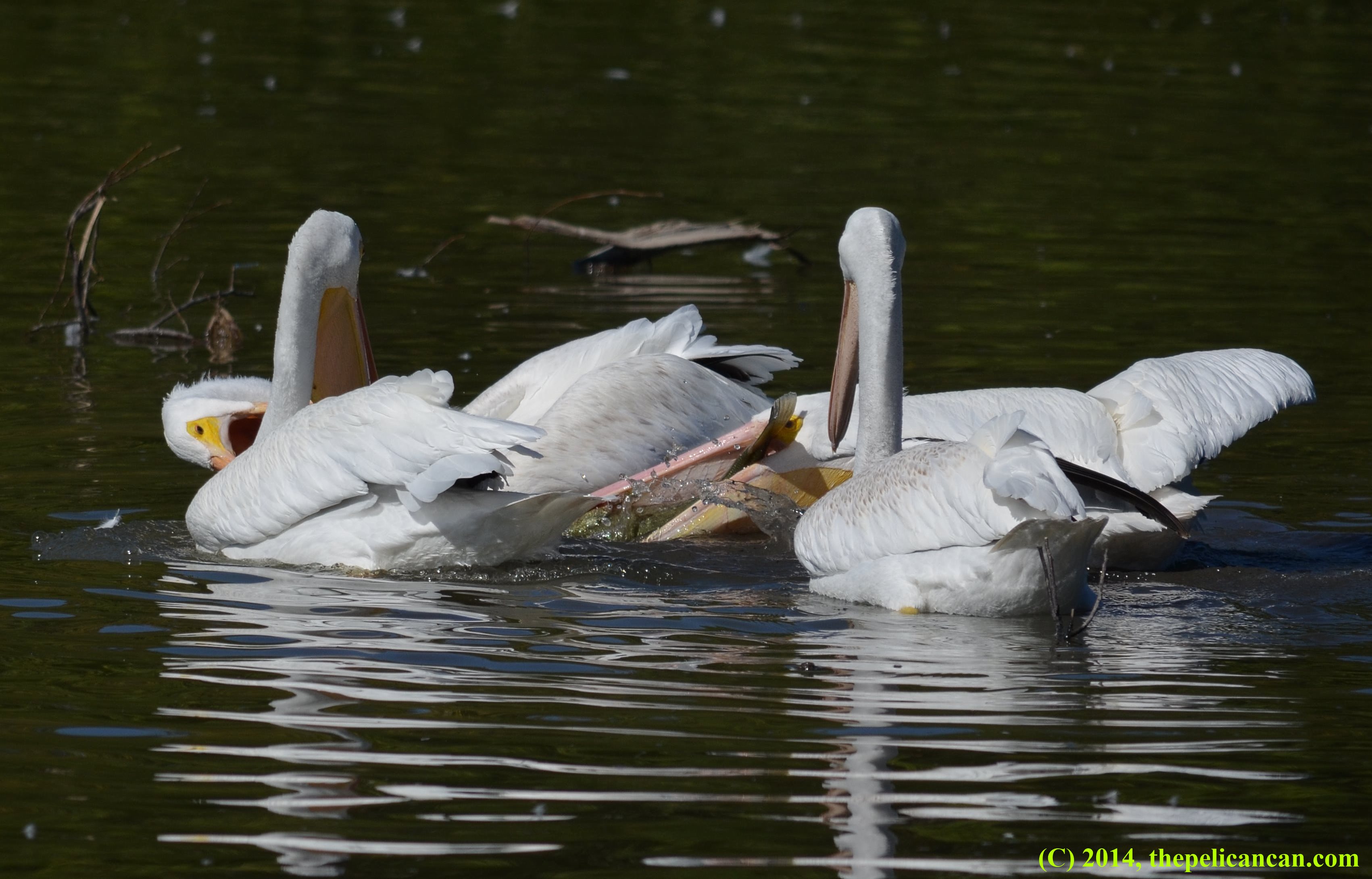
Four American while pelicans (Pelecanus erythrorhynchos) hunt for fish at White Rock Lake in Dallas, TX

Uhhh, pelican, you’re supposed to swallow the fish head first.

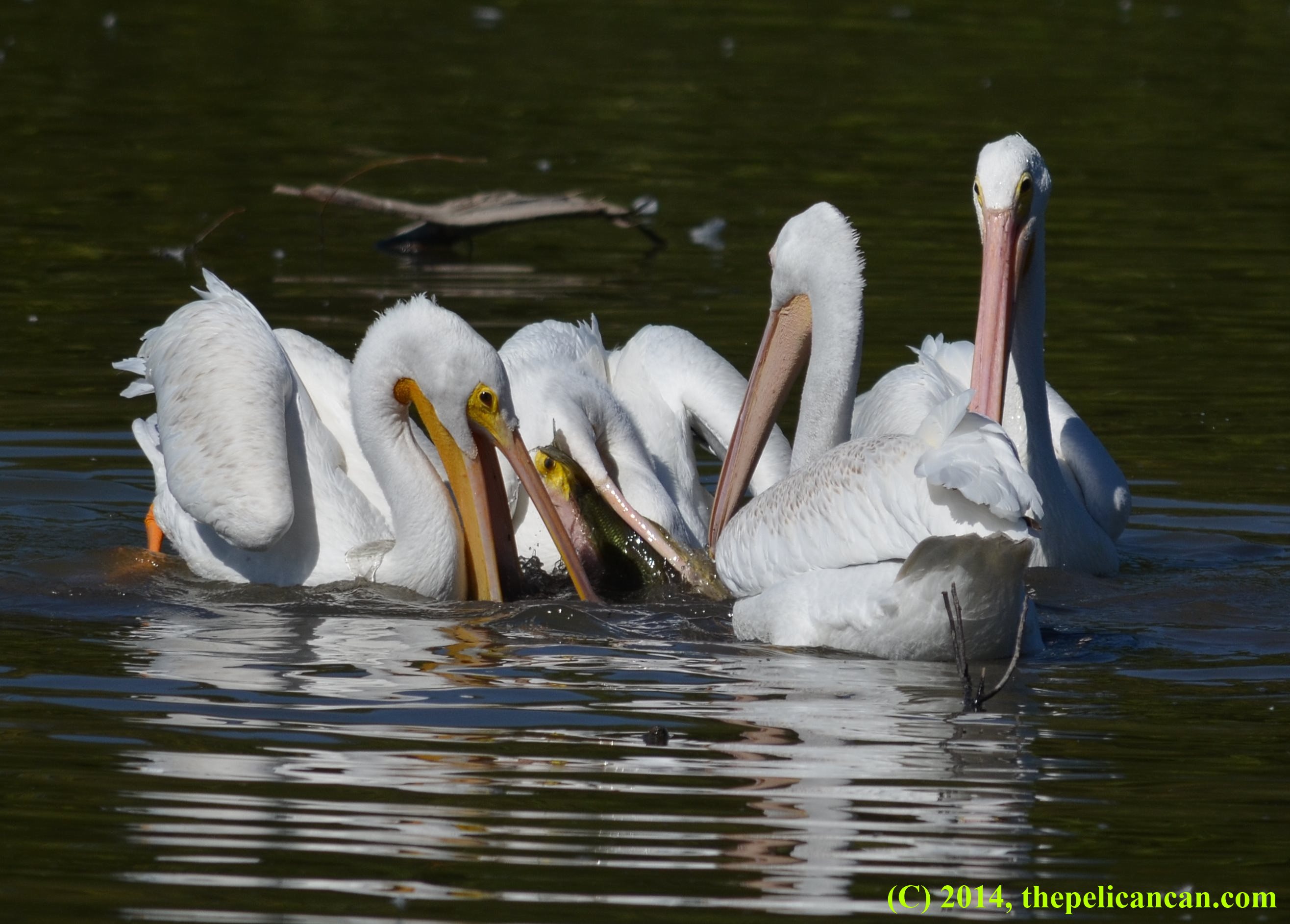
I wasn’t sure whether the pelican who initially had the fish managed to retain it or if another pelican snatched it away.

Four American while pelicans (Pelecanus erythrorhynchos) hunt for fish at White Rock Lake in Dallas, TX

Four American while pelicans (Pelecanus erythrorhynchos) hunt for fish at White Rock Lake in Dallas, TX

The chase is finished . . . or has it just begun?

I did not get the next pic in focus, but I wanted to post it to show the outline of the fish inside the pelican’s pouch.

American white pelican (Pelecanus erythrorhynchos) with a fish in her pouch at White Rock Lake in Dallas, TX

Slosh, slosh, slosh your fish, gently in your pouch . . .

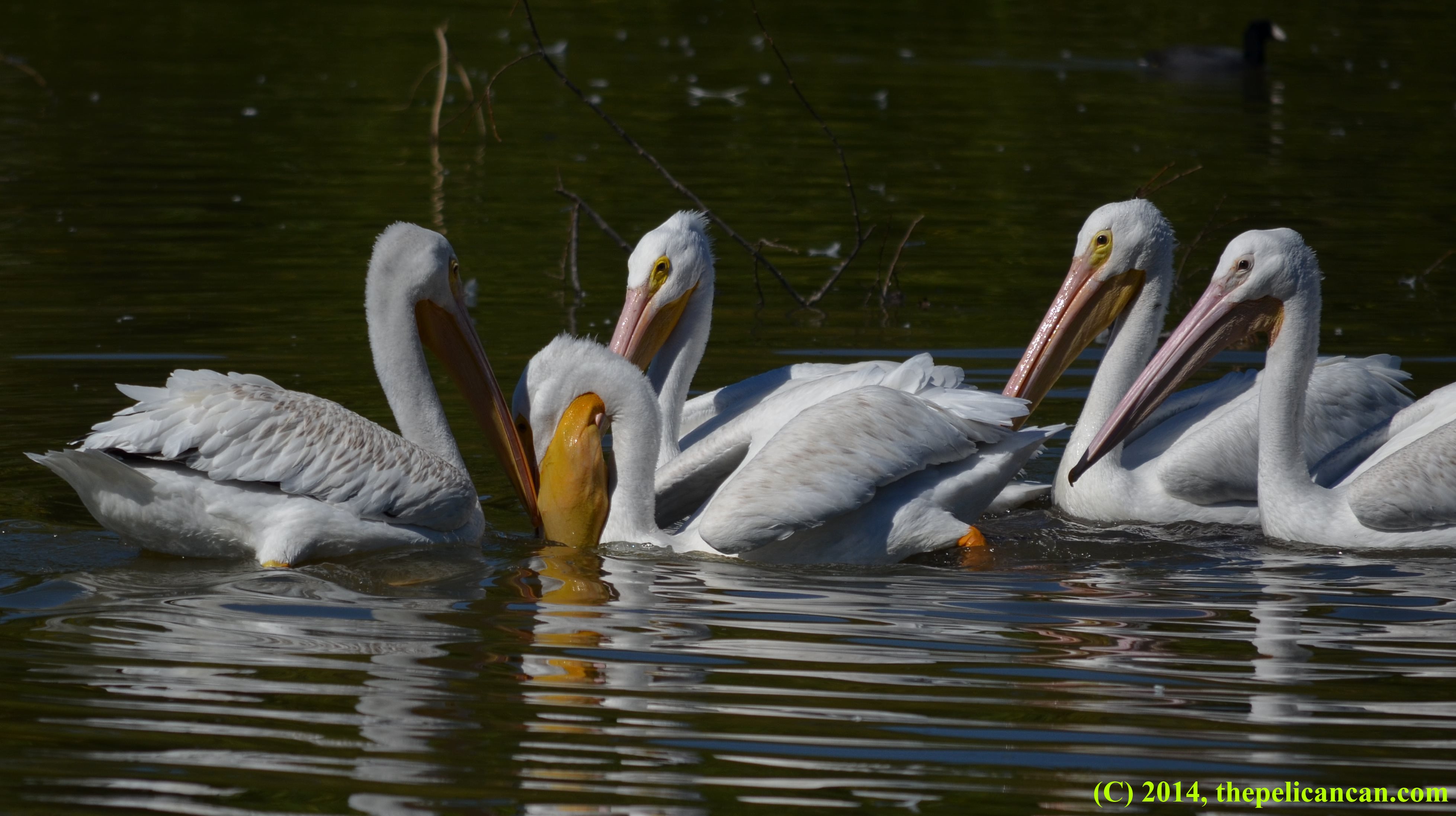
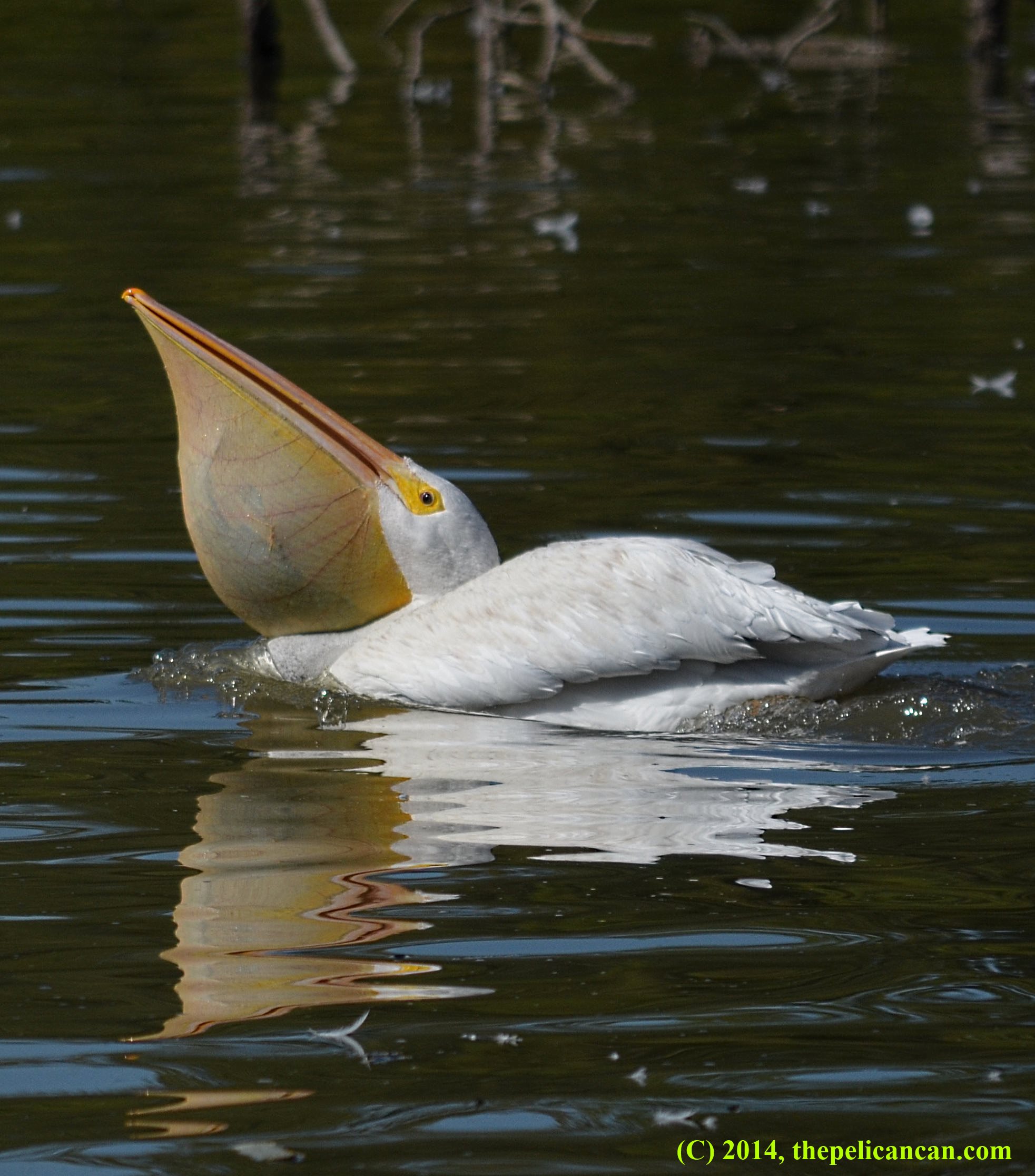
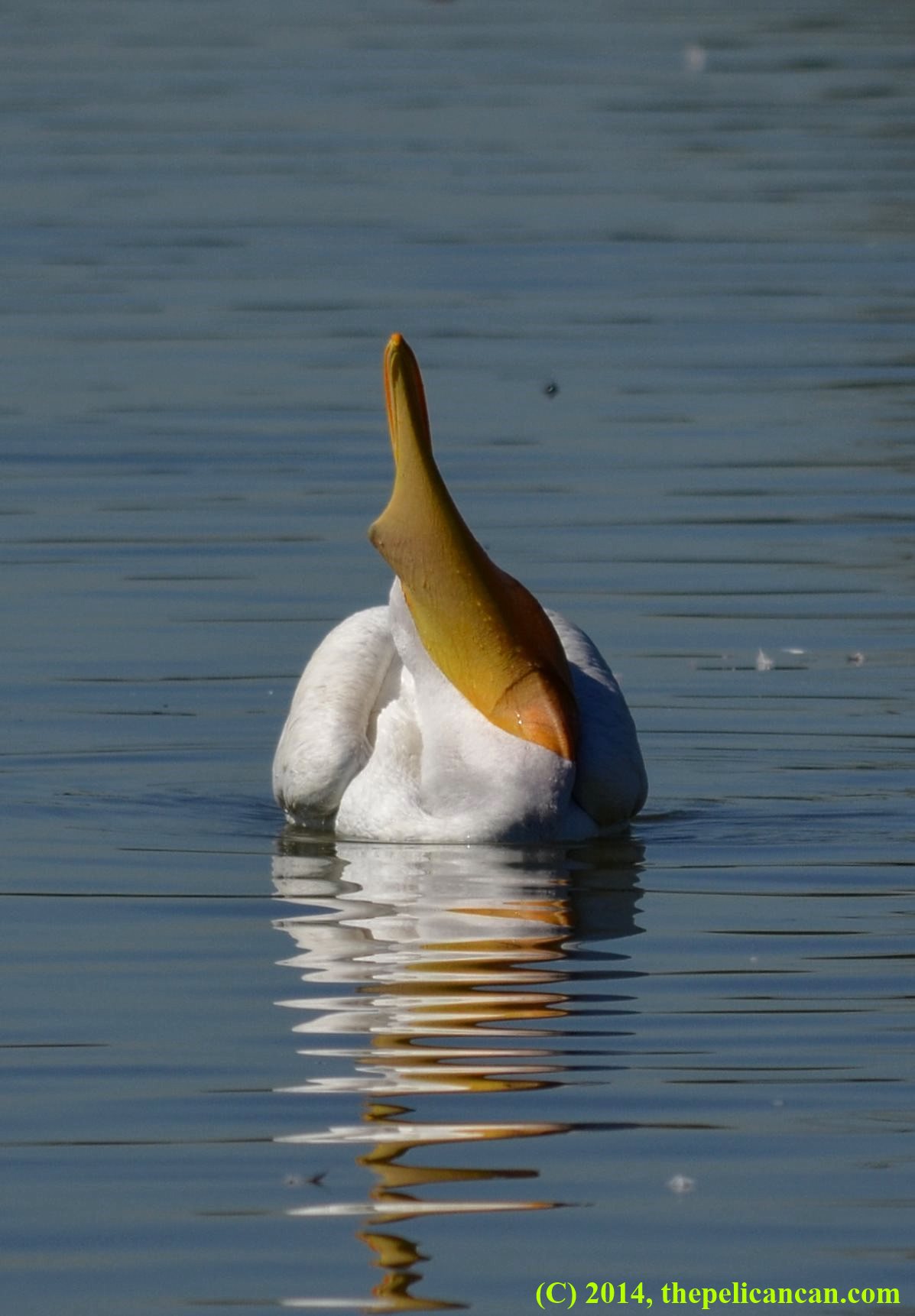
Just as I had seen when a pelican ate a dead fish, the bird swam off on her own, away from where the other groups of pelicans were congregating, and tilted her head back as she drifted away.

American white pelican swims with a fish in its pouch at White Rock Lake in Dallas, TX

She looks like she has a horrible tumor growing in her pouch.

American white pelican swims with a fish in its pouch at White Rock Lake in Dallas, TX

American white pelican swims with a fish in its pouch at White Rock Lake in Dallas, TX

That’s not an angle you often see on a pelican!

Closer to the dock, a group of coots were milling about. One cute little coot was hanging around with her wing held out jauntily.

American coot (Fulica americana) holding another coot underwater at White Rock Lake in Dallas, TX

Don’t mind me!

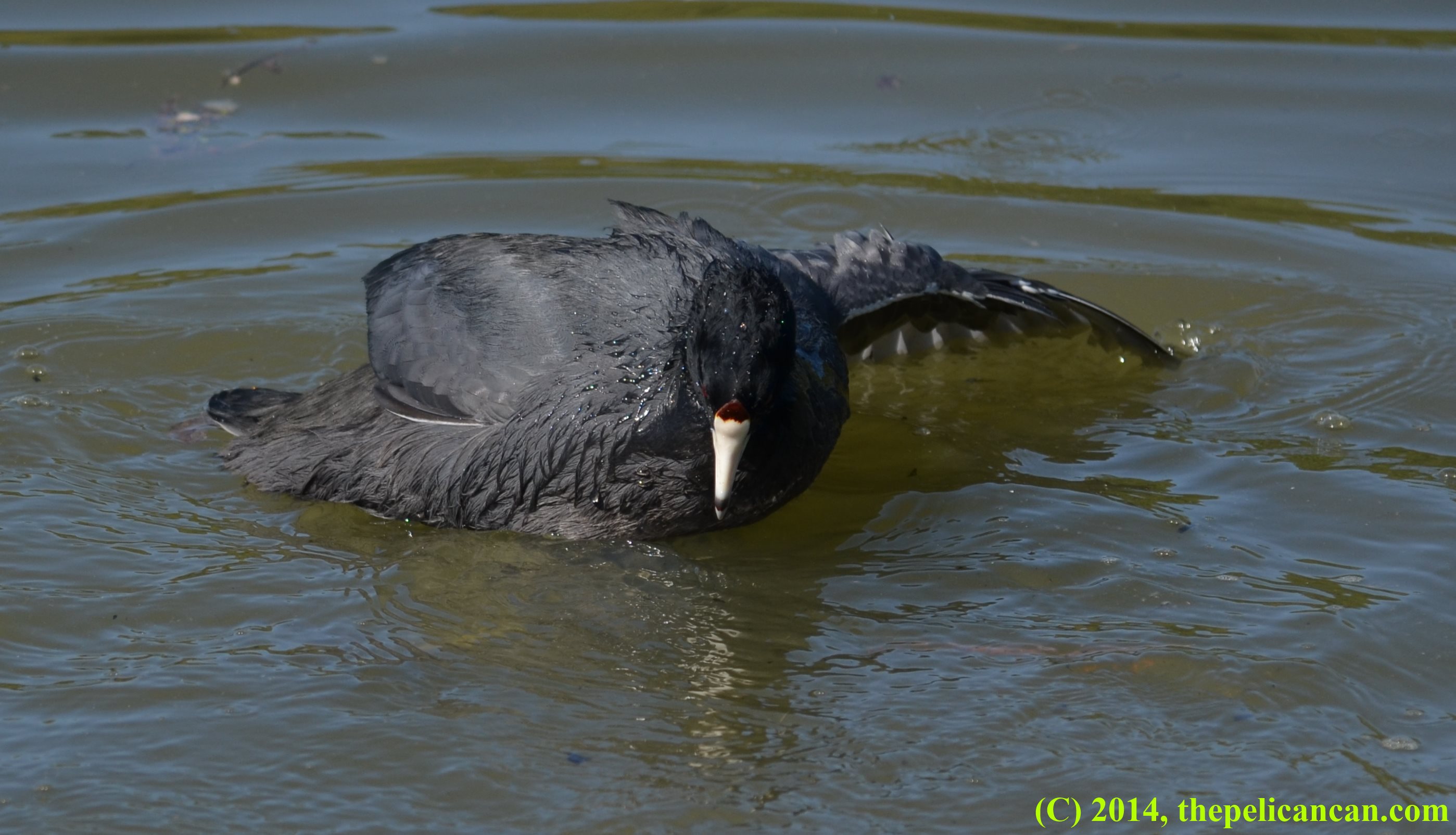
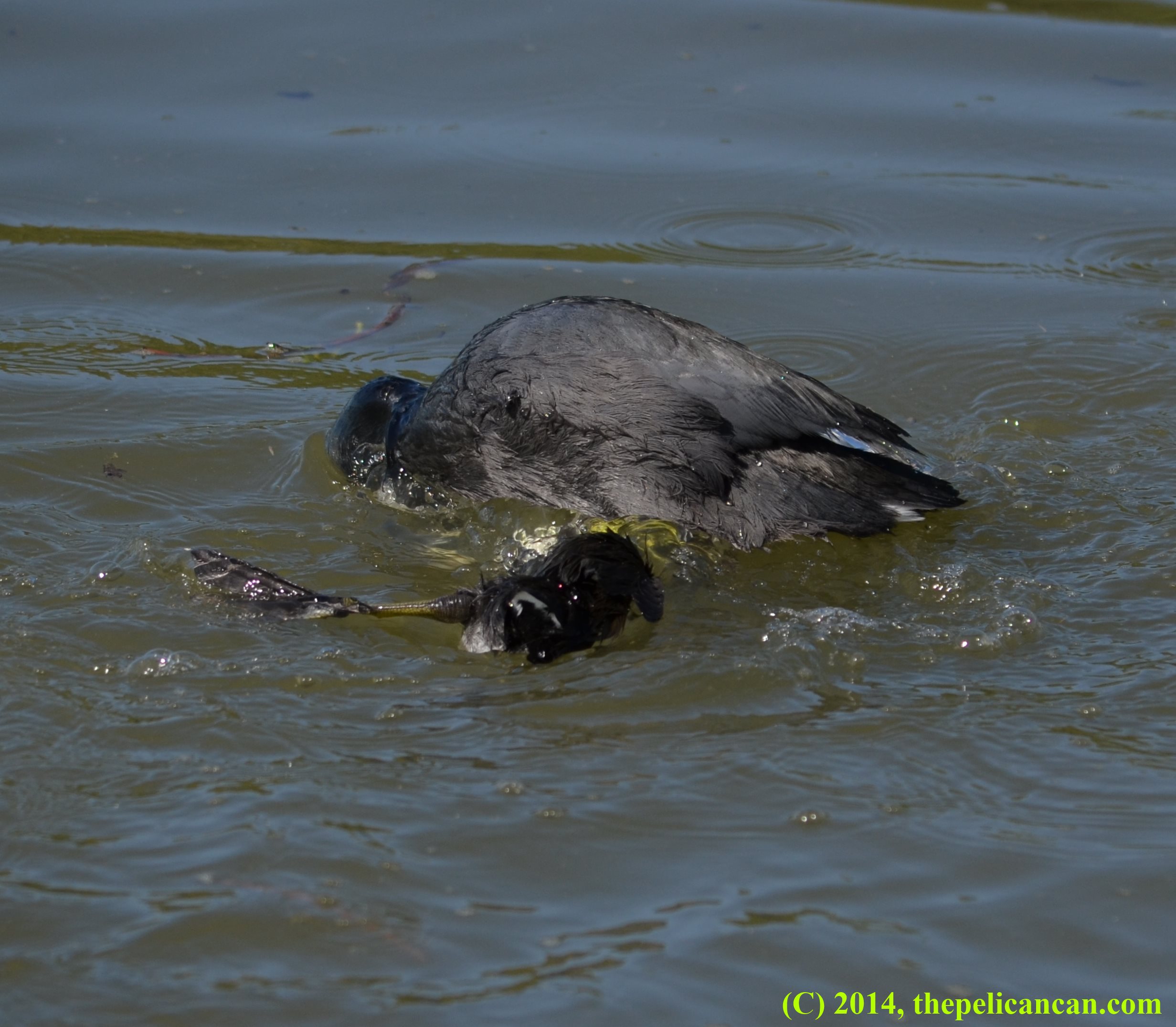
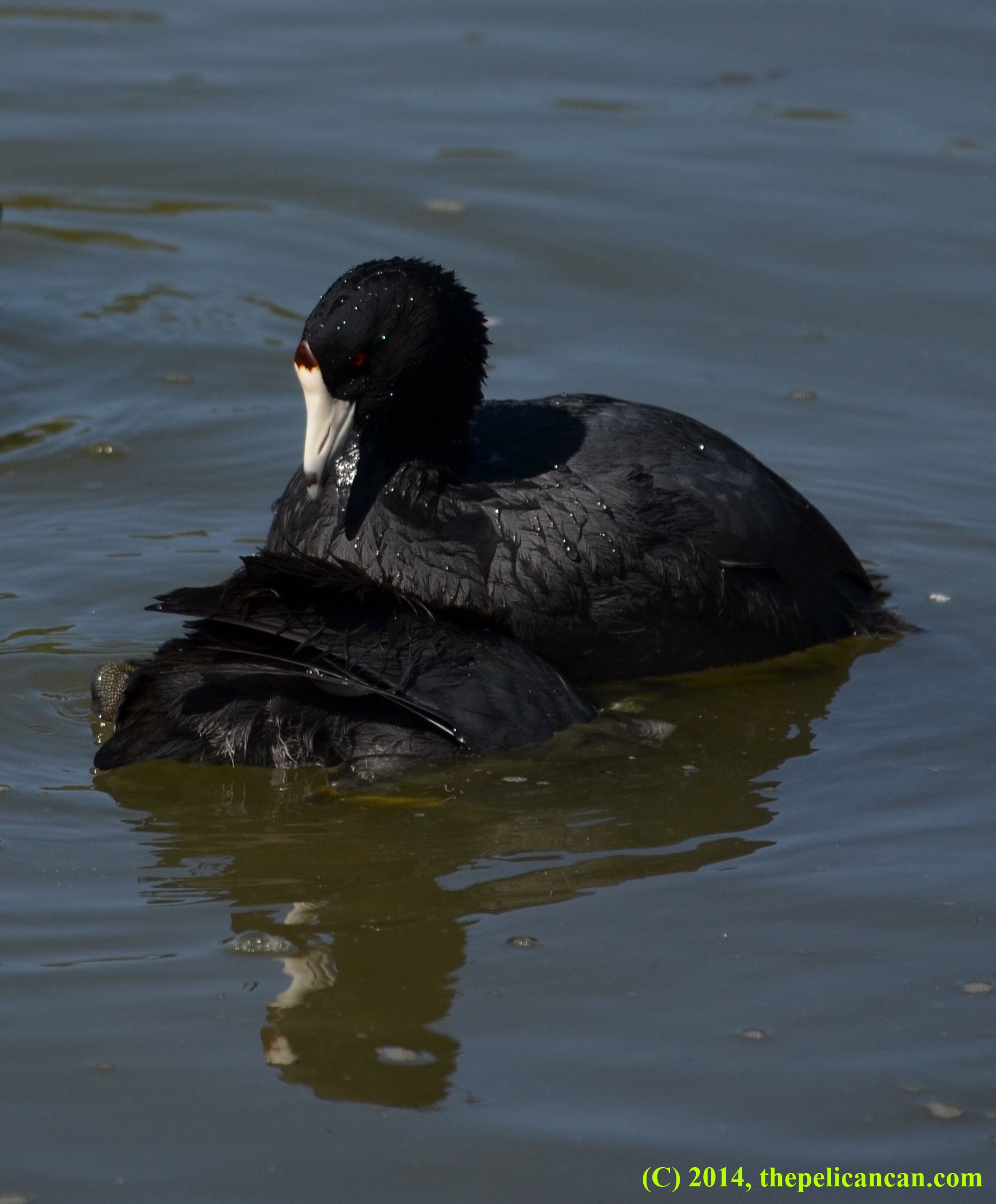
Except that cute little coot with the jaunty wing was a red-hot killing machine. She was in that posture for a purpose: TO DROWN ANOTHER COOT.

American coot (Fulica americana) holding another coot underwater at White Rock Lake in Dallas, TX

Goddammit, why are we coots so fucking buoyant?

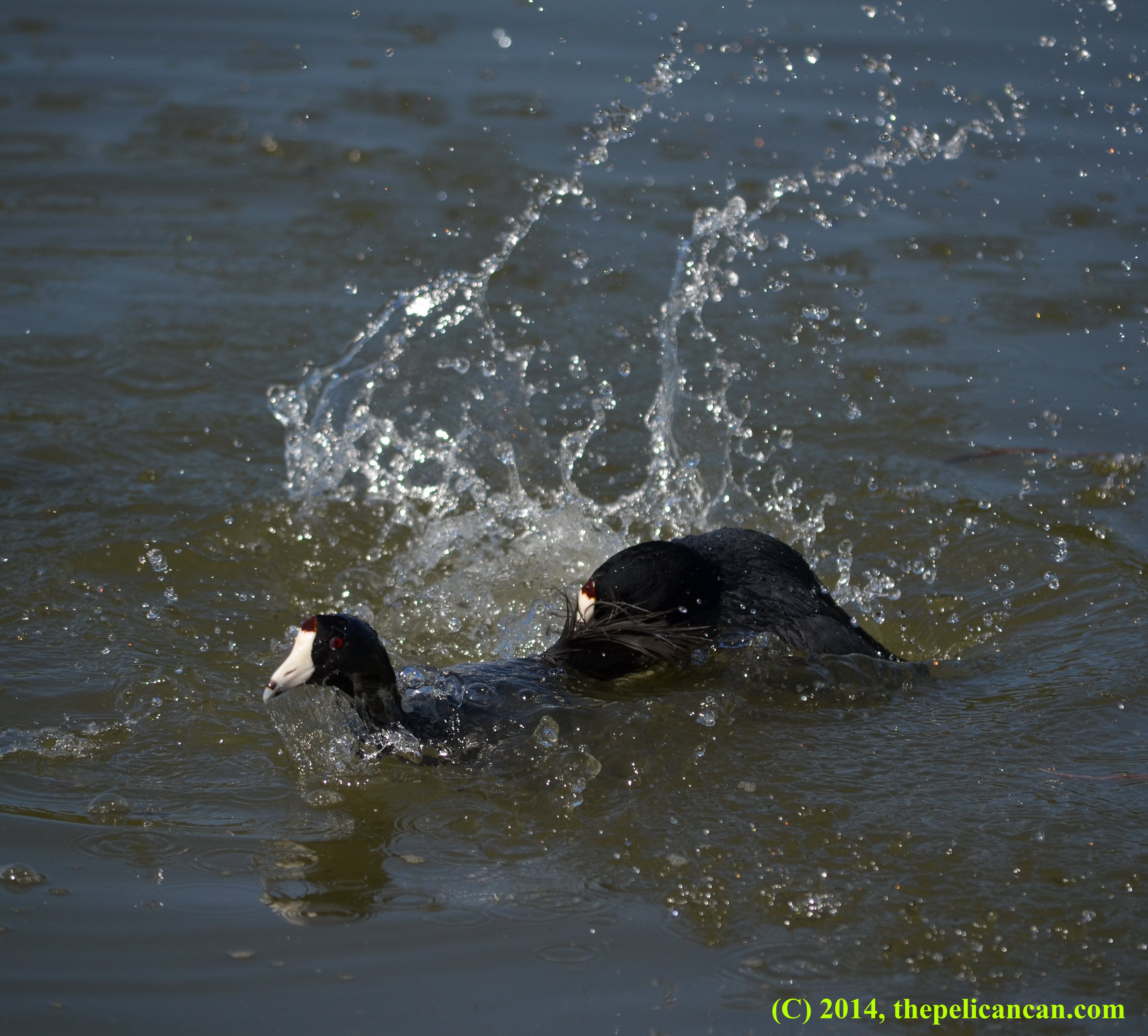
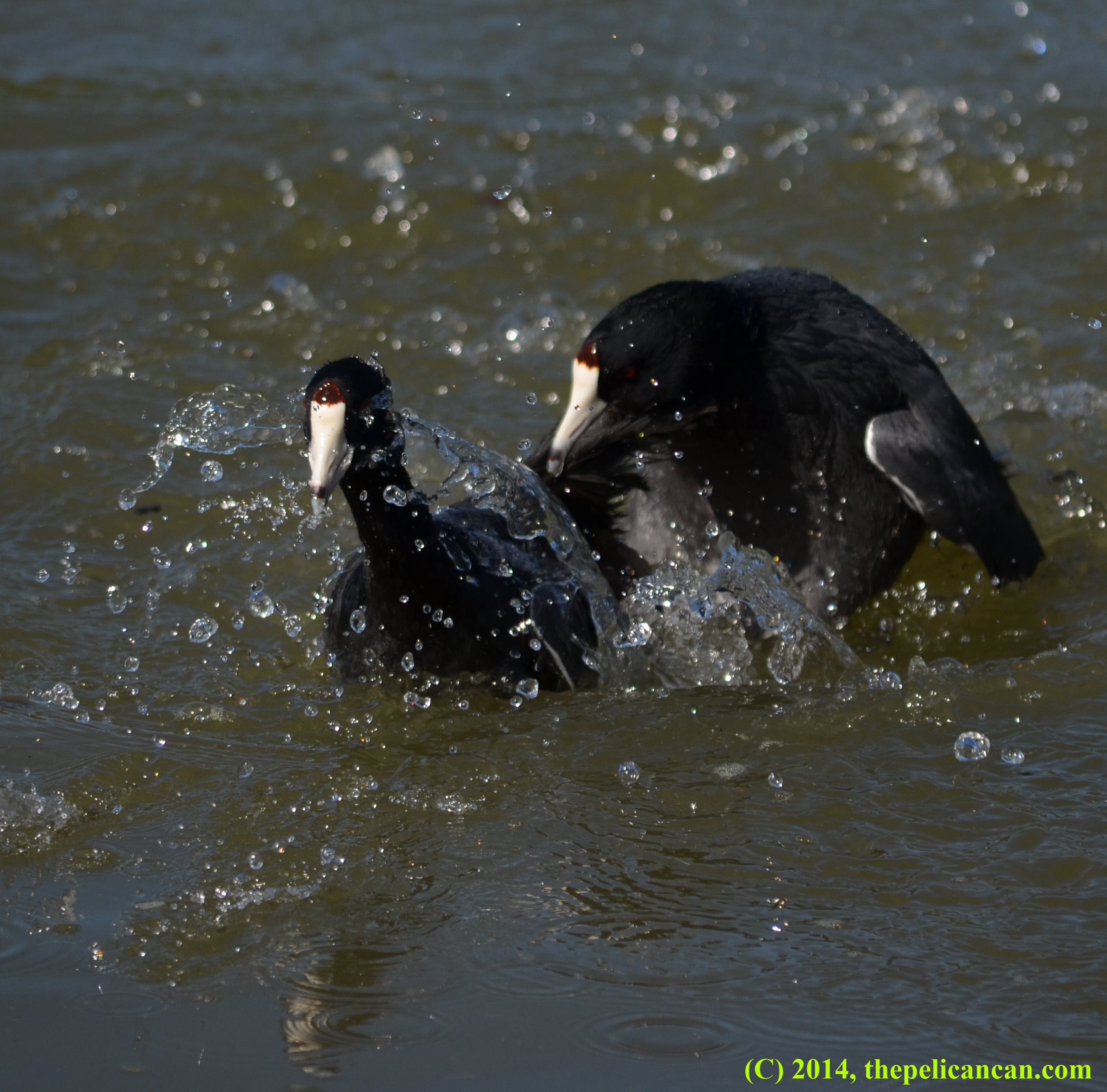
I starting noticing aggressive behavior among coots starting a few weeks before this incident. Some coots would swim with their necks held out stiffly and as close to the water as possible, as though they were pissed-off geese, and as they swam they would hold their hindquarters and wings slightly elevated so one could easily see the white feathers on their rumps. Occasionally the aggressive coots would charge toward another coot, who would quickly swim away, and a few times I briefly saw an aggressive coot fighting an opponent by kicking at them. Attempted drowning was new for me.

American coot (Fulica americana) tries to drown another coot at White Rock Lake in Dallas, TX

Doo da doo . . .

American coot (Fulica americana) tries to drown another coot at White Rock Lake in Dallas, TX

Why does my maniacal laugh sound so much like a cute little chirp?

American coot (Fulica americana) tries to drown another coot at White Rock Lake in Dallas, TX

Hey guys, what are you doing? OH SHIT OH SHIT OH SHIT PLEASE DON’T LOOK AT ME PLEASE DON’T FOLLOW ME.

An American coot (Fulica americana) tries to drown another coot at White Rock Lake in Dallas, TX

Jesus, coots are hardcore!

An American coot (Fulica americana) tries to drown another coot at White Rock Lake in Dallas, TX

Swim for it, little one!

An American coot (Fulica americana) tries to drown another coot at White Rock Lake in Dallas, TX

Next, on “Coots Who Kill,” hear serial killer Anna the Coot describe how her last victim almost escaped from her evil clutches.

The aggressive coot easily subdued the fleeing coot and held her underwater. Again the coot escaped and was recaptured and forced back underwater. Finally the victimized coot was able to get free and stay free.

The pelicans were still very chill.

American white pelican (Pelecanus erythrorhynchos) stands on a log at White Rock Lake in Dallas, TX

Back at the Shore Log, the birds were still grooming.

Two American white pelicans (Pelecanus erythrorhynchos) preen while standing on a log at White Rock Lake in Dallas, TX

Dread Pirate Roberts and another pelican preen together. Perhaps the pelican on the left closed her eye to make Pirate feel more welcome.

Then I saw a familiar pelican: the bird with the hurt foot from October 11. I last saw her on November 8th, and although she is still limping quite a bit, she seems to be getting around much better than she did at this time. I can’t believe both she and Copper Woman have been here for a month.

I have decided to name the bird with the hurt foot Philoctetes.

American white pelican grooming on a log at White Rock Lake in Dallas, TX

Before I left, I went out on the dock one last time. A juvenile jumped up on an oddly shaped log and was having a great deal of difficulty keeping her balance.

American white pelican (Pelecanus erythrorhynchos) flaps her wings as she tries to keep her balance at White Rock Lake in Dallas, TX

I can do it!

American white pelican (Pelecanus erythrorhynchos) sinks into water after losing her balance at White Rock Lake in Dallas, TX

No, I can’t!

American white pelican (Pelecanus erythrorhynchos) sinks into water after losing her balance at White Rock Lake in Dallas, TX

Fuck this log!

A dozing pelican briefly opened her eyes, then closed them again. Much more action would occur in the next few days, and perhaps she knew she would need her energy.

American white pelican standing at White Rock Lake in Dallas, TX


The Beginnings of Pelican Mayhem: October 14

The title isn’t entirely true; the mayhem started the day before, on October 13, when pelicans began to fight each other for access to colonize the nearby loafing areas. It was windy outside and the water was choppy, which made the pelicans’ abilities to encroach upon and defend new areas more difficult than usual.

On the fourteenth, the pelicans were still quite feisty. A large group kept circling the bay, hunting. Small groups splintered off to hunt on their own and later rejoined the main group. Other birds bathed and loafed, and birds who finished bathing or who wanted a break from hunting tried to steal log space away from loafing pelicans.

Because there are so many pictures in this post, there will be a cut near the beginning of the narrative.

American white pelican ((Pelecanus erythrorhynchos) preens her feathers at White Rock Lake in Dallas, TX

Such a peaceful beginning.

Some of the swimming birds found trash to bounce around in their pouches in play.

Two American white peliacns (Pelecanus erythrorhynchos), one of which is catching a tossed piece of trash in its beak while swimming at White Rock Lake in Dallas, TX

A few days later a different pelican would find the same bit of trash and toss it around as well.

The Queen of the Log log was an important location in the day’s events (and in general in the lives of the pelicans at White Rock Lake). It is a small log that is maybe fifty feet away from the edge of the dock. Two pelicans can share it if they both cooperate. IF.

Two American white pelicans (Pelecanus erythrorhynchos) at White Rock Lake in Dallas, TX

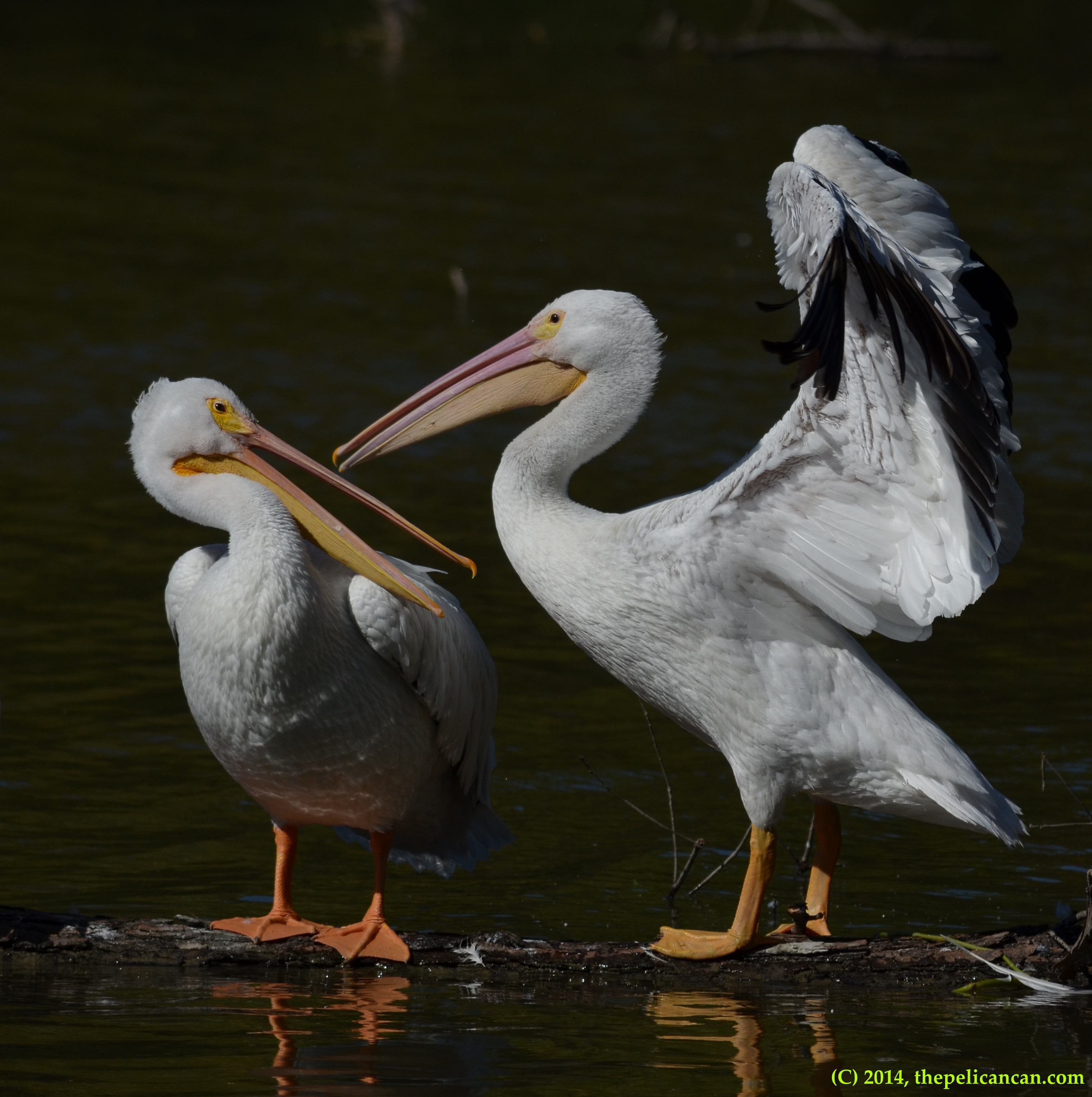
Oh, please. Do you really think I’m budging for the likes of you?

The juvenile was easily intimidated and moseyed away, but an adult thought she would try her luck.

fight1

Continue reading

Quick Update on Pelicans

This past week was absolutely fantastic for pelican watching. Lots of interactions, some very good play activity, fights, baths, and flights. On Saturday I was out on the dock at Sunset Bay for about three hours. Most of that time K was with me, and together we saw about sixty pelicans drop out of the sky and land in the water in front of us throughout the afternoon.

I have a ton of pics to go through, and I want to make some non-pelican posts first, but hopefully I won’t take too long to get to the good pelican stuff.

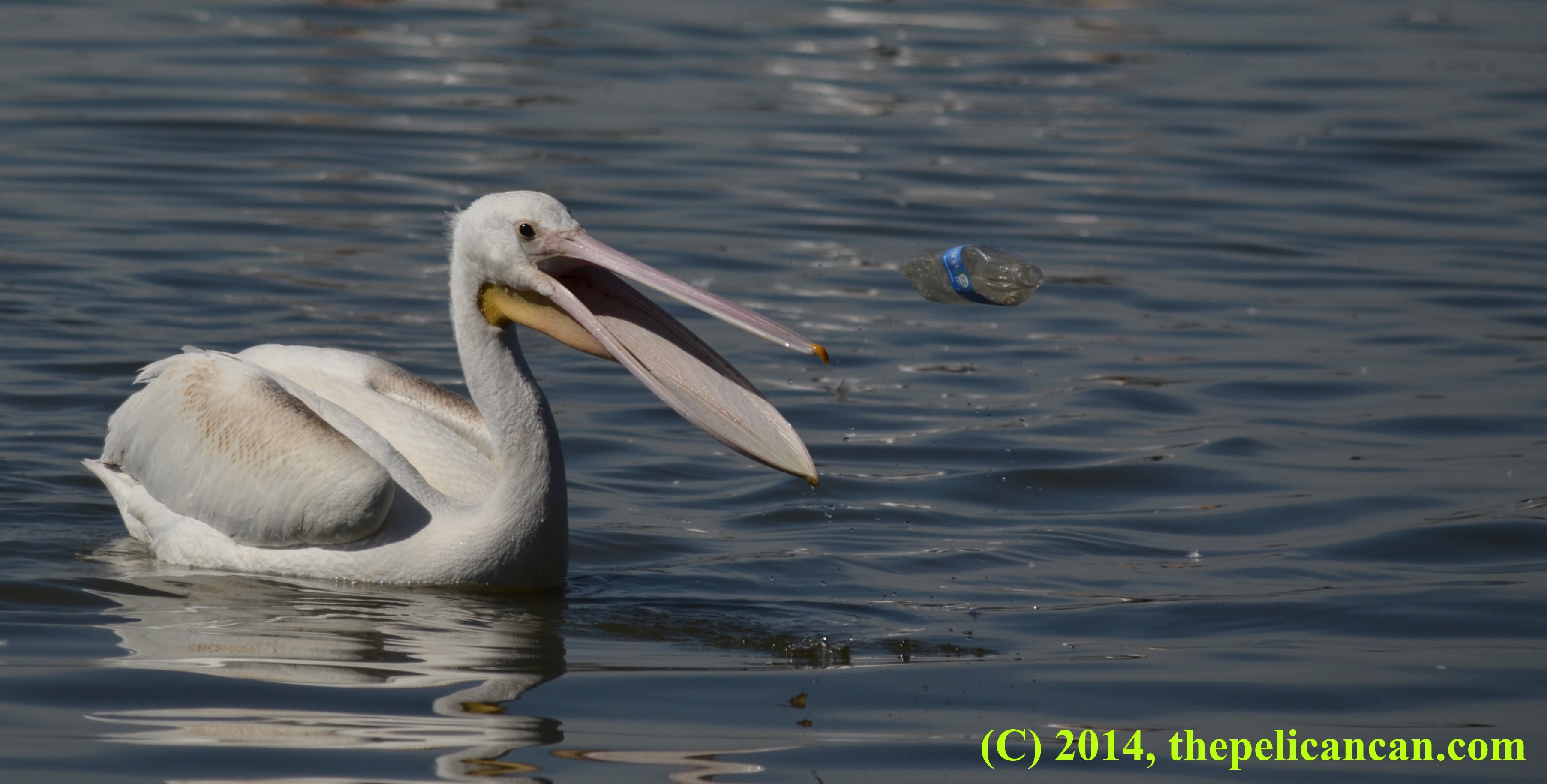
Juvenile pelican (american white pelican; Pelecanus erythrorhynchos) tosses a plastic bottle from her gular pouch in play

Yes, pelicansrulegullsdrool, hurry up and get to me!

Birds at the Merritt Island National Wildlife Refuge: March 2014 Florida Visit

I’ve been up to (over to? across to?) Titusville several times in the past, either to visit the Kennedy Space Center or to watch shuttle launches, but I’d never been birding in the Merritt Island National Wildlife Refuge. My father and I went there together, and I got to see another bird I’d been hoping to see.

We paused along a pull-off point because I saw a few birds standing together and wondered what they were. The day was extremely windy, and taking in-focus pictures was a huge challenge. The birds were about the size of a heron, with pink feathers and a long, strange bill with a circular curve at the end.

They were roseate spoonbills. I had never seen one before nor even heard of them.

The spoonbills eventually flew off, and almost right as they did, a tricolored heron flew in and began to hunt. I was so pleased! Little did I know that I would be seeing more tricolored herons in the future, and in Dallas.

We tried the Atlantic side, hoping for brown pelicans, but there was almost no birds and LOTS of people. We turned away from the Atlantic, and that’s when we started seeing more birds.
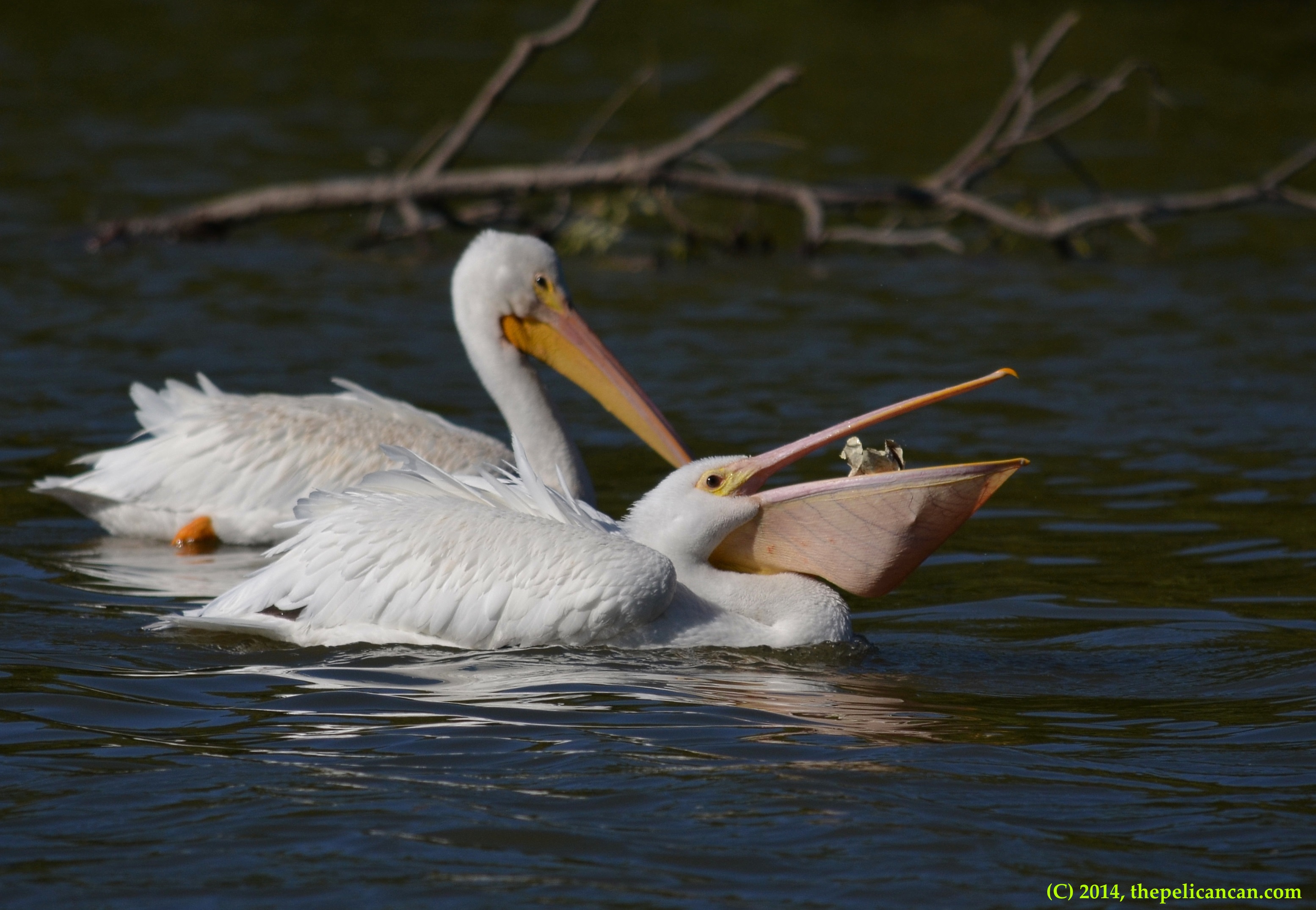
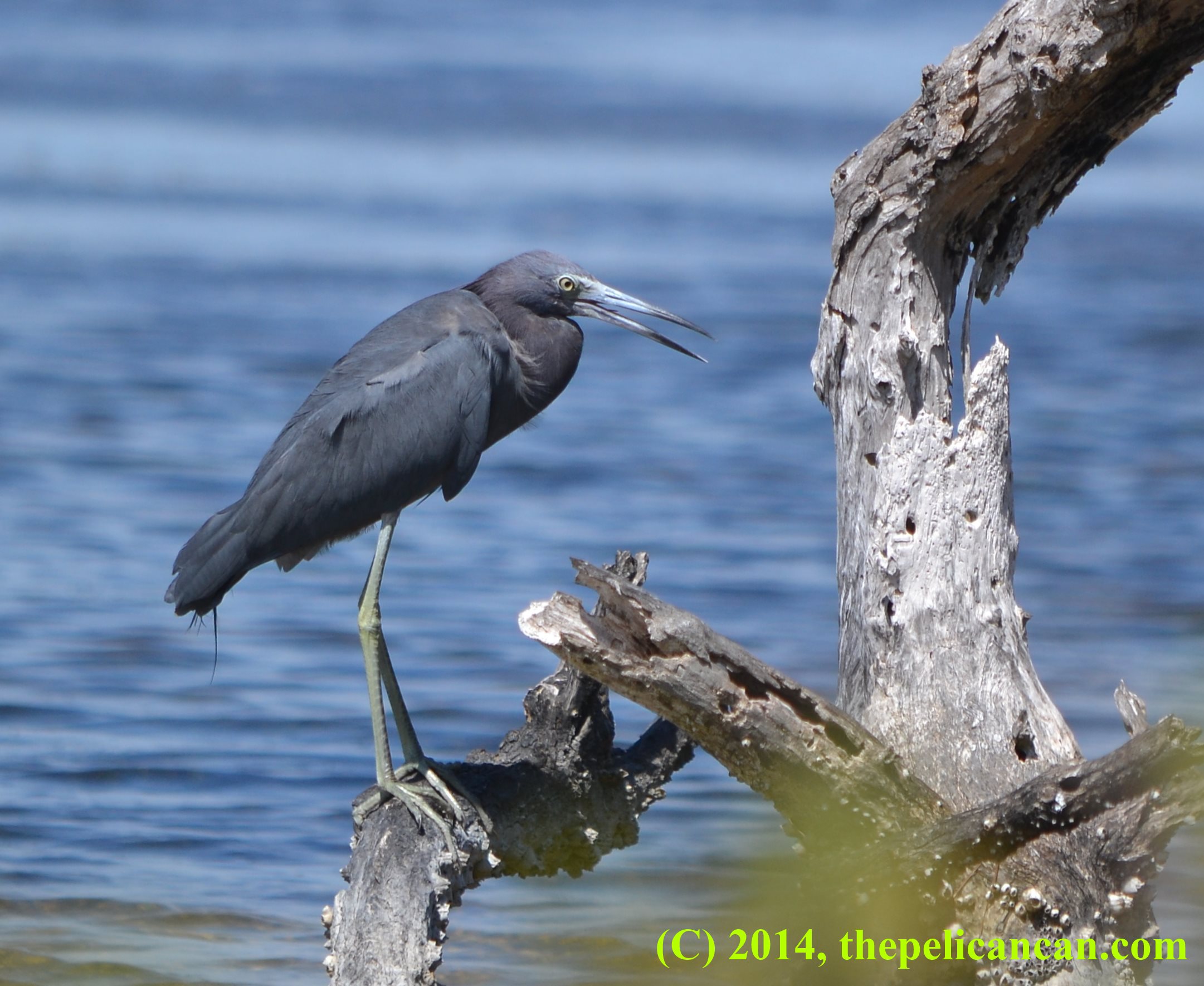
Little blue heron (Egretta caerulea) perches on a dead tree at the Merritt Island National Wildlife Refuge in Florida

Oh, Little Blue, birdie, I love you, Little Blue.

Tricolored heron (Egretta tricolor) lands on a tree at the Merritt Island National Wildlife Refuge in Florida

Nice of you to drop in, madam!

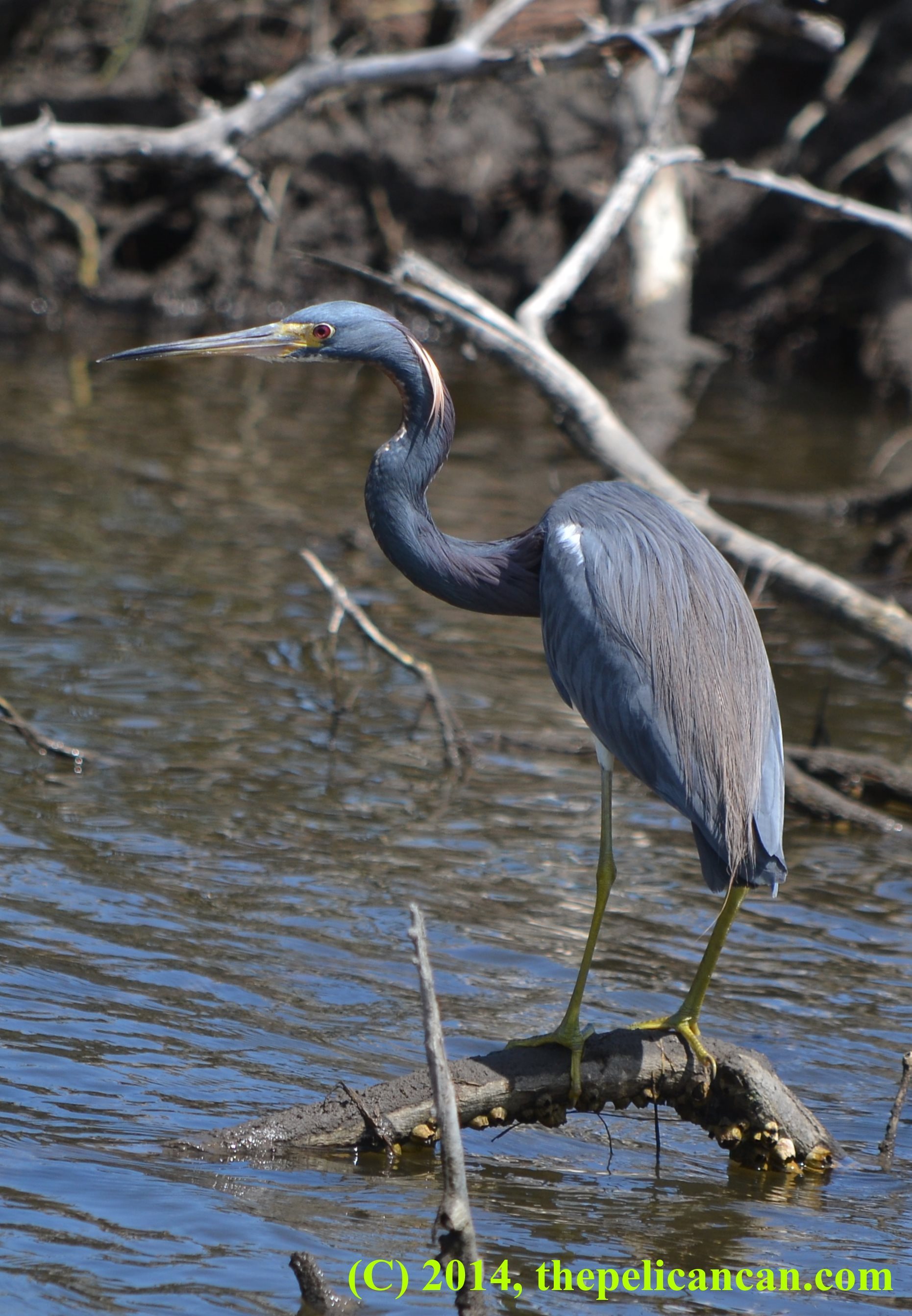
The tricolored flew in right as my father and I were turning back from a trail that had ended in muck. As we would walk closer to the heron, she would fly and land just a little in front of us.

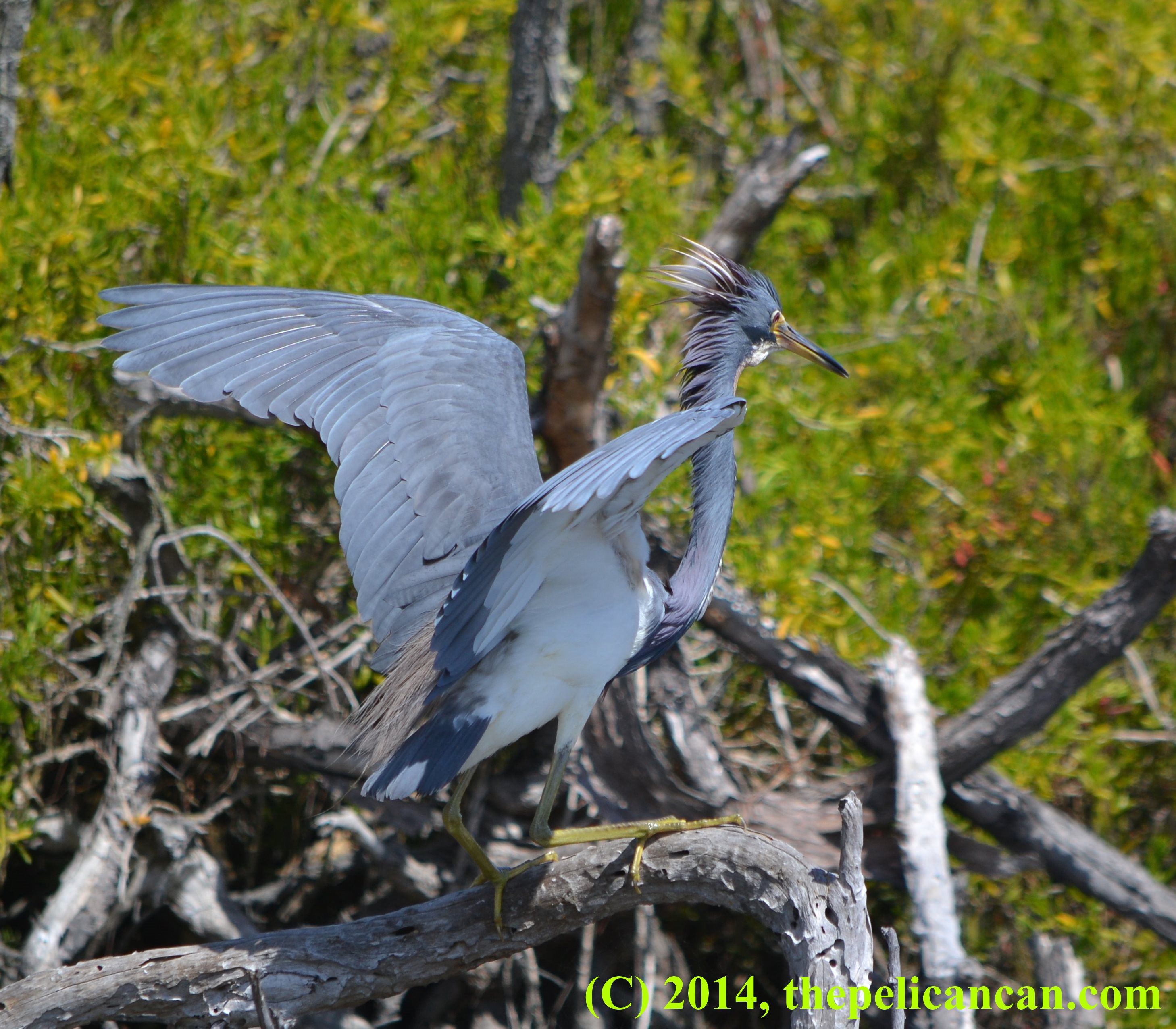
Tricolored heron (Egretta tricolor) perches on a branch at the Merritt Island National Wildlife Refuge in Florida

Just gorgeous.

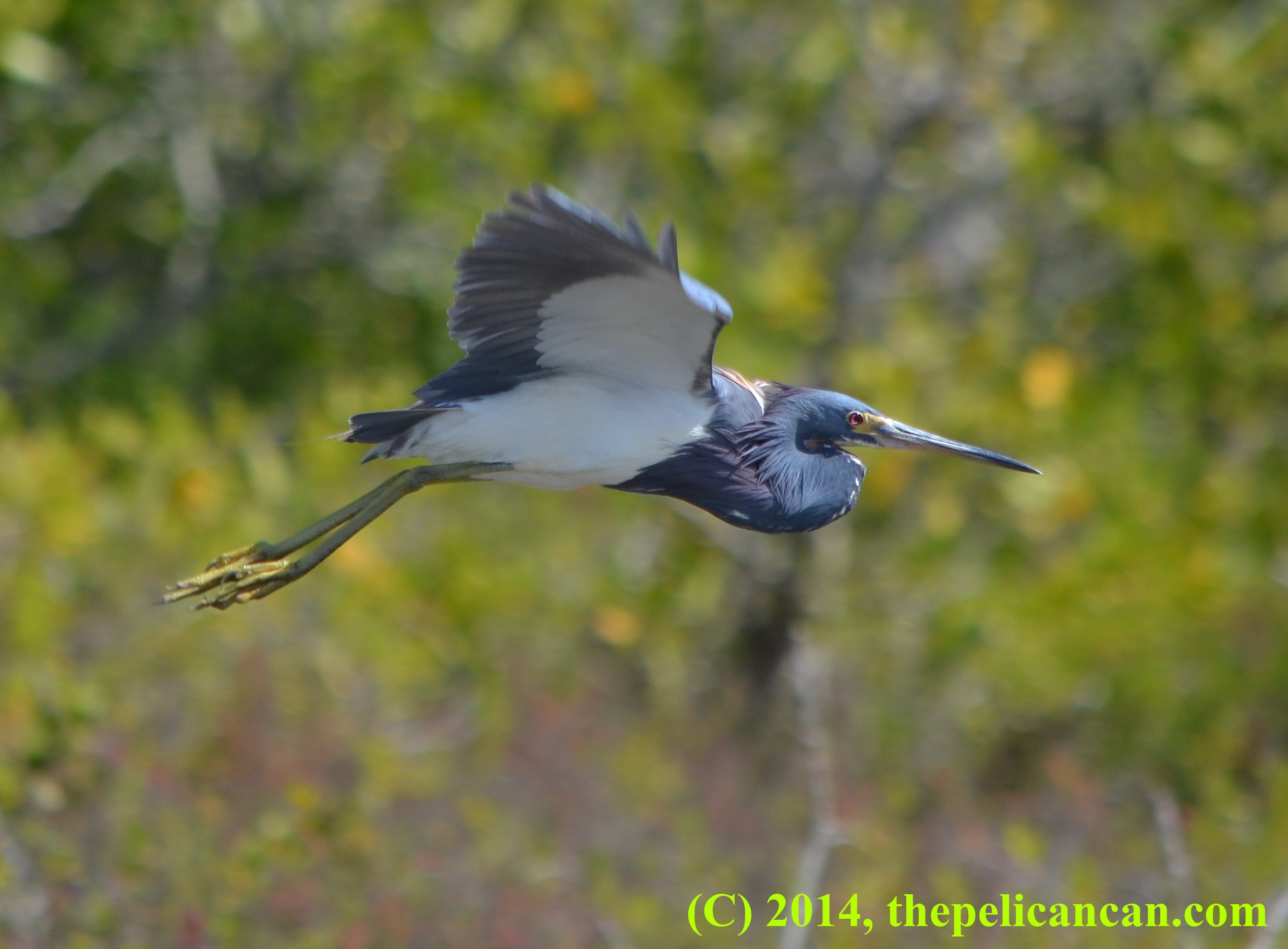
Finally she got tired of us always catching up with her and flew off for real.

Tricolored heron (Egretta tricolor) in flight at the Merritt Island National Wildlife Refuge in Florida

BYE, HUMANS!

We went by a location that was frequented by manatees, so we decided to drop in and look. We didn’t find manatees . . .

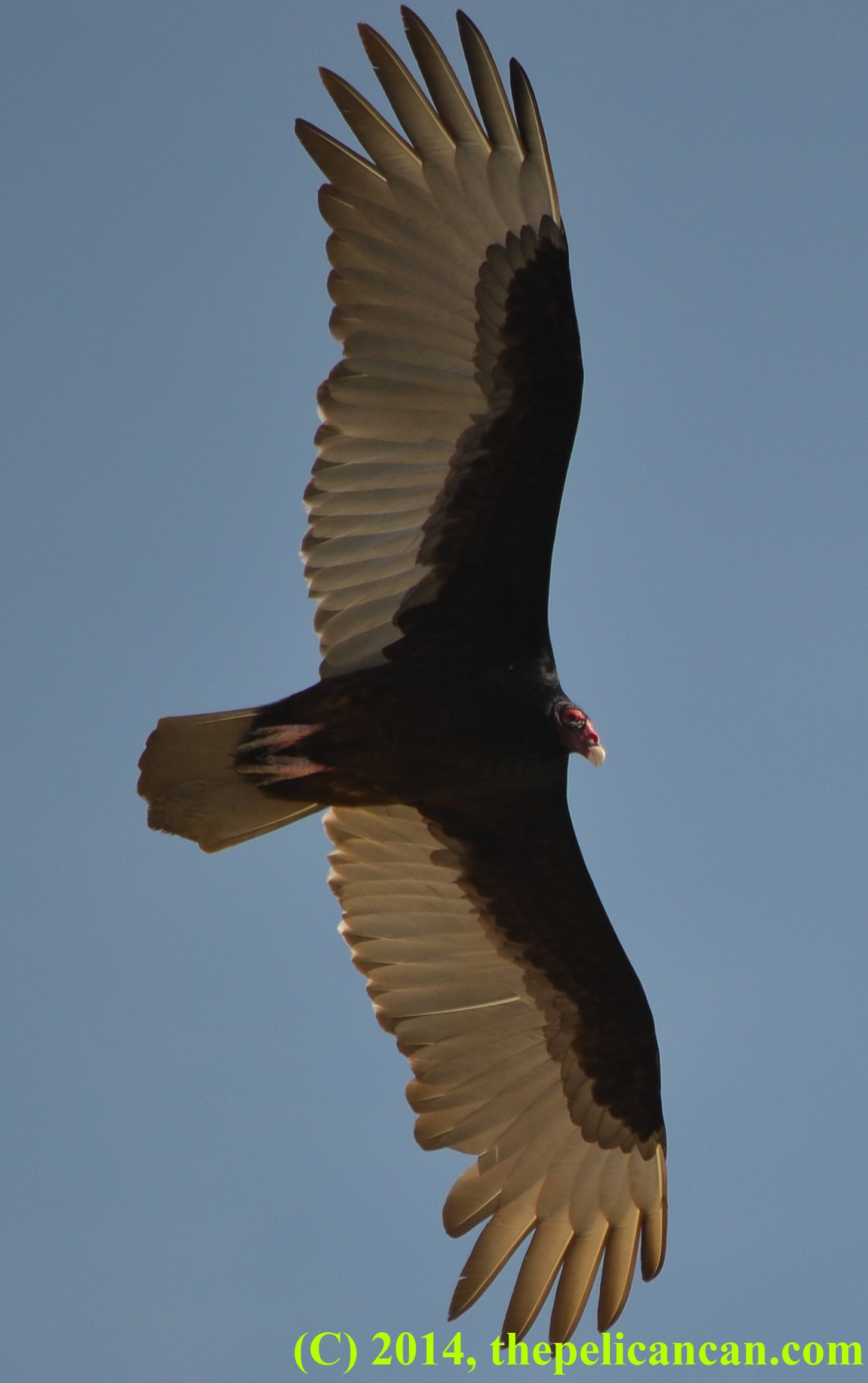
Turkey vulture (Cathartes aura) soars through the air at the Merritt Island Natinal Wildlife Refuge in Florida

The turkey vulture, one of my father’s favorite birds.
Brown pelican (Pelecanus occidentalis) flies above water at the Merritt Island National Wildlife Refuge in Florida

HELLO, AGAIN!

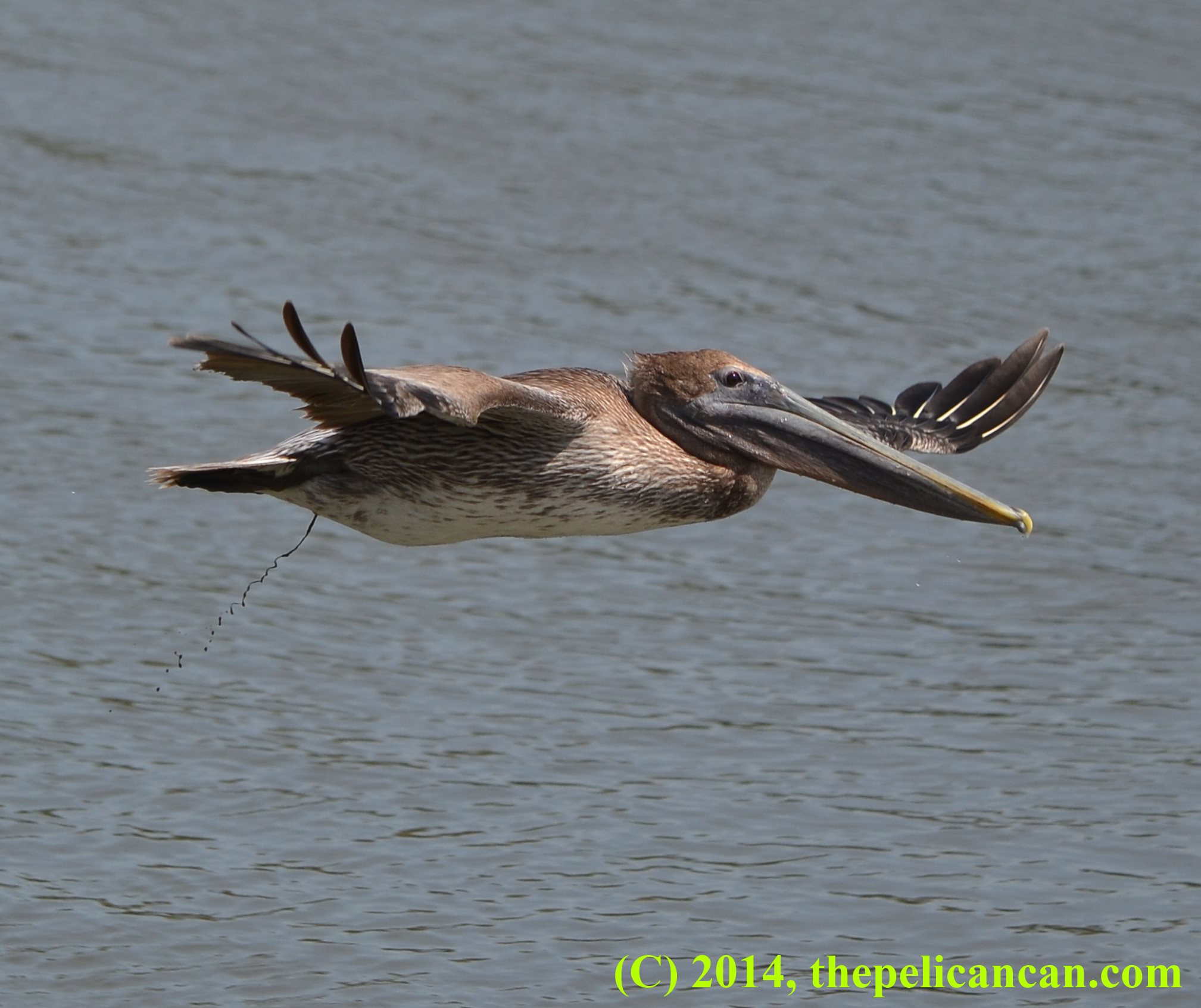
The adult brown pelican was initially loafing on a railing in a restricted part of the river. She dove into the water, floated for a while, then took off and began flying in circles. A juvenile joined in on the flying fun.

Juvenile brown pelican (Pelecanus occidentalis) poops while flying above water at the Merritt Island National Wildlife Refuge in Florida

Pooping birds crack me up. I don’t know why.

Brown pelican (Pelecanus occidentalis) flies above water at the Merritt Island National Wildlife Refuge in Florida

ZOOM!

We went on a walk in an area of pine habitat, where we saw some scrub-jays and an immature bald eagle. Overall it was a good visit, and I hope that the next time I go to Florida, Q will come with me so we can check out the refuge together.

Brown Pelicans Flying Over the Atlantic: March 2014 Florida Visit

A while ago I talked with J R Compton about what he thought were the two main types of birders: watchers and listers. Watchers, he said, are pretty much happy with whatever bird turns up, while listers know what they want to see and seek out their target.

I had a boss who was a lister. She asked me if I had a birding bucket list and seemed surprised when I said I didn’t.

In general I consider myself a watcher. I like pretty much all birds, and they can all be interesting. I even like grackles and gulls! But there were a few birds that I really hoped I could see. One was a tricolored heron. Another was the brown pelican.

Since I was going to be in Florida, I thought I might try looking for some brown pelicans while I was there. I found a likely spot in New Smyrna Beach, and off my mother and I went to find the birds.
The only problem was that I never found the turn-off that would take us northwest to where the birding location was, and we found ourselves going southeast along A1A, which runs along the Atlantic Ocean. My mother didn’t have a physical map, and my phone was refusing to reload any imagery of the map I had up. We talked about pulling over randomly and walking out to the beach, just to find out if we could see anything, but before we could decide to do that, I saw a sign for the Great Florida Birding Trail.

“Let’s follow that and see where it goes,” I said.

It went to the Canaveral National Seashore.

We spent a little bit of time on the Indian River side before going out to the Atlantic to look for the brown pelicans.
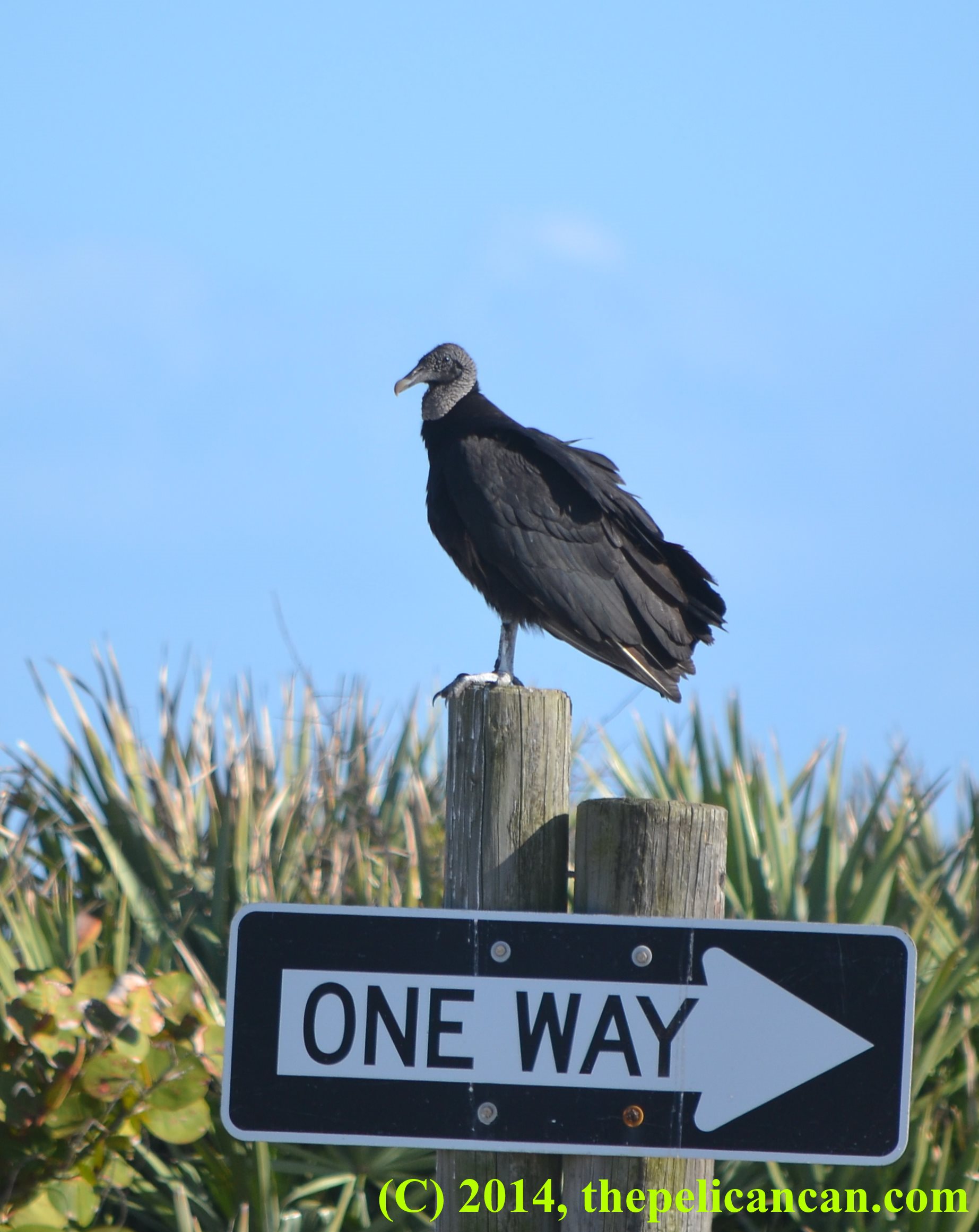
Black vulture (Coragyps atratus) standing on a sign post at Canaveral National Seashore

Not a brown pelican, but welcome nonetheless.
There were a few birds hanging out on the beach.

A royal tern (Thalasseus maximus) on the shore of the Atlantic Ocean at Canaveral National Seashore

All the Forsters Terns at White Rock Lake will see this pic and begin to mournfully sing, “And we’ll never be royals . . . “

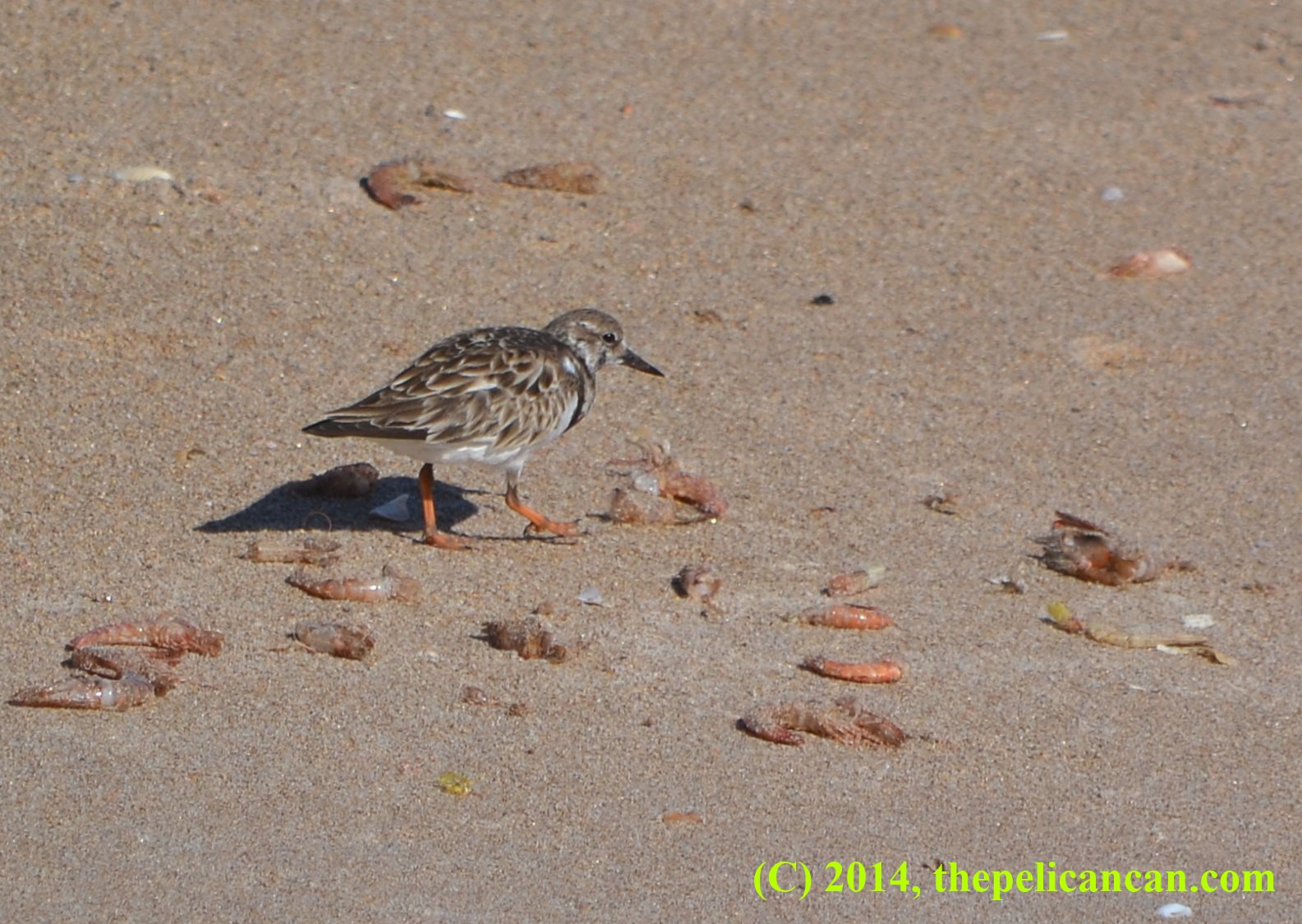
A ruddy turnstone (Arenaria interpres) on the shore of the Atlantic Ocean at Canaveral National Seashore

Ruddy Turnstone among shrimp.

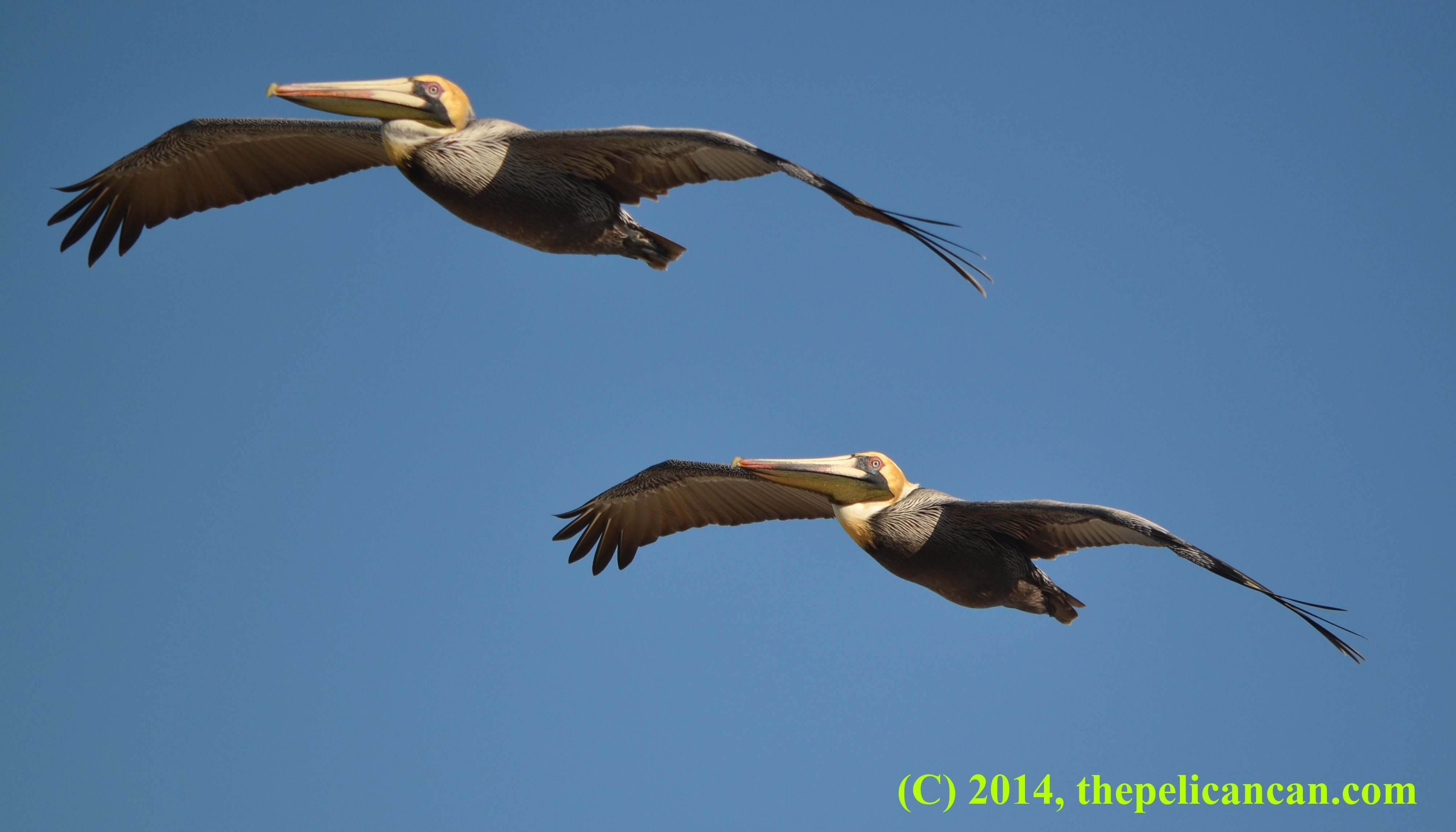
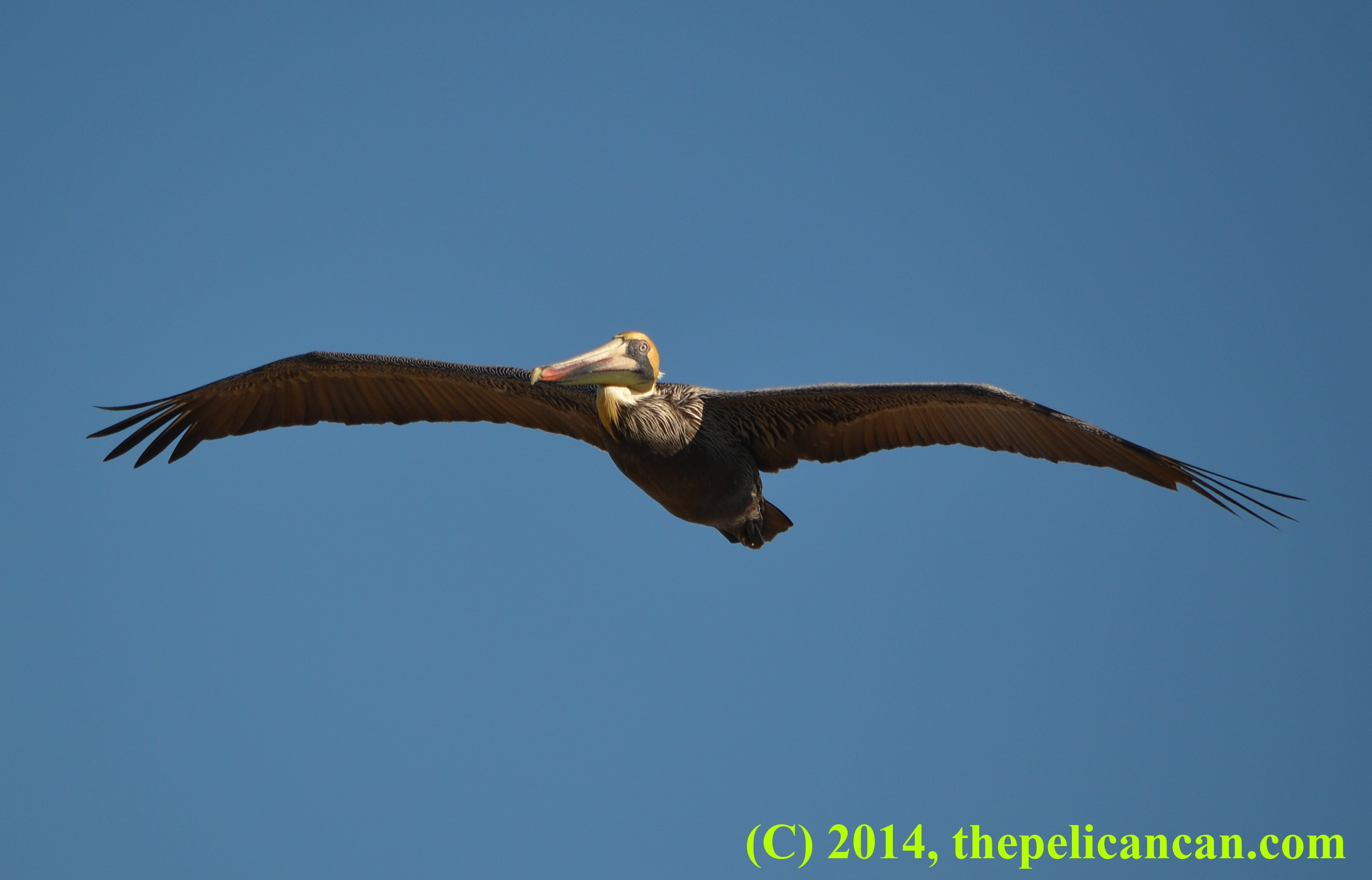
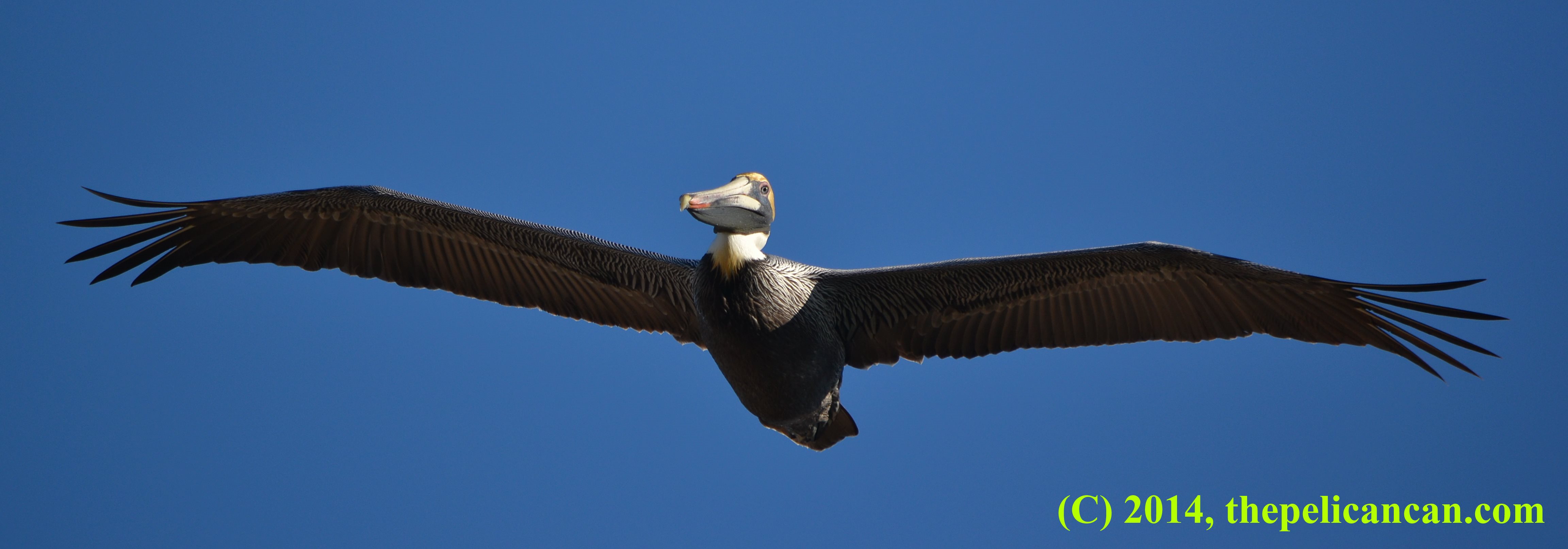
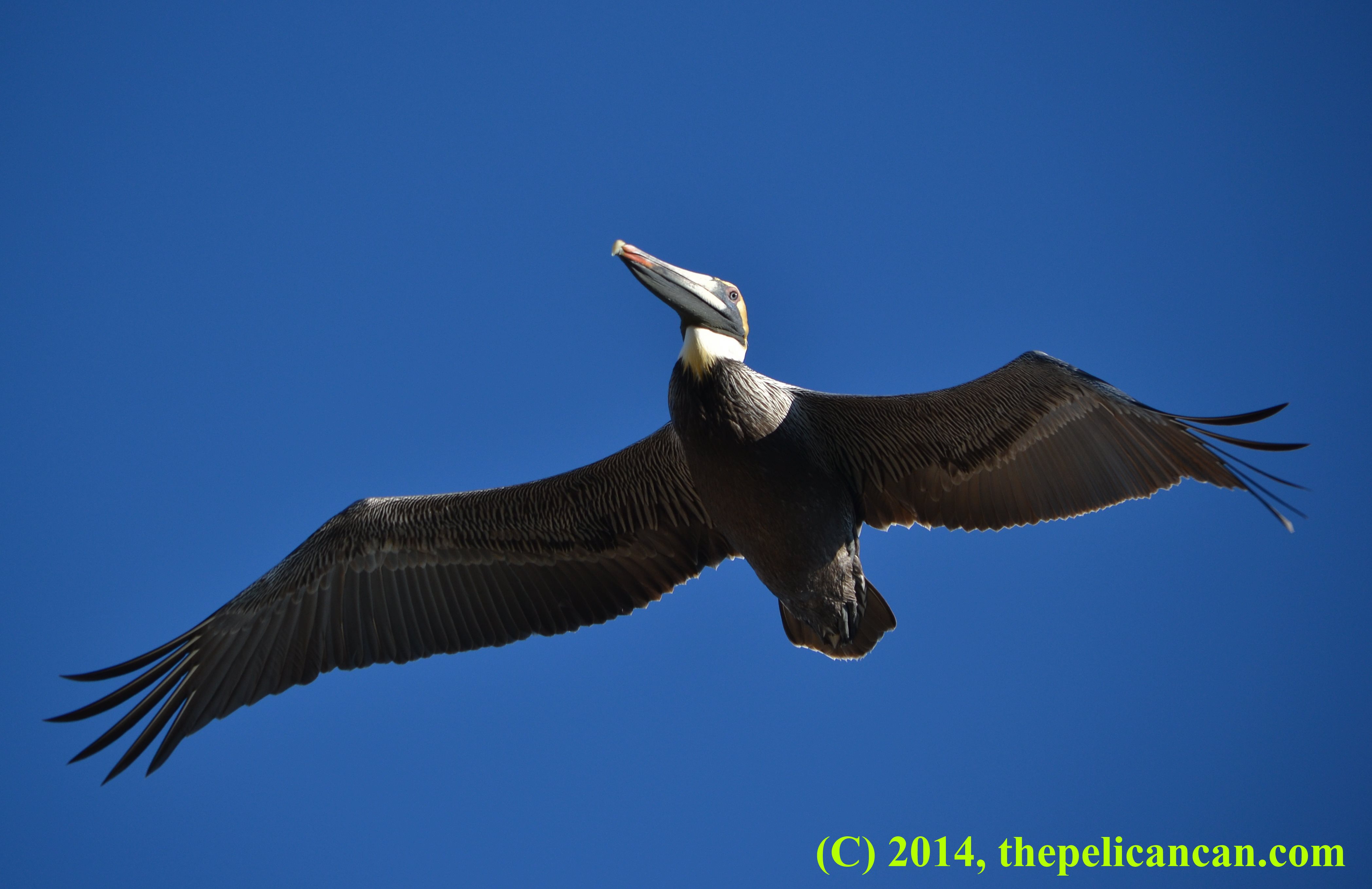
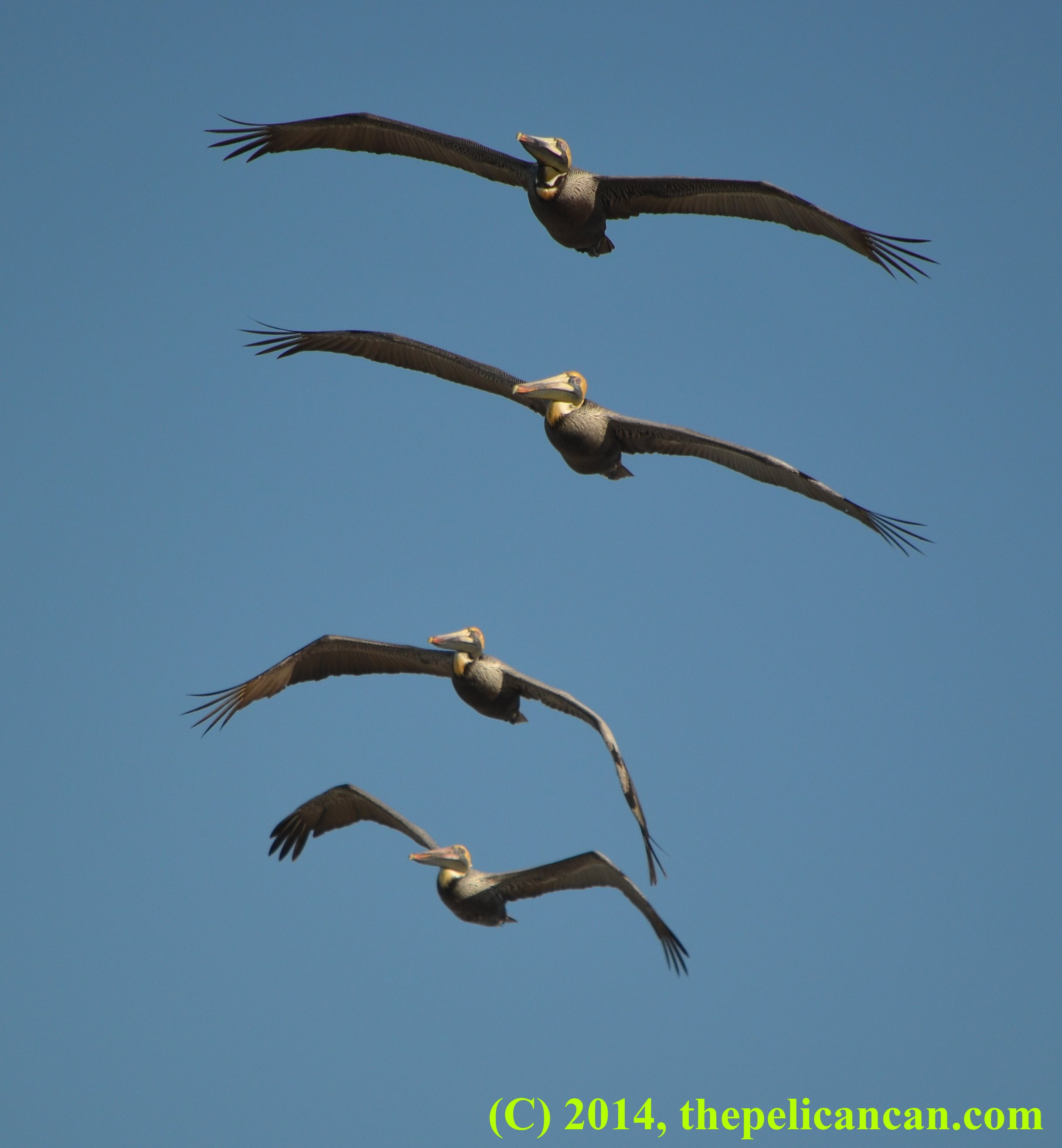
Then my mother spotted a group of brown pelicans. Several small groups came through in waves, and occasionally a loner would fly in by herself. The pelicans were flying from south to north. Because I was so used to white pelicans, the coloration of the brown pelicans shocked me; they looked as though they had painted their faces with garishly colored make-up.
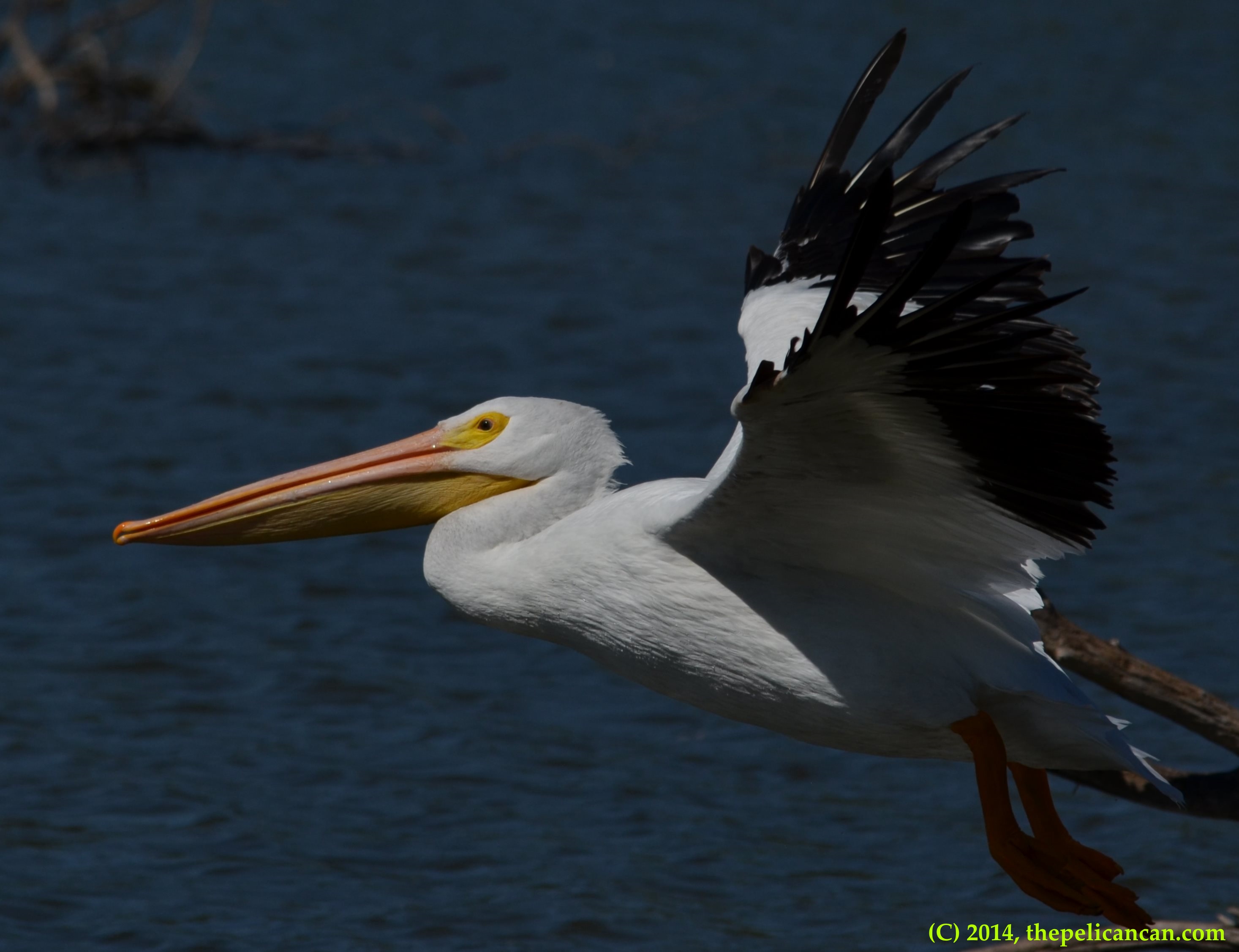
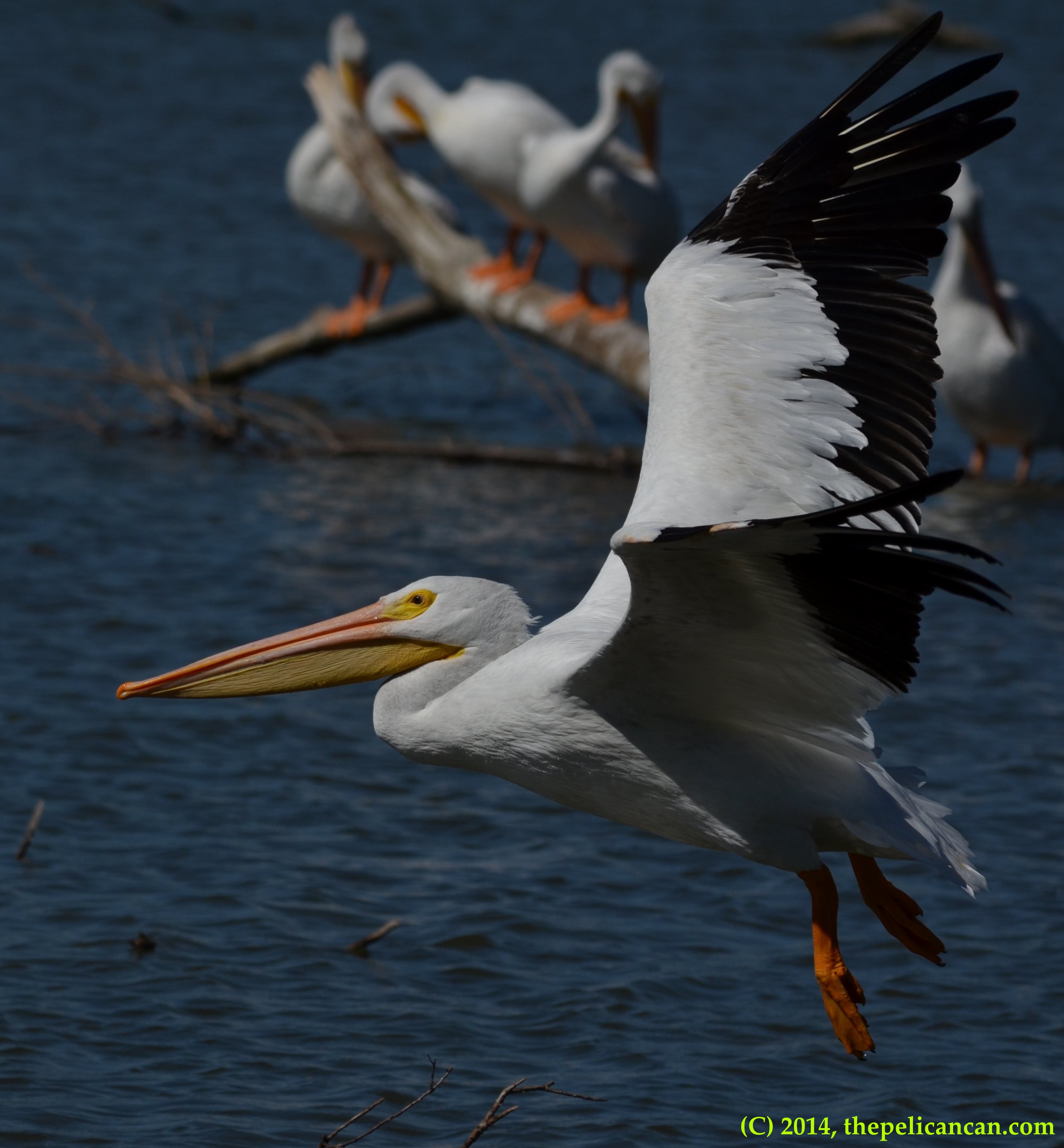
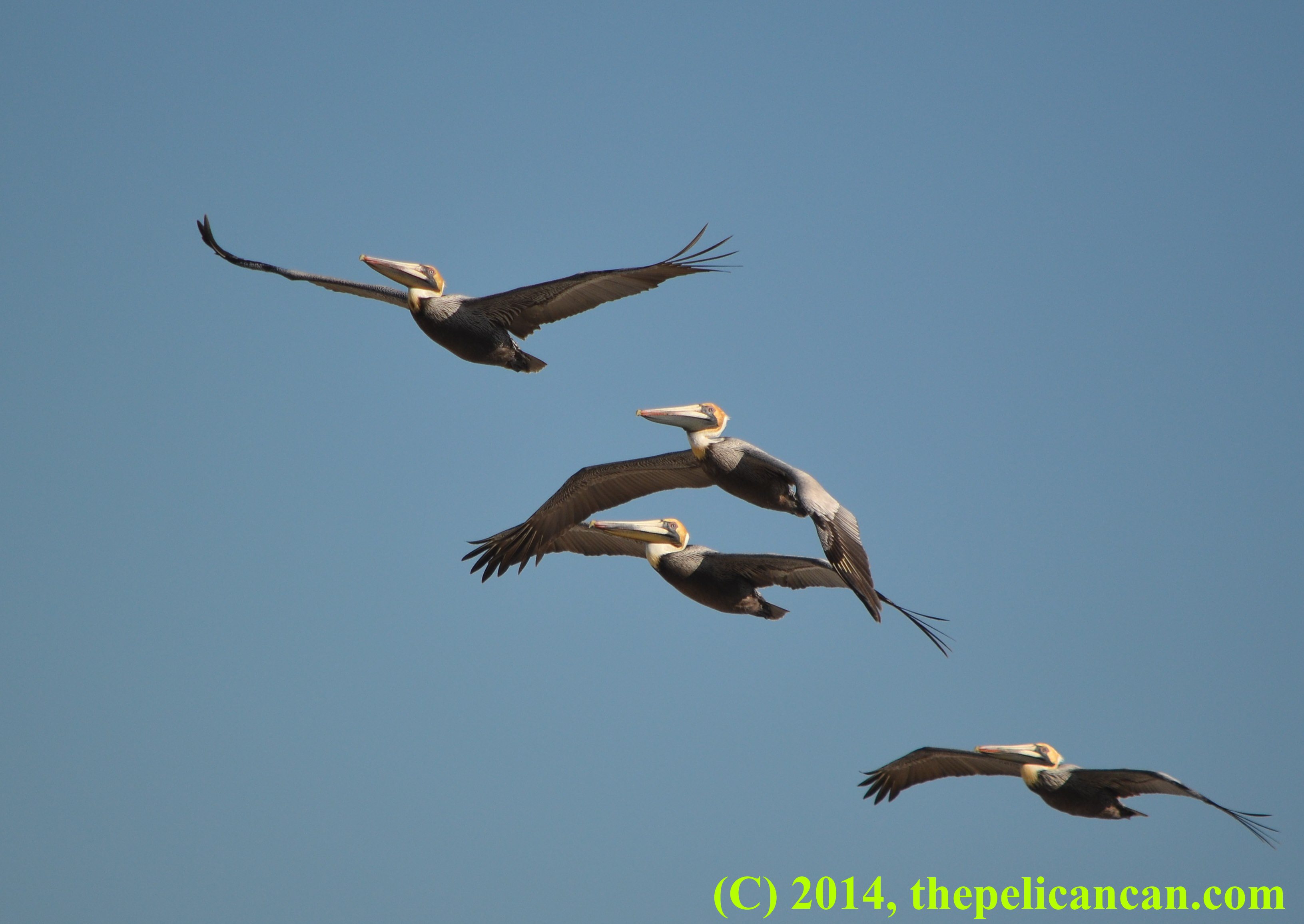
Four brown pelicans (Pelecanus occidentalis) flying over the Atlantic Ocean at Canaveral National Seashore


Two brown pelicans (Pelecanus occidentalis) flying over the Atlantic Ocean at Canaveral National Seashore

When I would watch groups of pelicans fly into Sunset Bay to loaf, I would hum the opening to Holst’s “Mars.” I did this with the brown pelicans. My mother tried to compete with me. She began humming Wagner’s “Ride of the Valkyries” despite my protestations and explanations why “Mars” was clearly the better choice. She won. I started humming “Ride of the Valkyries” with her as the pelicans soared over us.

Juvenile brown pelican (Pelecanus occidentalis) flying over the Atlantic Ocean at Canaveral National Seashore

Juvenile brown pelican (Pelecanus occidentalis) flying over the Atlantic Ocean at Canaveral National Seashore

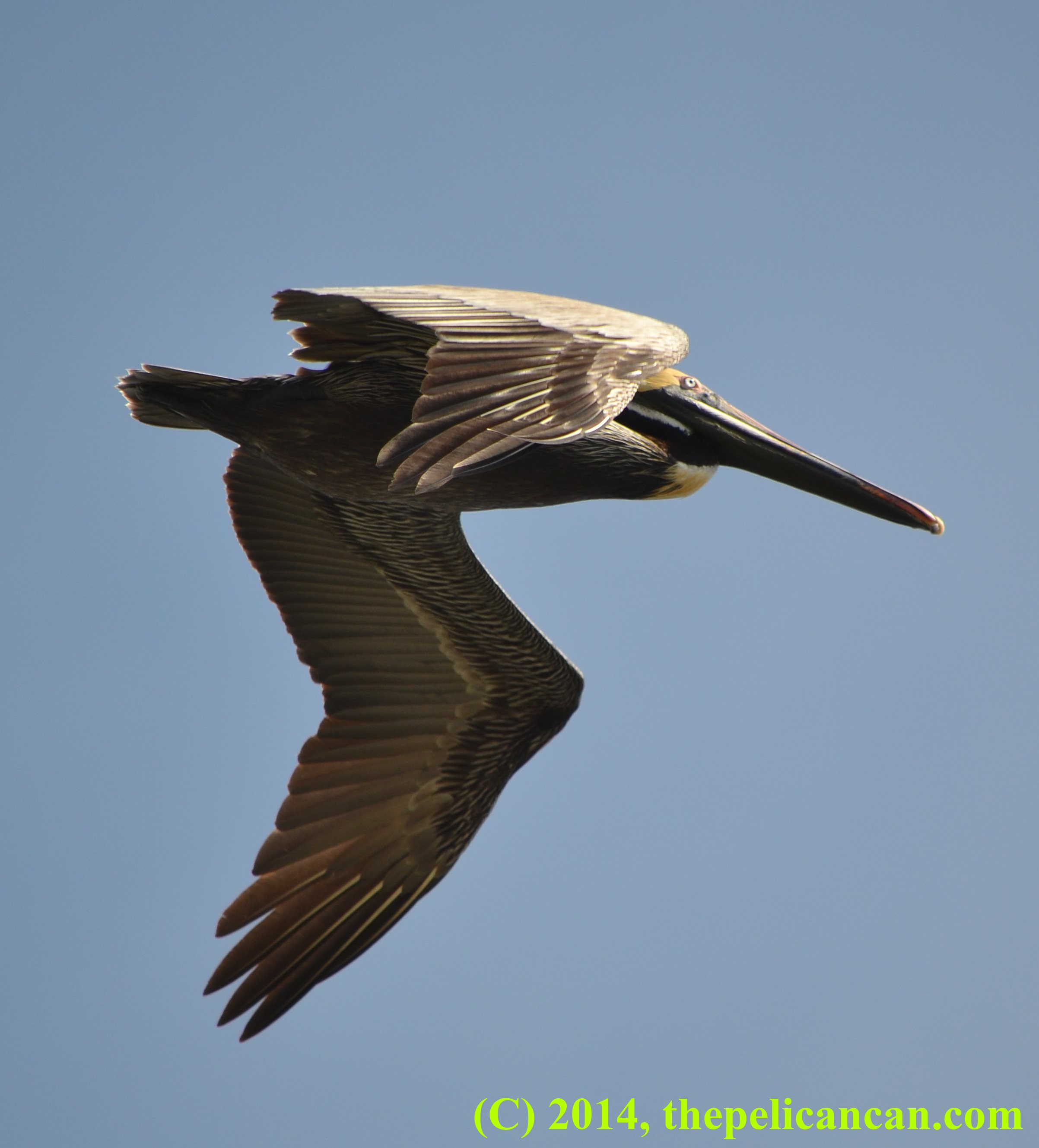
Brown pelican flying (Pelecanus occidentalis) over the Atlantic Ocean at Canaveral National Seashore

Brown pelican (Pelecanus occidentalis) flying over the Atlantic Ocean at Canaveral National Seashore

Brown pelican (Pelecanus occidentalis) flying over the Atlantic Ocean at Canaveral National Seashore

Brown pelican (Pelecanus occidentalis) flying over the Atlantic Ocean at Canaveral National Seashore

Four brown pelicans (Pelecanus occidentalis) flying over the Atlantic Ocean at Canaveral National Seashore

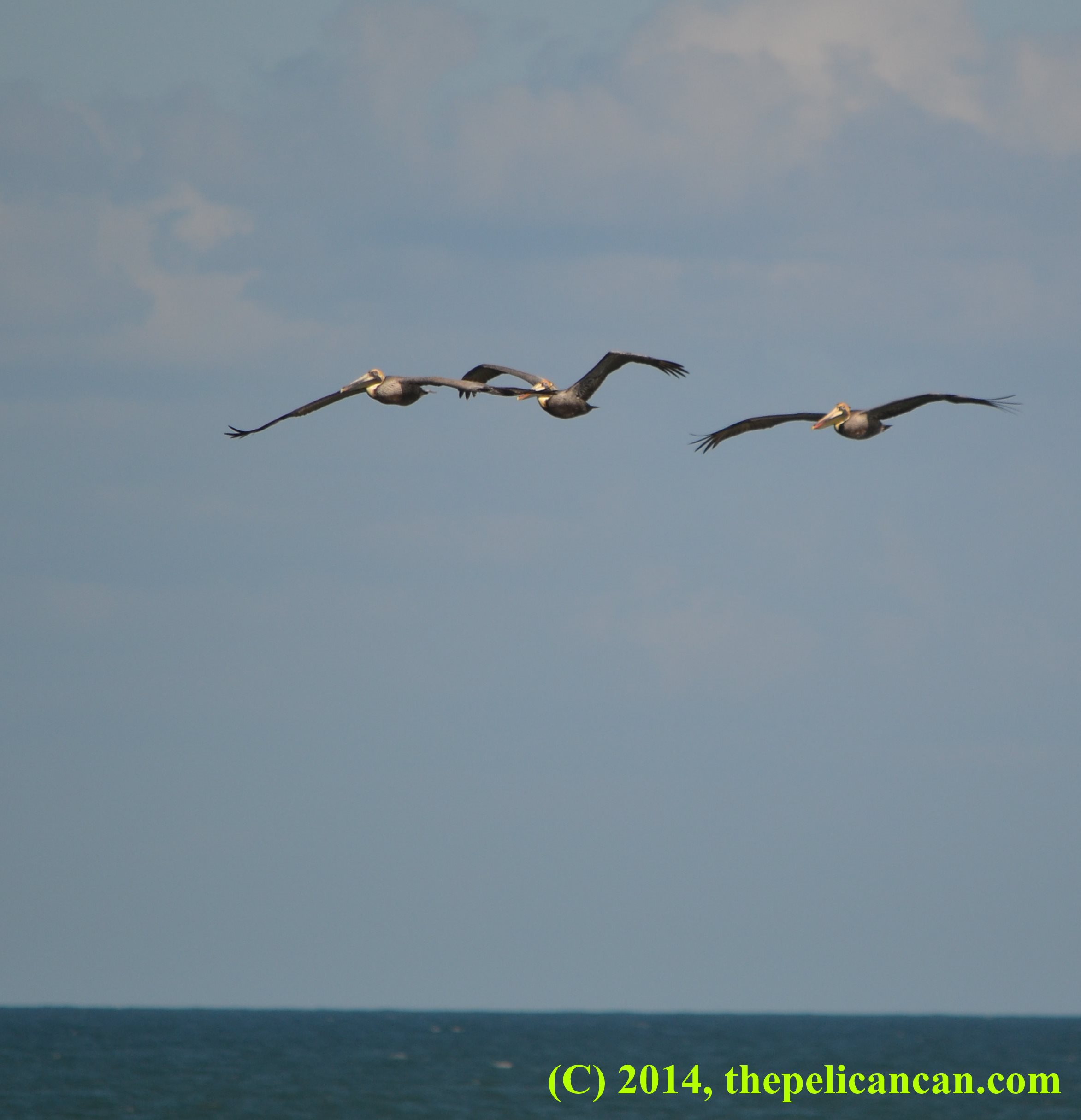
We decided that we’d had a good outing and that we’d let one more flock of birds go by before we left. After all, we had driven much further than we’d anticipated and still had to get back home.

Three brown pelicans (Pelecanus occidentalis) flying over the Atlantic Ocean at Canaveral National Seashore

Good night, and thank you.